Vase and planter CAD blocks for styling an interior elevation
How vase and planter CAD blocks fill out a console, mantel, or shelf on an interior elevation, with realistic sizing and placement tips.
Sumana KumarUpdated 21 May 20265 min read
Why vases and planters do more work than you'd think
When I'm finishing an interior elevation for a client presentation, the difference between a shelf that reads as staged and a shelf that reads as empty almost always comes down to two or three small accessory blocks, and a vase or planter is usually the first one I reach for because it fills an awkward gap without competing with the furniture it's sitting on. A console table, a mantel, a windowsill, a bookshelf end, all of these read as unfinished on a rendered elevation until something breaks up the flat surface, and a vase does that without pulling focus the way a lamp or a piece of framed art might.
The same logic applies just as much to a commercial or hospitality elevation as it does to a residential one, a reception desk, a lobby credenza, a boutique hotel corridor console, all of these get the same treatment from a designer on site, and a CAD elevation that skips that step ends up underselling the finished space compared to what actually gets delivered.
The shapes and variety in a vase and planter block set
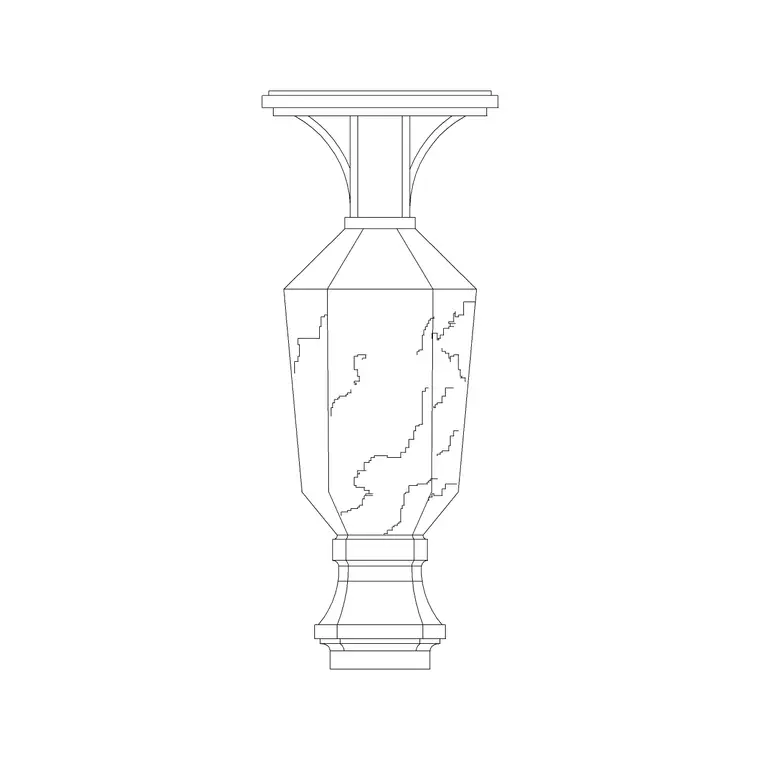
The carved vase block in the accessories library is a good example of the range you actually want in a set like this, because a single silhouette can carry a lot of different reads depending on scale and where you put it, a tall narrow vase on the floor beside a sofa reads as a statement piece, the same profile shrunk down and placed on a side table reads as a small accent. Planters specifically earn their keep on any elevation that's trying to bring greenery indoors, which is basically every residential and hospitality elevation being produced right now, and if your library pairs a vase block with a potted plant or leaf block you get a lot of styling mileage out of very little extra drafting time.
Beyond the carved vase silhouette itself, think about how the block reads at different distances on the sheet, a heavily detailed carved texture is a nice touch up close but at a typical elevation plot scale it mostly just reads as outline and shading anyway, so don't over invest in fine surface detail on a block that's going to be viewed from three feet away on a presentation board rather than inspected up close.
Where to place them for a believable elevation
Placement is really about reading the elevation the way a photographer would read a room, you want asymmetry more than perfect centering. Two identical vases centered on a mantel looks like a furniture catalog, one taller vase off to one side balanced by something lower and wider on the other, a stack of books for instance, reads like an actual styled room. I usually anchor the tallest piece about a third of the way in from one edge rather than dead center, and let smaller pieces trail off toward the other edge at decreasing height, which mimics how people naturally group objects on a shelf.
It's also worth paying attention to what's directly behind the vase on the wall, a vase placed in front of a window mullion or a light switch reads as an error the moment someone looks closely, so once you've placed the block, take a second pass specifically checking that nothing structural or functional is getting awkwardly obscured by a piece of styling.
Scaling a vase against real tabletop and shelf heights
Scale is the part that gets skipped when people are rushing a presentation deck. A decorative vase you'd actually see on a console table or mantel is typically somewhere in the range of 250 to 500 millimeters tall, a floor standing planter or urn can run anywhere from 500 millimeters up toward a meter depending on whether it's meant to anchor a corner or just accent a side table. Insert the block, then measure it against your furniture block, a vase that reads taller than the back cushion of the sofa beside it is almost always a scale error, not a design choice.
Scale checking is worth doing with an actual dimension rather than eyeballing it, draw a quick temporary vertical line at 300 millimeters next to the inserted block and compare, it takes fifteen seconds and it catches the kind of scale drift that happens when a block gets copied and pasted between projects with different drawing setup units, millimeters versus inches being the classic culprit.
Bringing the block in and keeping layers clean
Bring the vase or planter DWG in with INSERT, and set it on a decor or accessories layer separate from your furniture layer so you can toggle it off for a cleaner furniture-only elevation later, that separation matters more than people think once a project moves from concept presentation into a construction document set where the reviewer doesn't want to see styling clutter. Check that the block's insertion point sits at its base so it lands correctly on your shelf or floor line without needing to nudge it vertically every time.
If you're setting a project up from scratch, it's worth deciding early whether decor blocks live in model space alongside the furniture or get reserved for a separate detail or presentation layout, some offices prefer keeping every styling element in model space so the drawing is portable between sheets, others prefer building the styled version only on the presentation layout so the working drawing stays lean, either approach works as long as it's consistent across the project.
Pairing vases with other accessory blocks
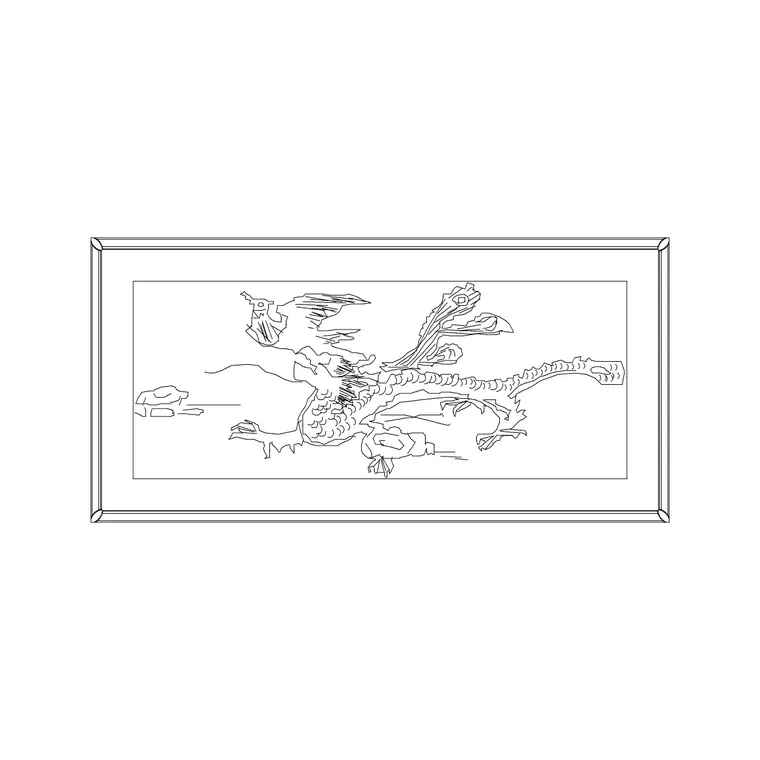
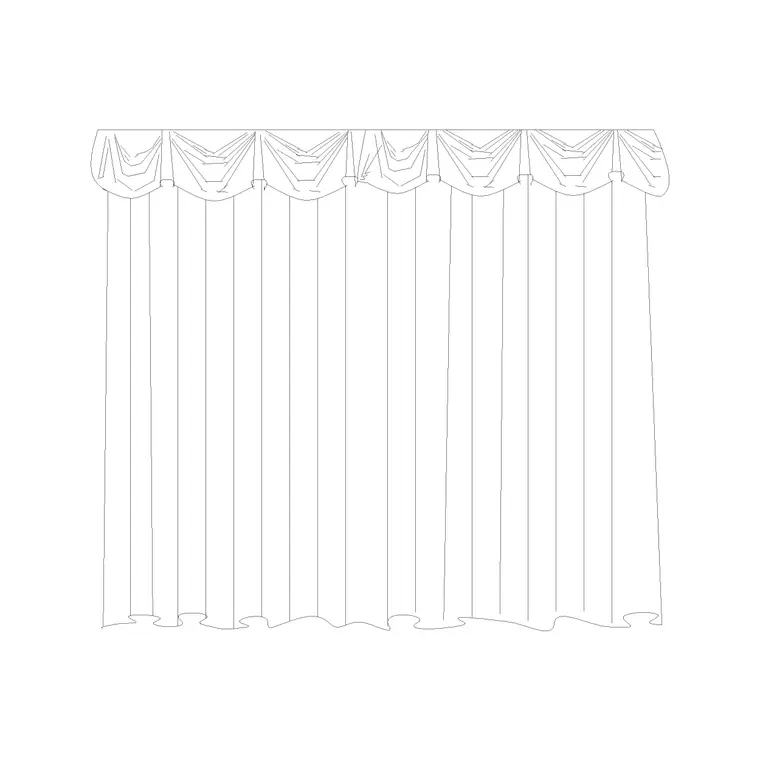
A vase rarely works alone on a styled elevation, in my experience it's most convincing paired with one or two other accessory blocks, a stack of books beside it, a framed picture behind it, maybe a curtain in the background giving the wall some softness. The trick is restraint, three or four accessory blocks well placed reads as curated, eight crowded onto one shelf reads as cluttered and actually undermines the professionalism of the sheet you're presenting.
When you're combining a vase with other blocks, vary the object types as much as the heights, a vase, a stack of books, and a small framed piece grouped together reads more convincingly than three vases of different sizes lined up, because real shelf styling mixes categories of object rather than repeating the same item at different scales.
Further reading
Questions
Frequently asked
Are vase blocks shown in plan or elevation?+
Most vase and planter blocks are elevation views since that's where they do the styling work, though a simple plan view circle or oval is sometimes useful on a furniture plan to reserve tabletop space for them.
Can I resize a vase block without distorting it?+
Yes, scale it uniformly, locking the X and Y scale together, rather than stretching only one axis, otherwise the vase silhouette ends up looking squashed or unnaturally stretched compared to the real object.
What's a realistic height for a floor standing planter?+
Usually in the range of 500 millimeters to a meter for a statement corner piece, though it depends heavily on the ceiling height and the piece of furniture it's meant to sit beside.
Free downloads from this article
Free CAD block library
Download the blocks from this article — free, no signup