Wall clock vs cuckoo clock CAD blocks for period interiors
Wall clock or cuckoo clock: how to pick the right timepiece CAD block for a contemporary versus a period interior elevation.
Sumana KumarUpdated 3 July 20265 min read
Two clocks, two very different stories on the wall
A clock is one of those accessory blocks that people insert without thinking twice about, and it's a mistake, because a wall clock and a cuckoo clock aren't interchangeable, they signal two completely different interiors and picking the wrong one can quietly work against every other styling choice you've made on the elevation. I keep both in my accessory set for exactly this reason, and which one goes up on the wall depends entirely on what kind of room I'm drawing.
I've watched this play out on actual project reviews more than once, a client looks at an otherwise solid contemporary elevation, and their eye snags on a clock that doesn't belong, and suddenly the conversation is about the clock instead of the kitchen layout you actually needed feedback on, which is exactly the kind of distraction a well chosen accessory should be preventing rather than causing.
What a plain wall clock block communicates
A plain wall clock, round face, thin frame, minimal numerals, is the safer default for almost any contemporary residential or commercial elevation. It reads as neutral, it doesn't fight with anything else on the wall, and it does the basic job a clock needs to do on a styled elevation, which is break up a blank vertical surface above a sideboard or across from a dining table without adding visual weight. If you're producing elevations for a modern apartment, an office breakout space, or really any interior where the brief leans contemporary, a simple wall clock block is the one to reach for.
A plain wall clock also has the advantage of working across a wider range of finishes without needing to be swapped, a thin black frame reads fine against a white wall or a warm timber background, whereas an ornate cuckoo clock's carved wood finish has to actually relate sensibly to the surrounding material palette, which is one more variable to manage on a project that might already have enough finish decisions in flight.
What a cuckoo clock block communicates, and where it belongs
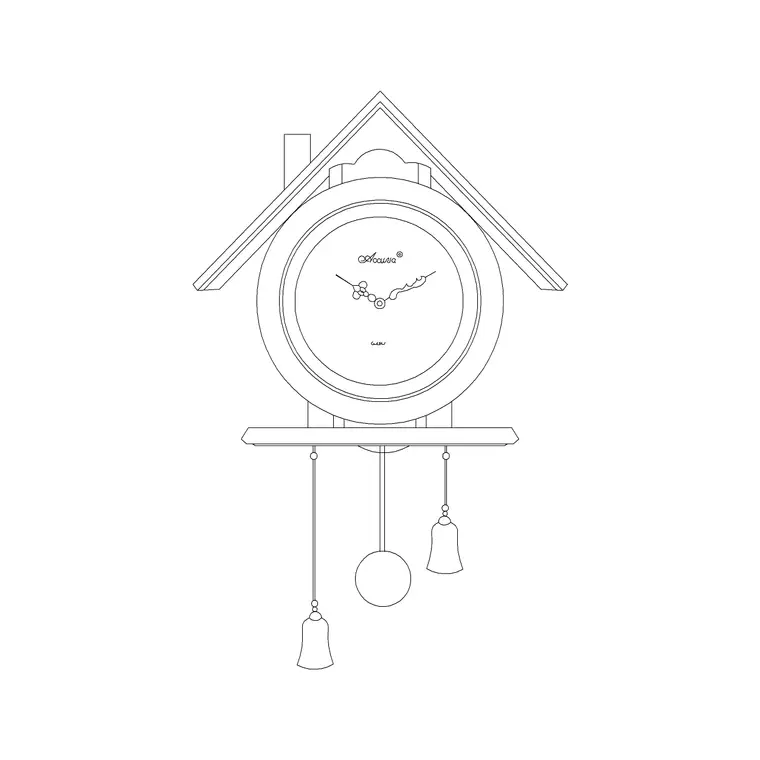
A cuckoo clock is a completely different signal. It's ornate, it's got carved detailing, a pendulum, often a chalet or cottage silhouette, and it belongs almost exclusively on period interiors, traditional cabin or lodge style projects, or anywhere you're deliberately leaning into a rustic or heritage character. Drop a cuckoo clock block into an otherwise minimal contemporary elevation and it reads as a mistake, like a prop that wandered onto the wrong set, so the cuckoo-clock block earns its place specifically on the traditional end of your project mix, not as a general purpose accessory.
There's a middle ground worth knowing about too, a slightly more detailed wall clock, wood cased rather than plain metal, without going as far as a full cuckoo mechanism, works as a bridge option for a transitional interior that wants some warmth and character without committing fully to a rustic period read, useful when a brief is genuinely somewhere between contemporary and traditional rather than firmly at either end.
Sizing and placement on the elevation
Sizing matters more on a clock than you'd expect because the eye is very calibrated to what a clock face should look like relative to a wall. A standard wall clock is typically in the 250 to 400 millimeter diameter range, a cuckoo clock, being a full carved case rather than just a face, usually runs taller, often 400 to 700 millimeters top to bottom including the pendulum drop. Mount height on the elevation should sit roughly at or slightly above eye level relative to your floor line, somewhere around 1500 to 1700 millimeters to the center of the face is a reasonable working range, adjust up or down depending on the furniture beneath it, a clock hung too high above a low console just reads as floating and disconnected from the grouping.
Mounting height should also account for what's on the wall around the clock, in a kitchen it often sits above a run of upper cabinets rather than at pure eye level, in a hallway or stairwell it can sit higher since the viewing angle is naturally more elevated, so treat the 1500 to 1700 millimeter range as a residential living space default rather than a fixed rule that applies everywhere.
Drafting considerations, layers and line weight
Both blocks insert cleanly with INSERT and belong on your decor or wall accessory layer, kept separate from structural wall lines so line weight contrast stays clean when you plot. Cuckoo clocks in particular carry more line detail than a plain wall clock, so at smaller elevation scales, anything past about 1 to 50, that detail can start to clot into an unreadable smudge, worth zooming in to check the plotted line weight before finalizing the sheet rather than discovering it in the printed set.
It's also worth checking how the clock block behaves if you ever need to rotate the whole elevation or mirror a unit type, a clock face rotated incorrectly reads instantly wrong to anyone who glances at it, since a clock face is one of the few objects on a drawing where the human eye has an intuitive, built in sense of correct orientation.
Making the call for your specific project
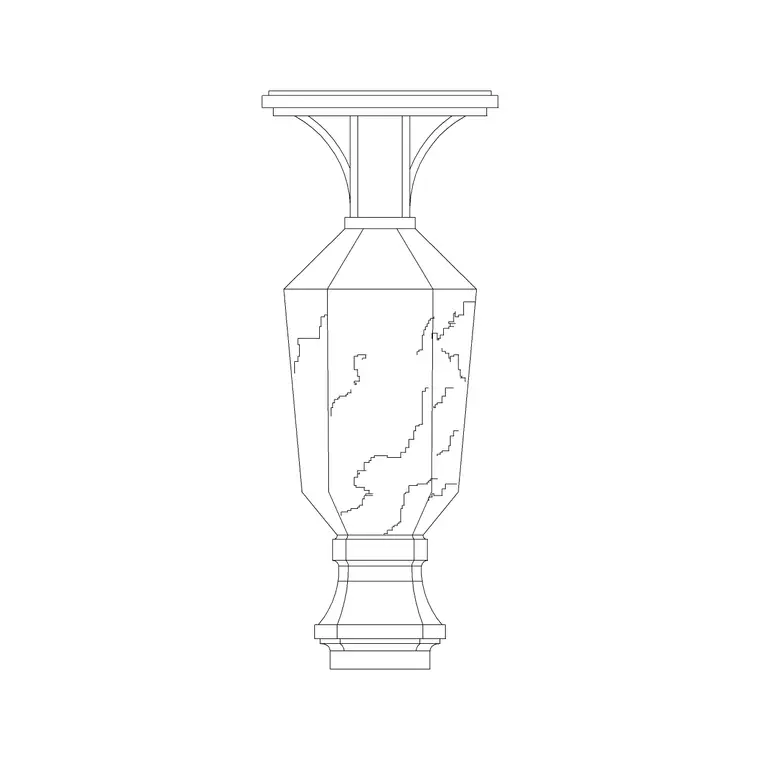
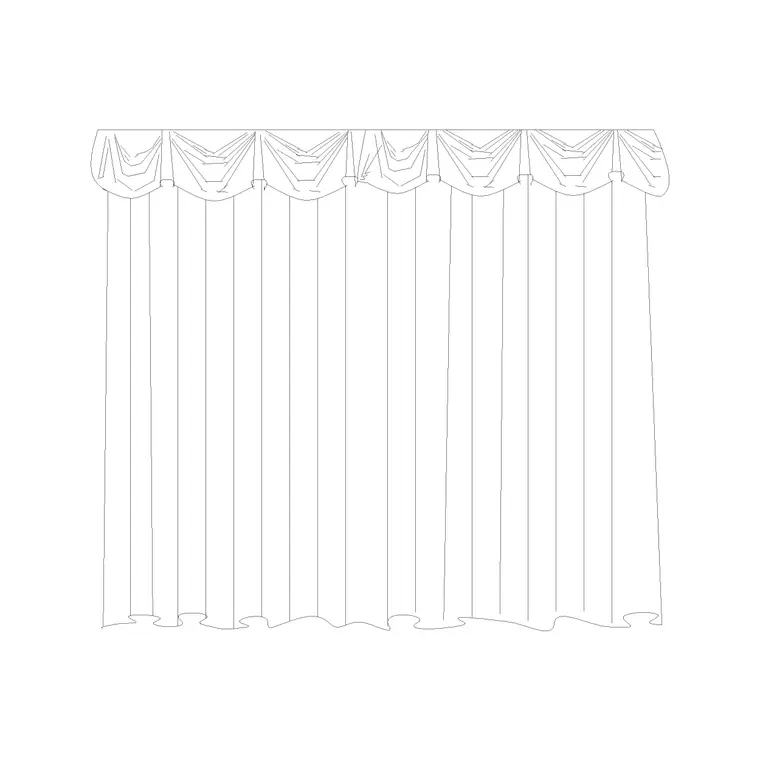
If you're genuinely unsure which to use, default to the plain wall clock, it's the block that works across more project types without needing justification, and reserve the cuckoo clock for the specific brief where a client has actually asked for a rustic, alpine, or period character, or where the rest of your accessory palette, heavier curtain drapes, carved vase forms, ornate picture frames, is already leaning that direction and the cuckoo clock is just completing a consistent story rather than starting one on its own.
One more thing worth remembering is that a clock is rarely reviewed in isolation, so if you're unsure about a specific project, look at what else has already been approved in the accessory palette, a heavier curtain drop, a carved vase, an ornate frame, and let that existing approved direction guide whether the wall clock or the cuckoo clock is the more consistent choice for the wall you're finishing next.
When in doubt, it's worth asking directly rather than guessing, a quick note to the client or the lead designer about whether the project is leaning traditional or contemporary saves you from styling an entire elevation set around the wrong clock, and it's a much smaller conversation to have early than a rework request after a full presentation deck has already gone out.
Further reading
Questions
Frequently asked
Is a cuckoo clock block appropriate for a modern interior?+
Generally no, it's a strongly period signifier, and dropping it into a contemporary or minimal elevation tends to read as inconsistent rather than characterful, a plain wall clock is the safer contemporary choice.
What wall height should a clock be centered at on an elevation?+
Roughly 1500 to 1700 millimeters from finished floor to the center of the clock face is a reasonable working range for most rooms, though it should be adjusted against whatever furniture sits below it.
Do clock blocks include the pendulum and weights for a cuckoo clock?+
Typically yes, the cuckoo clock block includes the pendulum drop as part of the elevation silhouette since that's a defining visual feature, factor that extra length into your mounting height so the pendulum doesn't overlap furniture beneath it.
Free downloads from this article
Free CAD block library
Download the blocks from this article — free, no signup