Curated pack · minimalist interior cad blocks
Free minimalist interior CAD block pack for AutoCAD
By Sumana Kumar · Published 22 Dec 2023 · Updated 23 Feb 2026
Minimalism is a discipline of subtraction: fewer pieces, simple rectilinear forms, flush surfaces and a lot of deliberate empty floor. Drawing a minimalist interior means resisting the urge to fill the plan, and starting from blocks whose outlines are already clean and unfussy. This free minimalist interior CAD block pack collects the pared-back essentials — plain straight-arm sofas, simple platform and slatted beds, flat-fronted storage, and unadorned tables — in DWG and DXF, drawn to true sizes for AutoCAD 2004 or later. Everything is free for personal and commercial work, with no signup and no watermark.
Use the pack for minimalist apartments, studio flats, gallery-like living spaces and any scheme where negative space is the design. Because the blocks are simple and scaled, they make the most important minimalist decision — how much floor to leave empty — easy to test and easy to read.
The trap with minimalism is that an under-furnished plan can look unresolved rather than intentional. Working with correctly scaled, restrained blocks lets you prove that the empty space is composed: the gaps are even, the few pieces are aligned, and the room breathes on purpose. That is a very different thing from a room that simply hasn't been finished.
What's in the minimalist pack
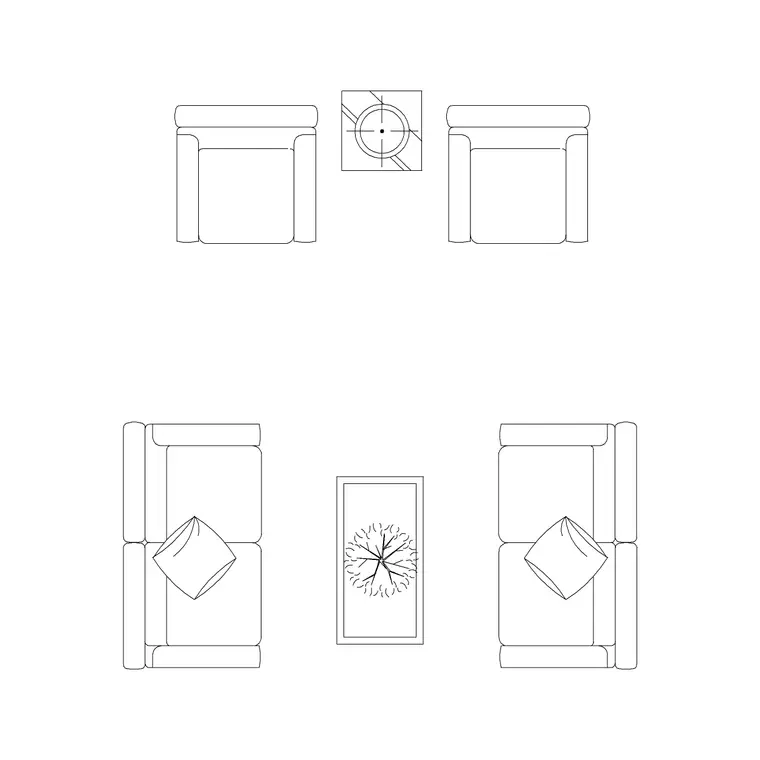
The set is deliberately lean. Seating: straight-arm two- and three-seat sofas with a low, simple profile and a single bench cushion line. Tables: plain rectangular coffee tables, slim dining tables and a basic desk. Storage: flat-fronted, handle-less sideboards and low cabinets that read as quiet planes. Sleeping: platform and slatted bed footprints with no headboard bulk.
There are no carved details, no ornament and no busy outlines — every block is reduced to the lines that define its function, which is exactly what a minimalist drawing needs.
Composing with empty space
In a minimalist plan the floor between pieces is as designed as the furniture. Place the sofa, then leave a generous, even margin around it rather than pushing it tight to walls. Align pieces to a shared grid or to architectural features — a window mullion, a wall edge — so the few objects feel intentional.
A practical move is to draw light construction lines for your alignment grid on a separate layer, snap the furniture blocks to it, then freeze the grid. The result is a layout where the empty space is measured and even, which is what makes minimalism read as composed rather than sparse.
Sizes and clearances for a calm layout
Minimalist pieces tend toward standard sizes with simpler outlines. A straight-arm three-seat sofa runs roughly 2000–2200 mm long and 850–950 mm deep. A platform bed sits low, around 250–350 mm to the mattress top, with a double at 1400 × 1900 mm and a king around 1800 × 2000 mm. Plain coffee tables are 1000–1200 mm long and low at 300–350 mm.
The clearances are where minimalism asserts itself: rather than the minimum walkway, allow generous gaps — 900–1200 mm of clear floor around the main pieces — so the emptiness reads as deliberate. The scaled blocks let you see that breathing room immediately.
Per-item notes
- Straight-arm sofa: the squared, simple arm is the minimalist signature; keep it clear of side tables so the silhouette stays clean. - Platform / slatted bed: low and headboard-free, it leaves the wall plane uninterrupted — centre it on the wall and let the space around it do the work. - Flat-fronted sideboard: handle-less and shallow, it reads as a plane rather than a piece of furniture; align its ends to the wall or to a window. - Plain table: a single unadorned rectangle; resist adding chairs you don't need, since a minimalist dining setting is often four seats, not six.
Each block is a single reference, easy to align, copy and rescale, with definition edits flowing to every instance.
Plan and elevation for minimalist drawings
For the layout you work in plan, and minimalism is where plan discipline matters most: the even gaps and shared alignments only read if you've set them out deliberately. The plan blocks are clean outlines that make that composition legible.
For presentation and interior elevations you switch to elevation, where minimalism shows as long horizontal lines and flush surfaces — a low platform bed and a handle-less cabinet drawn face-on say more by what they leave out than what they show. Where a block carries both views, one download covers the composed plan and the quiet elevation.
Who uses a minimalist pack
Interior designers use it for minimalist and Japandi-leaning residential schemes, and for gallery, spa and boutique interiors where restraint is the brief. Architects use it to furnish loft and studio plans without crowding the space. Stylists and visualisers use it for clean concept boards. Students use it for projects exploring space, light and negative space with licence-clear blocks.
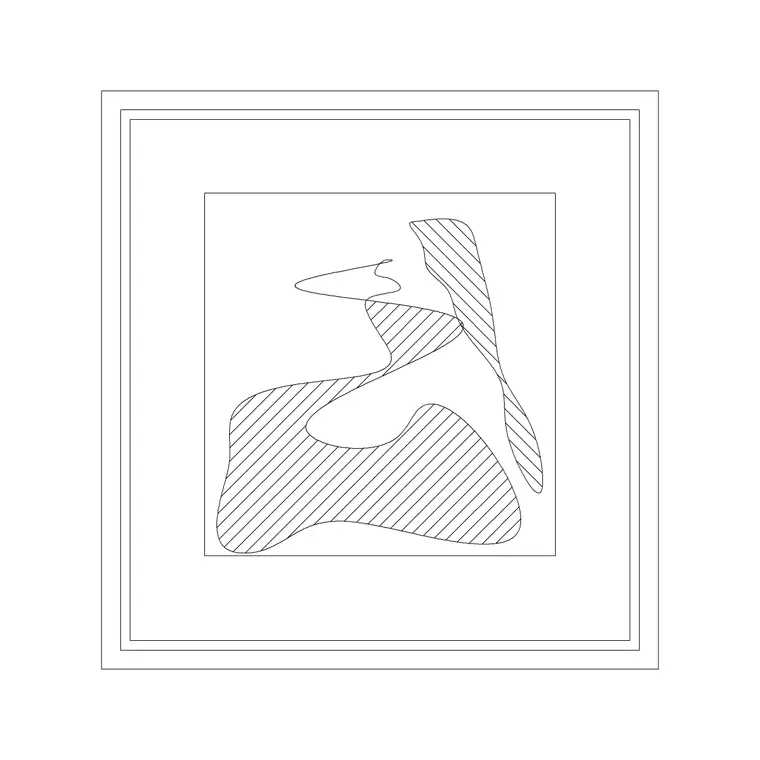
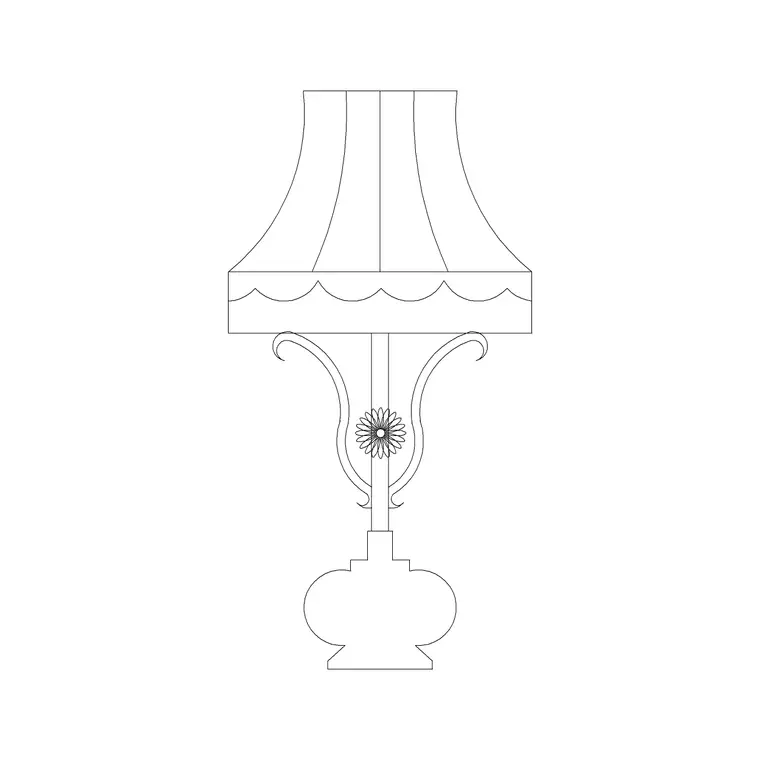
Pair the minimalist set with a single restrained lighting piece and one framed artwork from the accessories category — in minimalism, one good accessory is the whole story — to finish a room from one consistent, free library.
Free download
Browse the full library — DWG & DXF, no signup.
Questions
Frequently asked
Why use a dedicated minimalist pack instead of generic furniture?+
Minimalist blocks are drawn as clean, unadorned outlines with simple squared profiles, so a plan built from them reads as intentional restraint. Busy or detailed blocks fight the aesthetic and make a minimalist scheme look unresolved.
Are the minimalist interior blocks free for commercial use?+
Yes. Every block downloads free in DWG and, where available, DXF, with no signup, no watermark and no attribution requirement, and they are cleared for commercial project use.
How do I keep the empty space looking deliberate, not unfinished?+
Draw an alignment grid on a separate layer, snap the few blocks to it so gaps are even and pieces line up with architectural features, then freeze the grid. Measured, aligned empty space reads as composed rather than sparse.
What scale are the blocks drawn at?+
Full size in millimetres. Insert at scale 1 in a millimetre drawing, or set INSUNITS to millimetres so AutoCAD rescales automatically if your template uses different units.
Related downloads
Blocks for this guide
Related categories
Related guides
Curated pack
Free Modern Furniture CAD Block Pack — DWG/DXF
Free modern furniture CAD block pack in DWG/DXF — modular sofas, low coffee tables, sideboards and accent chairs. No signup, commercial use OK.
Curated pack
Free Classical Furniture CAD Block Pack — DWG
Free classical furniture CAD blocks in DWG/DXF — rolled-arm sofas, carved tables, wingback chairs and classical lamps. No signup, commercial use OK.
Curated pack
Free Luxury Interior CAD Block Pack — DWG/DXF
Free luxury interior CAD blocks in DWG/DXF — relaxers, dressing tables, statement seating and decorative lamps for high-end schemes. No signup needed.