Dishes and crockery CAD blocks for a styled kitchen render
Using dishes and crockery CAD blocks to style a kitchen render convincingly, with scale checks so a stack of plates never looks wrong.
Saumyajit Maity6 min read
A small detail with an outsized effect
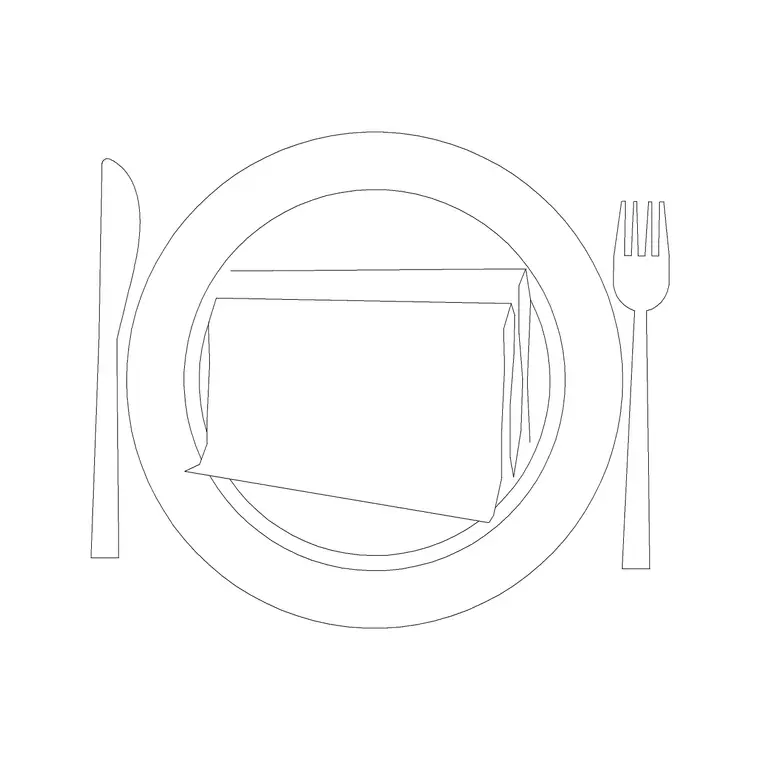
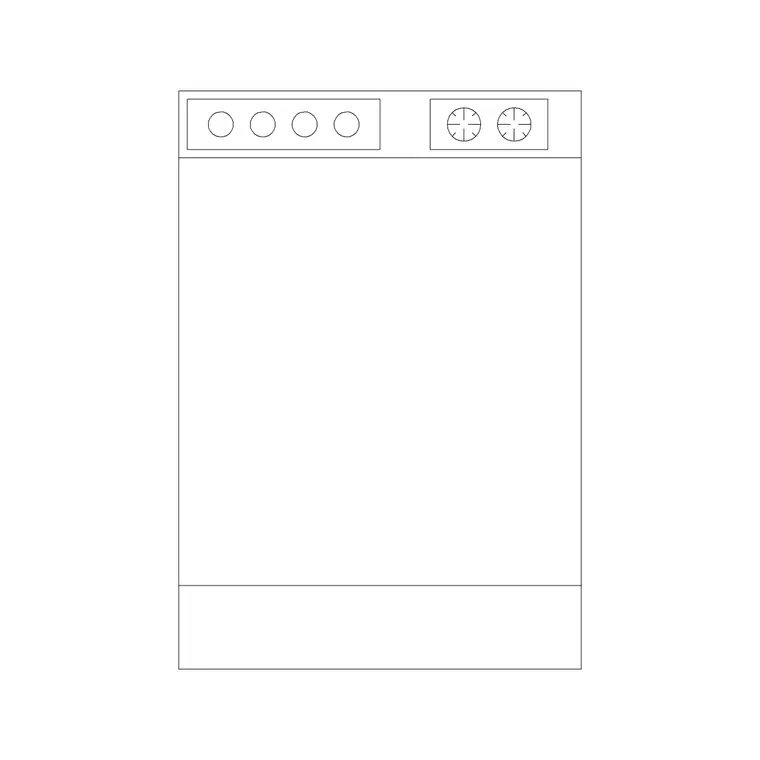
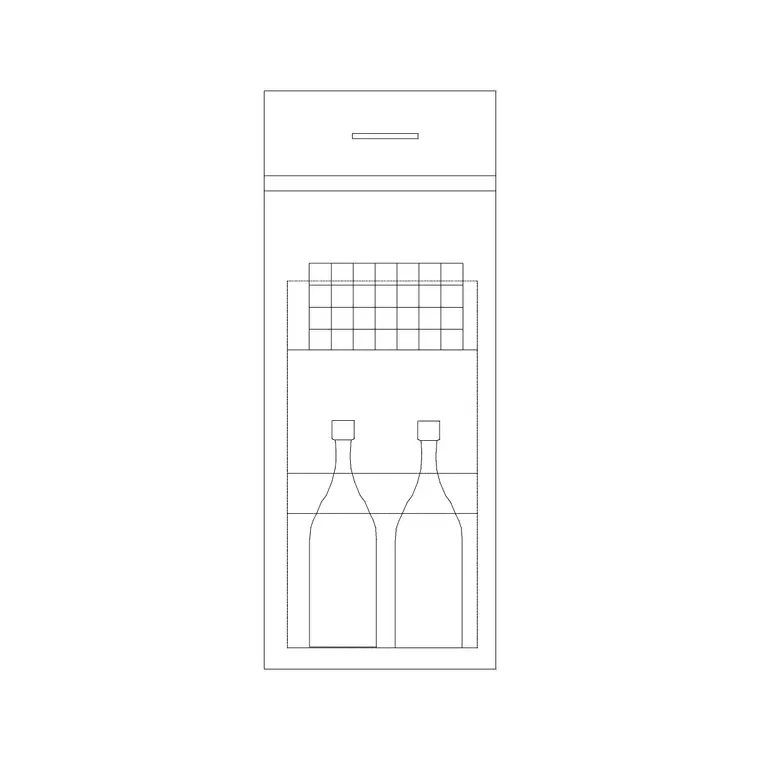
The dishes block on cadblockdwg.com sits in the same source folder as the dishwasher elevation block, which tells you something honest about how it was originally meant to be used, staged near or around the dishwasher scene rather than sourced as a standalone decorative item. That pairing is a small detail, but it's exactly the kind of small detail that has an outsized effect on how finished a kitchen render actually looks, because a dishwasher elevation with a matching stack of dishes nearby reads as a completed scene rather than an isolated appliance drawing.
It's a small piece of forensic evidence about how the original library was built, honestly, source folders tend to group items the way the person building the library actually used them on real projects, and that grouping often tells you more about intended use than a product name alone ever could. A block simply labeled dishes doesn't tell you where it belongs, but a block called dishes sitting in the same folder as a dishwasher elevation is a pretty strong hint that someone, at some point, drew it specifically to sit near an open dishwasher door in a finished kitchen scene.
What's in the dishes block, and why the pairing matters
Generic crockery geometry, plates, bowls, cups grouped as a single DWG, works fine either way it gets used, whether that's staged near the dishwasher, arranged on open shelving, or set on a drying rack near the sink. Plenty of drafters repurpose it well beyond its original folder pairing, and that's completely fine, a well-drawn dish grouping is useful wherever a kitchen scene needs a bit of everyday, lived-in detail rather than a sterile, empty surface.
Scale checkpoints so nothing looks off
Standard dinner plates run roughly 10 to 11 inches across, bowls closer to 6 to 7 inches, and mugs around 3 to 4 inches in diameter, ballpark ranges rather than fixed standards, but close enough to sanity-check a scaled block against. A stack of four or five plates should sit well within the depth of a standard 24 inch base cabinet counter without overhanging the front edge, and if your inserted block is spilling past the counter line, that's a clear sign the scale needs a second look before the sheet gets finalized.
A second, faster scale check is comparing the crockery grouping against a known appliance reference already on the same elevation, the dishwasher's 24 inch bay width, for instance, since it's usually already inserted and correctly scaled elsewhere on the sheet. A stack of plates that reads as noticeably wider than a third of that dishwasher bay is very likely oversized, while one that disappears to a sliver next to it has probably been shrunk too far. Cross-referencing against an element you already trust is faster than measuring from scratch every time you add a new decorative block to a scene.
Where crockery earns its place: shelving, islands, drying racks
Open shelving is probably the single best spot for a crockery block, since stacked plates and bowls are exactly what open shelving is designed to display in the first place, and it does more visual work there than almost anywhere else in a kitchen scene. A drying rack near the sink is another natural spot, and a small grouping on an island counter can work too, as long as it's kept modest rather than competing with whatever else is styled on that surface.
Open shelving in particular rewards a bit of deliberate imperfection over a perfectly symmetric arrangement, a slightly uneven stack, a bowl turned at an angle rather than stacked flush, a mug or two set slightly apart from the main grouping. Real crockery on a real shelf never sits in perfectly even stacks, and a CAD render that mimics that natural irregularity, even in a simple 2D elevation, reads as more convincing than one where every plate lines up with mechanical precision, which paradoxically looks less real the more perfectly it's arranged.
Combining crockery with other small kitchen blocks
Pairing the dishes block with the kitchen accessories block, and maybe the juicer or toaster block nearby, builds a fuller countertop or shelving scene without needing to model anything from scratch. What I actually do is treat crockery as the quiet background layer and let one or two appliance blocks be the visual focal point, since a scene where every surface is equally busy tends to feel cluttered rather than styled.
A good discipline here is picking a single dominant surface for each type of dressing rather than spreading everything evenly across the whole kitchen. Let crockery own the open shelving or the drying rack, let small appliances own a stretch of counter near an outlet, and leave at least one clearly visible surface, usually the island or the main prep counter, mostly clear so the eye has somewhere restful to land. Spreading every category of dressing across every available surface is the single fastest way to turn a styled elevation into a busy one.
Keeping it restrained where styling isn't the point
Construction and permit sets should stay focused on cabinetry, appliances, and dimension strings, exactly the linework a contractor is actually pricing and building from, so save crockery and other styling blocks for presentation and marketing elevations where they genuinely add value. At the end of the day a dish block is dressing, not structural information, and treating it that way keeps your construction sets clean and your presentation sets convincing.
It's also worth remembering that a construction set has a different audience with a different level of patience for visual noise, a contractor or estimator flipping through a stack of sheets under deadline pressure wants to find dimensions and callouts fast, not decode which lines are structural and which are decorative. Keeping crockery and other styling blocks strictly off that set isn't just about aesthetic preference, it's about respecting how differently a construction audience actually reads a drawing compared to a client seeing the same kitchen for the first time in a presentation meeting.
Avoiding the obviously copy-pasted look
If your crockery block is a single grouped unit, be careful about inserting several identical copies of it in a row along a long stretch of open shelving, since a repeated, perfectly identical pattern is one of the fastest ways to make a rendered elevation look obviously generated from a library rather than styled by hand. A small rotation on alternate copies, or swapping in the kitchen accessories block between every second or third crockery grouping, breaks up that repetition enough that a casual viewer won't consciously register the pattern, even though the underlying blocks are exactly the same source geometry reused several times.
This matters more on open shelving than almost anywhere else in a kitchen scene, since shelving puts several groupings in a single unobstructed sightline where repetition is easy to spot, whereas a single crockery grouping tucked near a dishwasher or on one end of a counter run doesn't have anything nearby to repeat against in the first place.
Further reading
Questions
Frequently asked
Is the dishes block meant to sit inside the dishwasher or on open shelving?+
The block itself is generic crockery geometry, plates, bowls, cups, so it works either way. On the source side it's grouped with the dishwasher block, a hint it was originally drawn for a dishwasher scene, but plenty of drafters repurpose it for open shelving or a drying rack instead.
What's a realistic scale check for a stack of plates in a CAD render?+
Standard dinner plates run roughly 10 to 11 inches across, so a stack of four or five should sit well within the depth of a standard 24 inch base cabinet counter without overhanging the front edge. If your inserted block spills past the counter line, the scale likely needs a second look.
Should crockery blocks appear on a construction drawing or only a presentation one?+
Save it for presentation and marketing elevations. A construction set benefits from staying focused on the cabinetry, appliances, and dimension strings a contractor is actually pricing and building from.
Free downloads from this article
Free CAD block library
Download the blocks from this article — free, no signup