Curated pack · free kitchen sink cad blocks
15 free kitchen sink CAD blocks for AutoCAD in 2026
By Saumyajit Maity · Published 10 Jul 2024 · Updated 19 Jun 2026
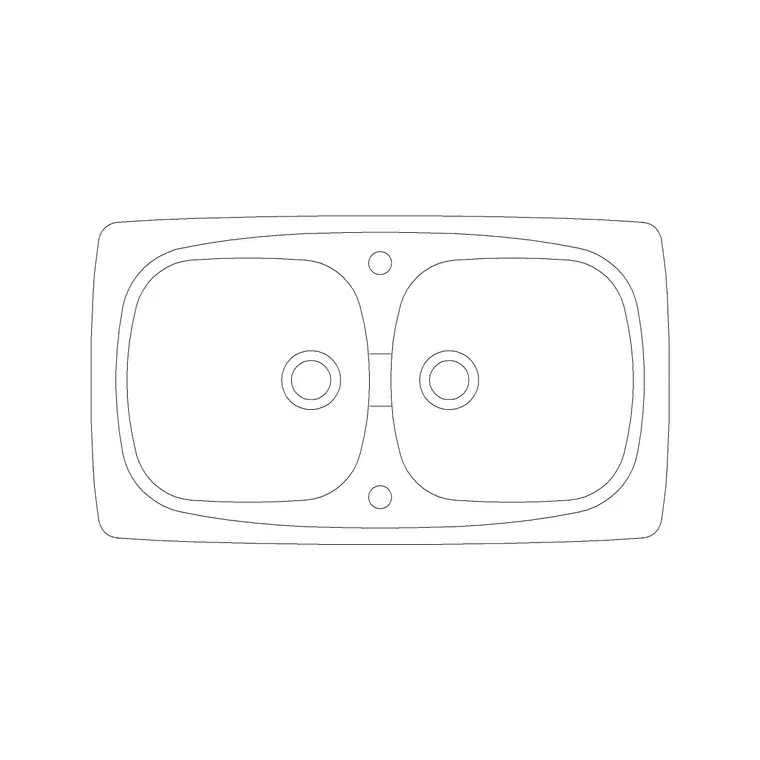
The sink is the wet anchor of every kitchen layout — its position is half-fixed by the window and the drainage, and the work triangle is measured to it — so a tidy set of scaled kitchen-sink blocks earns its place in any library. This collection gathers 15 free kitchen sink CAD blocks in DWG and DXF: single-bowl, double-bowl and 1.5-bowl sinks, inset and under-mount types, deep Belfast and farmhouse sinks, corner sinks for L-runs, and bowls drawn with left-hand, right-hand and double drainers. Everything downloads free for personal and commercial work, with no signup and no watermark.
Kitchen sinks sit on the standard 600 mm cabinet module, and the bowl, the drainer and the tap all need to fall within the worktop run, so drawing from correctly-sized blocks keeps the cabinetry honest. Drop a scaled sink into the run and you can see at once whether it fits the base unit beneath, whether the drainer clears the corner, and where the tap and window land.
Use the pack across residential kitchens, utility rooms, apartment kitchenettes and small commercial prep areas. The plan blocks are the working view here — sinks are laid out and arrayed in plan — and they snap straight onto the 600 mm cabinet grid the rest of the kitchen is built on.
What's in the 15-sink collection
The pack is organised by bowl arrangement and drainer, because that is what governs which base unit a sink needs and how it sits in the run. There are single-bowl sinks (the compact choice and the half-bowl utility option), full double-bowl sinks for serious prep, and 1.5-bowl sinks that split a main bowl and a smaller one. Drainer variants are drawn left-hand, right-hand and double, so you can match the sink to the way the run turns and the worktop falls. The set also includes deep Belfast and farmhouse sinks that front the cabinet face, and a corner sink that turns the dead corner of an L-shaped run into wash-up space.
Every block is drawn full size in plan with the bowl, the drainer grooves, the tap hole and a centreline on sensible layers, so you can dimension the cut-out, freeze the drainer detail, or recolour the outline without disturbing the worktop drawing.
Standard kitchen sink dimensions to design around
Keep these reference figures close. A single-bowl sink sits in a 600 mm base unit, with the bowl itself around 400–500 mm wide. A double-bowl or sink-with-drainer typically spans 800–1000 mm and needs an 800 mm or wider base cabinet. A bowl is usually 150–200 mm deep, while Belfast and farmhouse sinks run deeper. The whole sink unit fits within the standard 600 mm worktop depth, with the tap landing behind the bowl against the upstand or window.
Leave a clear working zone of around 1000 mm in front of the sink so someone can stand and wash comfortably, and keep at least 300–400 mm of worktop landing space on each side of the bowl for setting things down. Because the blocks are drawn full size, you can check the cut-out against the base unit and the landing space against the run the moment the sink lands.
Placing the sink in the work triangle
The sink is one of the three points of the classic kitchen work triangle, alongside the hob and the fridge, so place it early. Its position is usually pinned by the window (people like to wash up looking out) and by the drainage run, so drop the sink block under the window first, snap a centreline through the bowl, and dimension it off the wall and the run end.
With the sink fixed, set the hob and fridge to form a triangle whose three sides ideally total somewhere in the 4–8 m range for an efficient kitchen — the scaled blocks let you measure that directly. Keep the dishwasher within a short pipe run of the sink so they share drainage, and make sure the chosen drainer hand suits the direction the worktop runs. Put the sink on a layer with the appliances so you can produce a clean cabinet plan and a separate services plan from the same drawing.
Matching the sink to the base cabinet and worktop
A kitchen sink only works if the base unit beneath it takes the bowl, so size the cabinet to the sink, not the other way round. A single bowl drops into a 600 mm sink base; a double bowl or a bowl-and-drainer needs an 800 mm or 1000 mm sink base. Belfast and farmhouse sinks need a special belfast base with a cut-down front rail so the apron front shows, which the deep-sink blocks are drawn to suit.
The sink cut-out also has to fit within the worktop run with enough material left front and back for strength, so keep the bowl clear of the front and back edges. Drawing from the scaled block, you can mark the worktop cut-out on its own layer and dimension it for the fabricator. Where the run is short, a corner sink on a corner base unit reclaims the awkward dead space an L-run leaves — drop the corner-sink block straight onto the corner module.
Per-item notes: single, double, 1.5-bowl, Belfast and corner
The single-bowl blocks are the default for small kitchens and utility rooms — they fit a 600 mm base, leave room for landing worktop, and keep the run compact. The double-bowl blocks suit cooks who want a wash bowl and a rinse bowl, but they demand an 800 mm+ base and longer worktop, so check the run takes them. The 1.5-bowl blocks are the middle ground: a big main bowl plus a small half-bowl for the strainer or waste-disposal, in roughly the footprint of a single-and-drainer.
The Belfast and farmhouse blocks front the cabinet face and need their special base, so flag that on the cabinet plan; their depth also affects the upstand and tap height in elevation. The drainer-hand variants matter more than people expect — set the drainer toward the worktop run so wet dishes drain back onto the counter, not into a corner. The corner-sink block is the specialist: use it only where an L-run leaves a corner base that would otherwise be hard to use.
Who uses these kitchen sink blocks
Kitchen designers and interior designers use the sink set to fix the wet point early and build the work triangle around it, switching drainer hands as the run dictates. Architects use the plan blocks to populate residential and apartment kitchens with believable, correctly-sized sinks that sit on the cabinet module. Services designers use them to coordinate the waste, the dishwasher and the tap supply. Students use them on studio kitchens where a sink that actually fits its base unit keeps the layout credible.
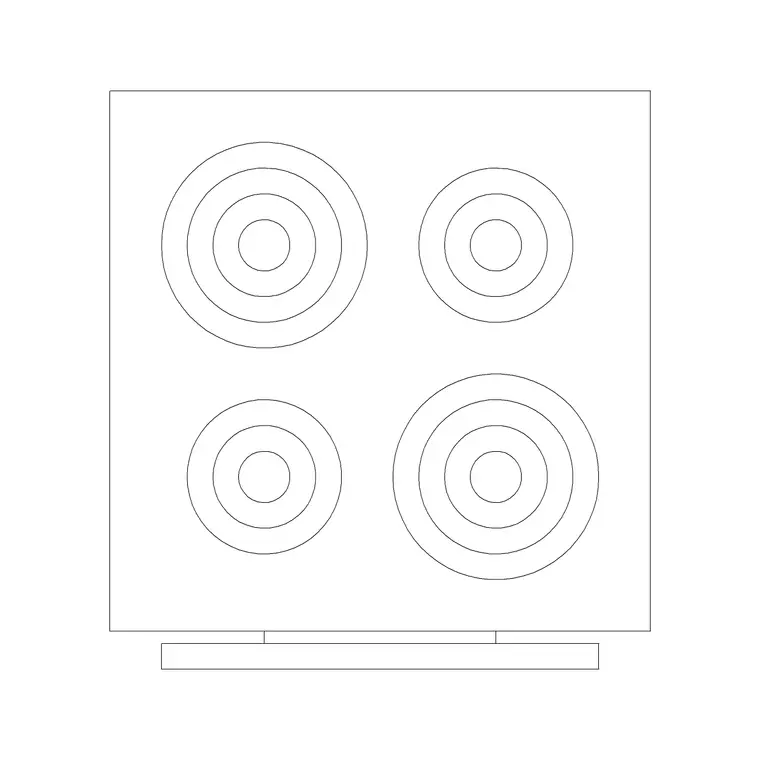
Pair the sink pack with the stove and cooktop blocks and the refrigerator blocks to complete the work triangle, and with the cabinetry and the broader kitchen category to fit out the whole room from one consistent, free library.
Free download
Browse the full library — DWG & DXF, no signup.
Questions
Frequently asked
What base cabinet does a kitchen sink need?+
A single-bowl sink fits a 600 mm sink base; a double bowl or a bowl-with-drainer needs an 800 mm or 1000 mm base. Belfast and farmhouse sinks need a special belfast base with a cut-down front rail for the apron front.
What's the difference between a 1.5-bowl and a double-bowl sink?+
A double-bowl sink has two full bowls for washing and rinsing; a 1.5-bowl sink pairs one full bowl with a smaller half-bowl, fitting roughly the footprint of a single bowl and drainer while adding a spot for the strainer or waste-disposal.
How do I choose a left-hand or right-hand drainer?+
Set the drainer toward the way the worktop runs so washed dishes drain back onto the counter, not into a corner or off the end. The pack includes left-hand, right-hand and double-drainer blocks so you can match the sink to the run.
Are the kitchen sink blocks free for commercial use?+
Yes. Every sink downloads free in DWG and, where available, DXF, with no signup, no watermark and no attribution requirement, and they are cleared for commercial project use.
Related downloads
Blocks for this guide
Popular blocks to download
Related categories
Related guides
How-to guide
How to Insert a Kitchen Sink Block in AutoCAD
How to insert a kitchen sink block in AutoCAD — download the DWG, fix units, run INSERT, snap it to the cabinet run and centre the bowl under the window.
Block landing
Free Kitchen Faucet / Mixer Tap CAD Block — DWG
Download free kitchen faucet and mixer tap CAD blocks in DWG and DXF — monobloc and pull-out mixers in plan and elevation. No signup, commercial OK.
Block landing
Free Kitchen Sink Unit CAD Block — DWG Download
Download free kitchen sink unit CAD blocks in DWG and DXF — single, double and 1.5-bowl sinks with drainers in plan and section. AutoCAD 2004+, no signup.