Wooden vs upholstered bar stool CAD blocks for a cafe layout
Choosing between a wooden bar stool block and an upholstered one for a cafe counter, and what actually changes in the drawing and the spec.
Saumyajit MaityUpdated 29 March 20265 min read
Laying out a cafe counter for the first time
The first time I drafted a cafe fit-out, I remember spending way more time picking the stool than I expected to, because it turned out the stool wasn't just a seating decision, it was a material decision, an acoustic decision, and a maintenance decision all wrapped into one small piece of furniture along a busy counter. Wooden bar stools and upholstered bar stools solve genuinely different problems, and the CAD block you use to represent them, while geometrically similar in footprint, is standing in for two very different real world products with different implications for the space.
If you're laying out a cafe counter right now and trying to decide which way to go, here's how I actually think through it.
What a wooden bar stool block is doing for you
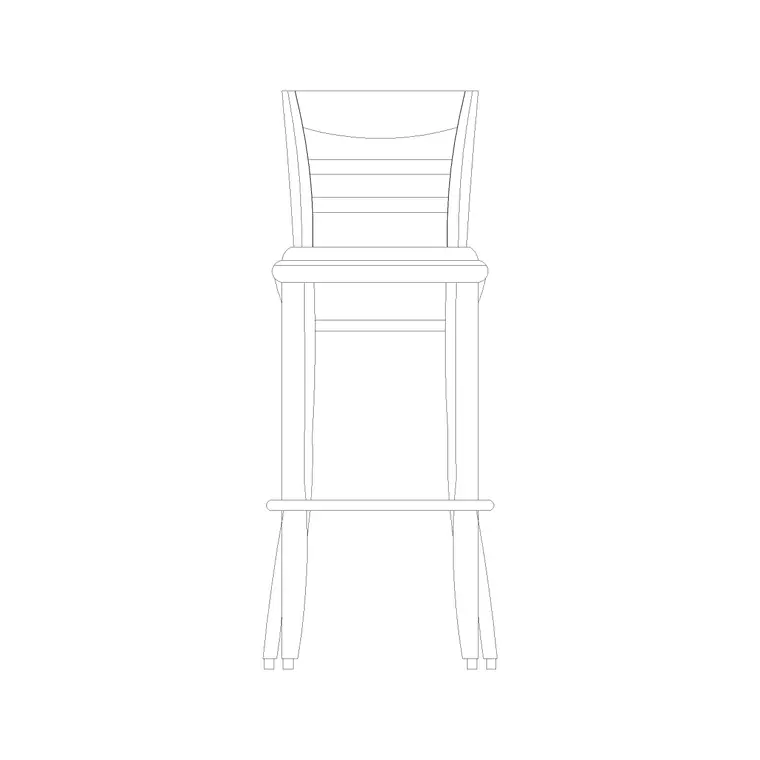
The wooden bar stool on the CADBlockDWG furniture library is drawn in elevation, showing the typical solid seat pan, turned or straight legs, and often a simple footrest bar, and it's a genuinely useful reference for cafe work because wood is still the default material for high traffic counter seating. It's durable, it wipes clean fast, it doesn't stain the way fabric does when someone spills a flat white, and it's usually the cheaper option to source in bulk when you're furnishing a dozen or more seats along a long counter.
Visually, wood also does a lot of work in a cafe's design language, it reads warm, casual, and low maintenance, which fits the fast in-and-out rhythm of most cafe seating far better than something that looks like it belongs in a formal dining room.
What changes when you go upholstered
Upholstered bar stools trade some of that low maintenance practicality for comfort and a more considered, sit-down aesthetic, padded seat, sometimes a padded back, often on a metal or wood frame. In a cafe context, upholstered stools tend to show up at a specific type of counter, the ones meant for people who are staying with a laptop for an hour rather than grabbing a coffee to go, so the seating decision is really tracking the intended dwell time of that section of the space.
The practical tradeoff is cleaning and durability. Fabric upholstery in a food and drink environment needs to be a performance fabric rated for commercial wear, and even then it's more maintenance than wood over a five year lifespan, something worth flagging to a client who's drawn to the look without thinking through the daily reality of a cafe floor.
How the CAD blocks actually differ in practice
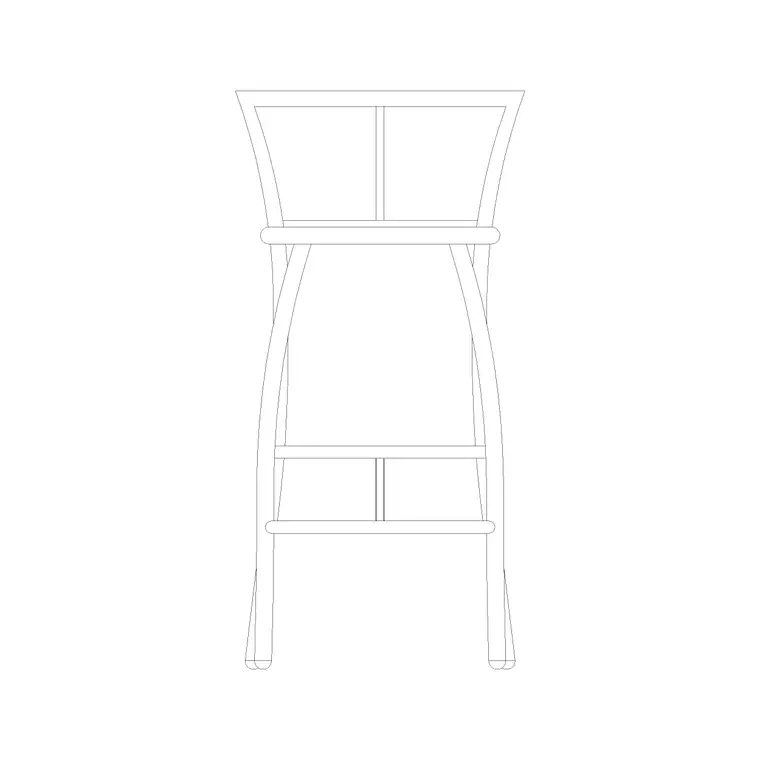
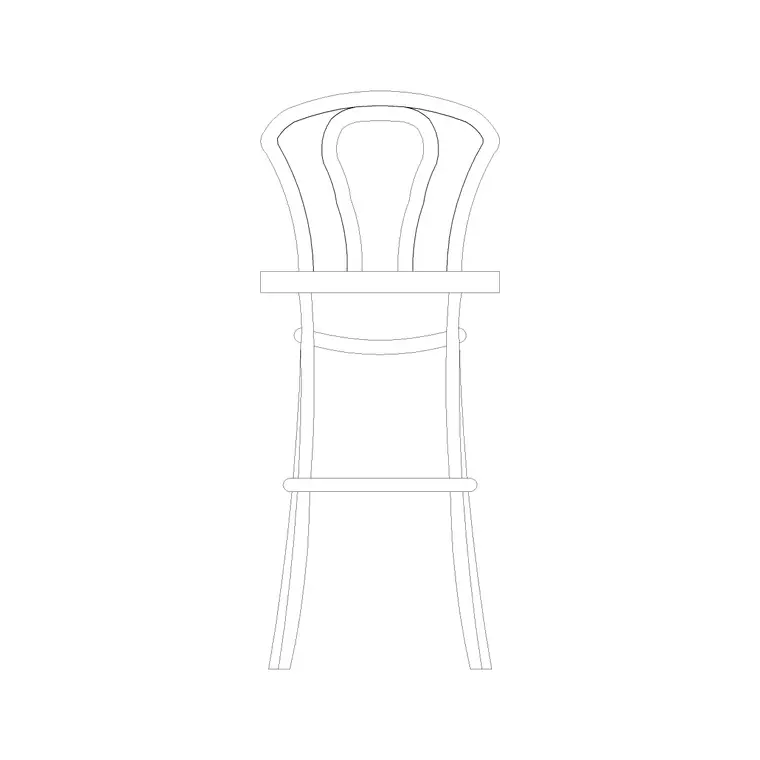
Geometrically, the plan view footprint for both stool types is close enough that you can use either as a placeholder early in a layout, typically in the 350 to 450 millimetre range for the seat, but the elevation is where the real information lives. The wooden stool elevation shows the leg structure and slat or turned details that matter for a rendering meant to actually sell the design to a client, while an upholstered stool elevation needs to communicate seat padding thickness and back height if it has one, since those details drive both comfort and how the piece reads against the counter height.
When I'm building out a cafe furniture schedule, I keep both types tagged clearly by material in the block name and in any schedule table, because a wood versus upholstered call late in a project, after ordering has started, is a genuinely expensive mistake to walk back.
Matching the material to the zone
In most cafe layouts I've drawn, the split follows the function of the zone almost exactly, wood along the quick service counter near the register or pickup area, where turnover is fast and spills are common, and upholstered in a lounge or window seating zone meant for longer stays. That split isn't a hard rule, plenty of cafes go all wood for a consistent look, but if a client wants to differentiate zones without changing the floor finish or the wall colour, the seating material is one of the cheapest and most effective ways to do it.
It also affects acoustics more than people expect, a room full of hard wooden stools and hard surfaces gets loud fast, and dropping in even a run of upholstered seating along one wall noticeably softens the sound in a space that otherwise has nothing but tile, glass, and stainless steel to bounce noise around.
Bringing the blocks into your drawing
Insert the wooden bar stool block onto your plan for footprint and spacing first, since that's what actually determines your counter layout and seat count, and reserve the material decision, wood or upholstered, for the elevation and finish schedule stage once you know how many seats fit and where the zones fall. Keep a consistent scale check against the counter height numbers, generally 1050 to 1100 millimetres for bar height seating, so whichever stool you're specifying actually reads correctly against the surface it's paired with.
At the end of the day, this decision is less about which block is "better" and more about matching material to how long someone's actually going to sit there, and once you frame it that way the choice tends to make itself for each zone of the cafe.
Ordering in volume without a mismatch turning up on site
One thing that catches people out on a cafe fit-out specifically is ordering a dozen or more of the same stool and discovering a finish or fabric batch inconsistency once they're all lined up along the counter, which reads far more obviously in a long run of identical seating than it would with a single chair in a living room. Wood grain and stain colour can vary batch to batch more than people expect, and fabric dye lots on upholstered runs can shift slightly too, so for any order past a handful of units, it's worth asking the supplier directly about batch consistency and, where possible, ordering everything in one production run rather than topping up later from a different batch.
This is a sourcing detail rather than a drafting one, but it's exactly the kind of thing worth flagging on the furniture schedule alongside the CAD block reference, a small note like "order as single batch, confirm finish match" next to the stool callout saves a genuinely awkward site visit later when half the counter's stools don't quite match the other half.
Further reading
Questions
Frequently asked
Is a wooden or upholstered bar stool better for a busy cafe counter?+
Wood generally wins for high turnover, spill prone zones like a quick service counter because it wipes clean and holds up to daily wear. Upholstered stools suit lounge or window seating meant for longer stays.
Does the footprint differ between wooden and upholstered bar stool blocks?+
Not significantly. Both typically fall in the 350 to 450 millimetre seat footprint range, so the material choice is mostly an elevation and finish schedule decision rather than a plan layout one.
Can I mix wooden and upholstered stools in the same cafe?+
Yes, and it's a common and effective way to visually differentiate zones, like a quick service counter versus a lounge area, without changing flooring or wall finishes.
Free downloads from this article
Free CAD block library
Download the blocks from this article — free, no signup