Wash basin CAD blocks by shape: round, oval, square
Round, oval and square wash basin CAD blocks compared, with practical guidance on picking the right shape for the counter and the user.
Sumana KumarUpdated 5 July 20265 min read
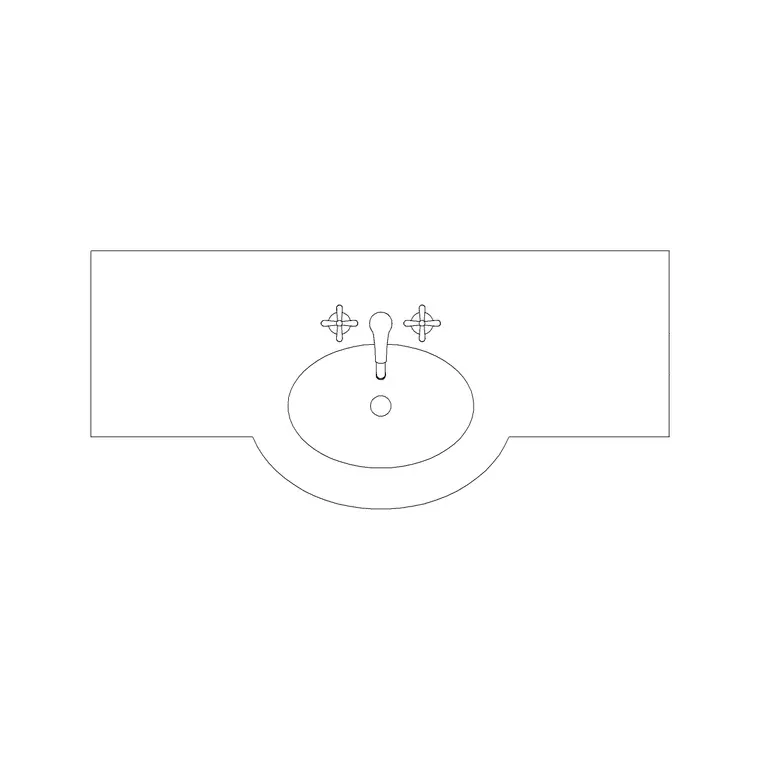
Shape is a functional choice before it's an aesthetic one
For instance, a round basin and a square basin at the same nominal diameter don't actually use the counter the same way, and I think that gets lost when people are picking a wash basin shape purely off how it looks in a render. The shape changes how close you can set the basin to a side wall, how it reads next to a rectangular mirror or a curved one, and how much usable counter is left on either side for actually setting things down. Worth walking through round, oval and square on their own terms before defaulting to whichever one's the most common download, since the wrong shape in the wrong counter is one of those mistakes that only becomes obvious once the basin's already been ordered and the cutout's already been cut.
Round basins and where they genuinely fit best
A round wash basin block is compact and forgiving, typically drawn somewhere in the 400mm to 450mm diameter range for a standard countertop unit, and because there's no long axis to align with the counter edge, it's the shape I reach for in a tight powder room where every centimeter of counter length matters. The tradeoff is that a round basin can look a little lost on a long, wide counter run, it doesn't anchor the composition the way a rectangular or oval basin does, so it works best on its own or paired with a narrower counter. I've specified round basins more than once specifically to buy back counter length for a towel hook or a small shelf on a wall that had no room to spare.
Oval basins and the middle ground they occupy
Oval wash basin blocks are probably the most common shape you'll find across the catalog, and for good reason, they typically run somewhere around 500mm to 600mm along the long axis and 350mm to 450mm across, which gives a reasonable washing area without demanding a huge counter footprint. The soft edge also plays nicely with both curved and rectangular mirror shapes above it, which matters more than people expect once the elevation is drawn, since a hard-edged square basin under a soft oval mirror can look like two different design languages fighting on the same wall.
Oval basins are also fairly forgiving if you need to nudge the counter cutout slightly to clear a stud or a plumbing chase behind the wall, since the long axis gives you a little more room to shift the faucet hole without it looking obviously off-center, something a round basin's symmetrical outline doesn't offer as easily.
Square and rectangular basins for a cleaner counter line
A square or rectangular basin block reads as more architectural, and it's the shape that lines up most naturally with a straight-edged vanity counter and a rectangular mirror, since all the edges are parallel rather than fighting the counter's straight lines. These typically run in a similar footprint range to the oval, somewhere around 450mm to 550mm on the long side, but the visual effect is noticeably different, a square basin makes the whole vanity composition feel tighter and more geometric.
The catch here is that square basins with sharp corners can feel a little unforgiving in a small, high-traffic bathroom, since there's less forgiveness at the edges compared to a rounded shape, so I'd think twice about specifying one in a kids' bathroom or anywhere durability against bumps and knocks matters more than the design statement.
How the basin shape interacts with the counter and faucet block
None of these shapes exist in isolation on the drawing, the basin block sits inside a counter block like vanity-single-basin-1 or vanity-double-basin-1, and the faucet symbol has to clear the basin's rim without crowding the wall behind it. When I'm swapping a basin shape into an existing vanity block, I check the basin's plan outline against the counter's cutout dimension first, since an oval basin swapped in for a round one at the same nominal width can end up either too close to the back wall or too close to the front edge if the long axis isn't oriented the way the counter expects.
It's worth actually measuring the counter's cutout template, if the block includes one, against the replacement basin's rim dimension before finalizing a swap, since a basin rim that's even 20mm larger than the original cutout won't drop in cleanly, and one that's noticeably smaller leaves a visible gap around the rim that has to be filled or re-templated, neither of which is a five minute fix once the counter's already fabricated.
Mounting style adds another layer on top of shape
Shape is only one axis of the decision, mounting style is the other, and it changes the plan and the counter cutout regardless of whether you've picked round, oval or square. A countertop or vessel style basin sits proud of the counter surface, which reads in plan as a basin outline sitting entirely within the counter footprint rather than cut into it, and it typically needs a slightly taller faucet to clear the raised rim.
A semi-recessed basin sits half in, half out of the counter, useful in a shallow counter depth where a fully countertop basin would eat too much usable surface. An undermount basin sits below the counter edge with no rim interrupting the surface, the cleanest to wipe down but it needs a counter material that can handle an exposed cut edge, which rules it out for some laminate counters. None of the three change the basin's round, oval or square shape decision, but they do change the counter cutout dimension you're working from, so confirm mounting style before finalizing the counter block's cutout, not after.
A practical way to decide without overthinking it
What I actually do is match basin shape to two things, the counter shape it's sitting in and the mirror or elevation composition above it, and let the room's overall style follow from that rather than lead it. Round for tight powder rooms, oval as the safe default that plays well with almost any mirror, square or rectangular when the whole vanity wall is meant to read clean and architectural. None of these are strict rules, right, they're starting points, and the fastest way to confirm one works is to drop the actual block into your actual counter cutout at scale and look at it before committing.
Further reading
Questions
Frequently asked
What's the most common wash basin shape in a bathroom plan?+
Oval basins tend to be the most versatile default, typically around 500mm to 600mm on the long axis, since they pair well with both rectangular and curved mirror shapes above them.
Is a round or square basin better for a small powder room?+
Round basins usually work better in a tight counter run since there's no long axis competing for space against the side walls. Square basins can feel unforgiving in a very small, high-traffic room.
Do basin shape and mirror shape need to match?+
Not strictly, but they should feel intentional together. A soft oval basin under a hard rectangular mirror can read as two different design languages, so it's worth checking the pairing in elevation before finalizing either block.
Free downloads from this article
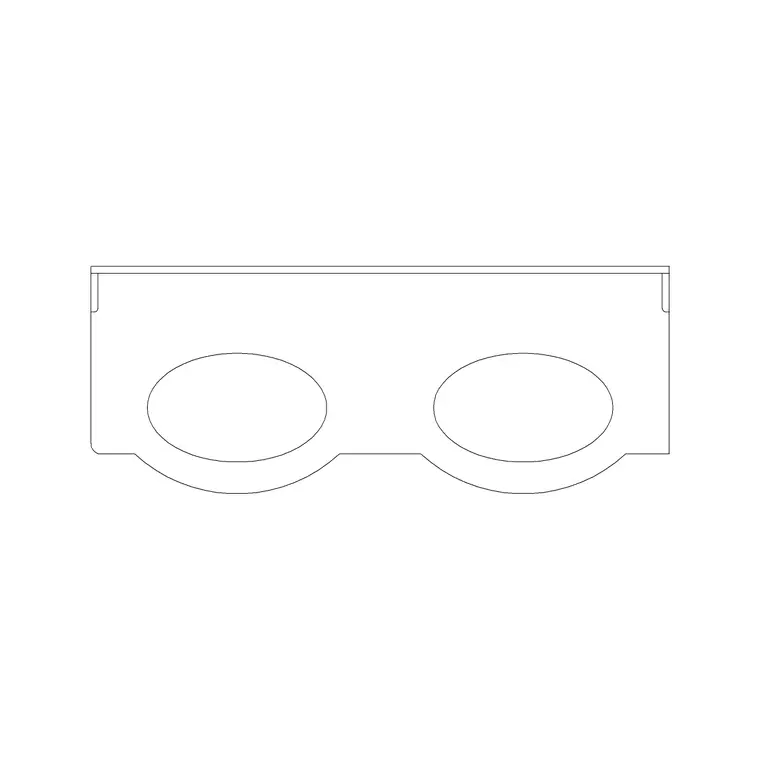
Free CAD block library
Download the blocks from this article — free, no signup