Why a downloaded CAD block explodes into hundreds of objects
Nested blocks, hatches and individual line segments all add up fast. Here's why one EXPLODE on a downloaded block can leave you with a huge object count.
Saumyajit MaityUpdated 17 July 20265 min read
One block is rarely just one shape
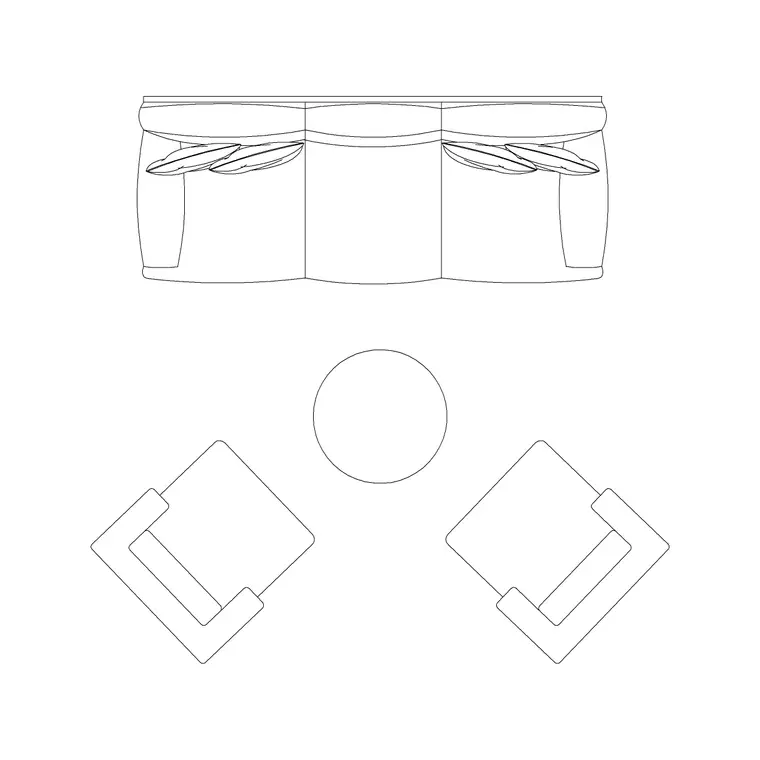
This one catches people off guard constantly, you insert what looks like a single simple object, say a sofa in plan view, run EXPLODE on it because you want to tweak one cushion line, and suddenly your selection count shows three hundred and forty objects instead of the handful you were expecting. It feels like something broke. Nothing broke, that's just what was actually inside the block the whole time, you just couldn't see the individual pieces while it was still a single block reference.
A well-drawn furniture block in plan view is typically built from dozens of individual line and arc segments to render cushion folds, stitching lines, armrest curves and shading, plus a hatch pattern or two for shadow or fill, plus sometimes a layer of dimension or text objects for labeling. All of that gets bundled invisibly under one block name. Explode it once and every single one of those underlying entities becomes its own separate, individually selectable object in your drawing.
Nested blocks multiply the count fast
The bigger jump happens when a block contains other blocks inside it, which is extremely common in furniture sets and site symbol libraries. A sofa set block, for instance, might actually be built from three or four separate sub-blocks, one for each cushion or seating module, nested inside a parent block so the whole set moves and scales together. Explode the parent once, and you don't get raw geometry, you get the sub-blocks exposed as their own block references. Explode again, and now those sub-blocks blow apart into their raw line and hatch entities too.
This is why EXPLODE sometimes needs to be run two or three times before a nested block turns into flat, editable geometry, and why your object count can jump dramatically between each pass. If you only explode once and the drawing still shows a block icon when you click on a piece, that's your sign there's another layer of nesting underneath.
Hatches are usually the silent multiplier
Hatch fills are the other big contributor people don't expect. A single hatch pattern covering a chair seat or a paving area can be made of hundreds of tiny line segments internally, especially with dense patterns like brick, gravel, or crosshatch fills used to represent materials in section or plan. When you explode a block containing a hatch, that hatch often converts into its full underlying line network rather than staying a single hatch object, which alone can account for the bulk of a surprising object count jump.
If your goal was just to move or edit one line and you didn't need the hatch touched at all, this is usually the point where people realize exploding wasn't the right move in the first place, see the next section.
Do you actually need to explode it?
Before reaching for EXPLODE, it's worth asking what you're actually trying to do, because in my experience most of the reasons people explode a downloaded block don't actually require it. If you want to move, copy, scale or rotate the whole thing, you don't need to explode anything, blocks handle all of that natively as a single unit and it's faster and cleaner to leave them intact. If you want to edit one specific piece of geometry inside the block without affecting other instances of it elsewhere in the drawing, use REFEDIT or double-click to open the Block Editor instead, that lets you edit the internal geometry in place while keeping it as a block definition everywhere else it's used.
Explode is really only the right tool when you specifically want that one instance to stop being a block and become raw geometry permanently, for example if you're customizing a single chair in a row of otherwise identical ones and don't want the edit to propagate to the rest.
Cleaning up after an accidental over-explode
If you've already exploded something and now have hundreds of loose objects you didn't want, Ctrl+Z immediately after is your fastest way back, AutoCAD treats one EXPLODE as one undoable step even though it affects many entities. If you've done other work since and can't undo cleanly, select the resulting mess with a window selection and use QSELECT or the Properties palette to filter by object type or layer, which makes it much easier to isolate and delete the pieces you don't want, like a stray hatch, without hand-picking through hundreds of tiny lines one at a time.
Why this matters more than it seems
The object count jump isn't just a curiosity, it has real consequences for file size and performance, which is the other reason I generally push people toward leaving blocks intact rather than exploding by default. A drawing with two hundred sofa blocks stays light because every instance references one shared definition, but explode all two hundred and you've just created two hundred independent copies of every underlying line and hatch, with no shared definition left to keep the file compact. That's directly connected to the performance issues covered in our piece on why drawings slow down after inserting a lot of downloaded blocks, over-exploding is one of the more common causes.
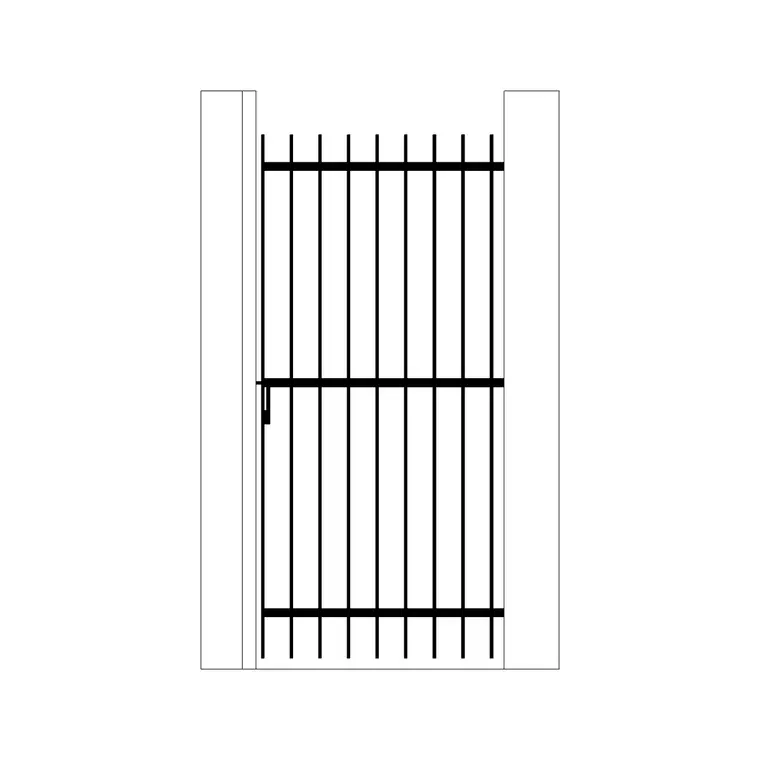
So the takeaway I'd leave you with, for a paving block used across a driveway pattern or a gate repeated along a fence line, is to treat EXPLODE as a deliberate, occasional tool for one specific instance you need to hand-edit, not a habit you reach for every time you insert something new. The object count itself is genuinely a useful diagnostic too, if you're curious how detailed a block actually is before committing to editing it, selecting it and checking the object count in the status bar or the Properties palette gives you a sense of its internal complexity without exploding anything at all.
There's also a more controlled alternative to plain EXPLODE worth knowing, the XPLODE command, which lets you explode a selection while choosing exactly how the resulting objects inherit color, layer, and linetype, rather than accepting whatever AutoCAD defaults to automatically. Type XPLODE, select the block, and you get prompts asking whether the exploded pieces should keep the block's overall properties, inherit from layer 0, or take on the properties of the current layer, which is genuinely useful when a block was authored with several different hardcoded colors internally and you want the exploded result to come out uniform rather than a scattered mix of whatever colors happened to be buried inside the original definition. It's a small step up in control over the plain command for the same reason XPLODE exists in the first place, giving you a say in the outcome instead of just accepting whatever the block happened to be built with.
Further reading
Questions
Frequently asked
Why does exploding one block create hundreds of objects?+
Most blocks are built from many individual lines, arcs and hatch fills bundled under one name, plus sometimes nested sub-blocks. Exploding just exposes everything that was already there, it doesn't create new geometry.
Do I need to explode a block just to move or resize it?+
No. Moving, copying, scaling and rotating all work directly on the block reference. Explode is only necessary if you need to permanently edit the raw geometry of one specific instance.
Why did explode only partially break the block apart?+
The block likely contains nested sub-blocks. Run EXPLODE again on the exposed sub-blocks to flatten them fully into raw line and hatch entities.
Free downloads from this article


Free CAD block library
Download the blocks from this article — free, no signup