How to purge and audit a downloaded DWG block
Run AUDIT and PURGE on every block you download before you trust it. A two-minute hygiene routine that strips junk, fixes errors and keeps your drawing clean.
Saumyajit MaityUpdated 29 April 20264 min read
Why a downloaded block needs cleaning at all
Every DWG you download is a complete drawing file, not just the one chair or door you wanted. It can carry leftover layers, unused linetypes, dimension styles, registered applications, and sometimes the remains of objects that were deleted before the file was saved. None of that shows up on screen, but it rides along into your drawing the moment you insert or open the file, quietly bloating it and occasionally introducing errors.
This is true of free and paid blocks alike — it has nothing to do with where the file came from and everything to do with how DWG works. The fix is two built-in AutoCAD commands that take about two minutes: AUDIT to find and repair internal errors, and PURGE to delete the unused baggage. Run them on anything unfamiliar and you stop a single messy file from polluting an otherwise tidy drawing. Treat every download as untrusted until it has passed both, and your drawing standard stays yours.
Get the block, then open it on its own first
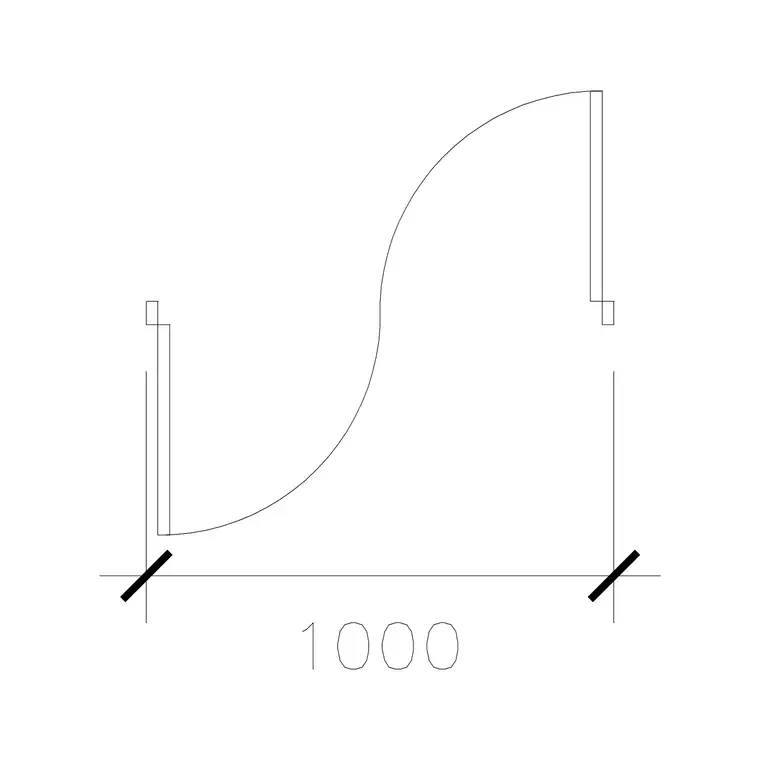
Download the block you need — say the Sofa Set Plan from the Furniture category, or a 1000mm door from Doors — and note where it saved, usually your Downloads folder. Every block here ships as DWG with no signup, so you have the raw file in hand immediately.
The cleanest habit is to open that downloaded DWG on its own, clean it, and only then insert it into your working drawing. That way you scrub the file in isolation rather than dragging its junk into your live project and cleaning up afterwards. Open it with FILE > Open or by dragging it onto an empty AutoCAD session, and you are ready to audit.
Run AUDIT to find and fix errors
With the downloaded file open, type AUDIT and press Enter. AutoCAD asks 'Fix any errors detected?' — answer Y (Yes) and Enter. It then walks the database, reports what it found, and repairs anything it can. On a clean block you will see a short report with zero errors; on a file that was saved from a crashing session or a third-party program, AUDIT often quietly fixes a handful of issues you would otherwise never have known about.
AUDIT only works on the drawing that is currently open, which is another reason to clean the block in isolation. If a file is too damaged for AUDIT to open at all, the related RECOVER command opens and repairs it in one step — reach for that if the DWG refuses to load. For the vast majority of downloads, a single AUDIT-with-fix is all the error checking you need.
Run PURGE to strip the unused baggage
Now type PURGE (or PU) and press Enter to open the Purge dialog. Tick 'Purge nested items' so it cleans inside block definitions too, and click 'Purge All'. AutoCAD removes every unused layer, block, linetype, text style, dimension style and more. Run it twice — purging one set of unused items sometimes frees up others that can then be purged on a second pass.
The dialog has a tree you can expand to see exactly what is about to go, which is reassuring the first few times: you can confirm it is only removing things nothing in the drawing actually uses, never live geometry. Leave 'Confirm each item to be purged' unticked once you trust it, so 'Purge All' runs in one click.
For a deeper clean, the -PURGE command line variant exposes options the dialog hides, including 'Regapps' (orphaned registered-application IDs left behind by other software), zero-length geometry, and empty text objects. Strip those out too. On a block exported from a non-Autodesk program, the Regapps list is often surprisingly long. What you are left with is a lean file that contains the block you actually want and almost nothing else — which is exactly what you want to keep in your library or insert into a drawing.
Make it a habit and lock the result in
The whole routine — open, AUDIT with fix, PURGE All twice — takes about two minutes and becomes muscle memory fast. Do it on every block you download before you rely on it, and you will never have to wonder whether some imported file is the reason a drawing has mysteriously ballooned or started throwing errors.
Two system variables make the habit even more reliable. AUDITCTL, when turned on, writes an .adt log file each time you run AUDIT, so you have a record of what was repaired — useful on files you intend to reuse widely. And keeping STANDARDSVIOLATION-style checks aside, the simplest discipline is just consistency: same two commands, every download, no exceptions. You can even record the sequence as a short script or action macro so a single command runs AUDIT and PURGE back to back.
Once the block is clean, save it back over the downloaded file (or into your library folder) so the cleaned version is the one you keep. If you build your own block library from downloads, this is the gatekeeping step: nothing enters the library until it has passed AUDIT and PURGE. Pair that with checking the block sits on sensible layers and measures at real-world scale, and you have a vetting routine that protects every drawing you produce from the small contaminants that otherwise creep in one download at a time.
Questions
Frequently asked
What does PURGE remove from a downloaded DWG?+
Unused layers, block definitions, linetypes, text and dimension styles, and more. Tick 'Purge nested items' and run it twice to catch items freed up by the first pass. Use -PURGE to also strip orphaned Regapps and zero-length geometry.
Should I run AUDIT or PURGE first?+
Run AUDIT first to find and repair internal errors, then PURGE to delete the unused baggage. If a file is too damaged for AUDIT to open it, use RECOVER instead, which opens and repairs in one step.
Do I need to audit free CAD blocks?+
It is good practice to audit any block you download, free or paid, because every DWG can carry leftover layers and styles. A two-minute AUDIT and PURGE keeps a single messy file from bloating or corrupting your drawing.
Free downloads from this article
Free CAD block library
Download the blocks from this article — free, no signup