Vanity basin CAD blocks with curved vs rectangular mirror
How pairing a vanity basin CAD block with a curved versus a rectangular mirror changes the elevation, and how to choose between them.
Sumana Kumar5 min read
The pairing that only shows up once you draw the elevation
It's easy to place a vanity basin block in plan and never think about the mirror above it until someone asks for the interior elevation, and that's usually the wrong order to work in, because the mirror shape has to relate to the basin's plan shape and the counter width, and getting that pairing right in elevation is where a vanity wall actually reads as designed rather than assembled from whatever blocks were on hand.
It's a small thing to get right and an obvious thing to get wrong, and because the mirror is usually the largest reflective surface in the room, any mismatch between it and the basin below tends to be the first thing a client notices when they walk into the finished space, even if they can't immediately articulate why the wall feels slightly off. It's a quick check once you know to look for it, but it's easy to skip on a fast moving project where the elevation gets drawn as an afterthought.
Curved mirrors and the basin shapes they suit
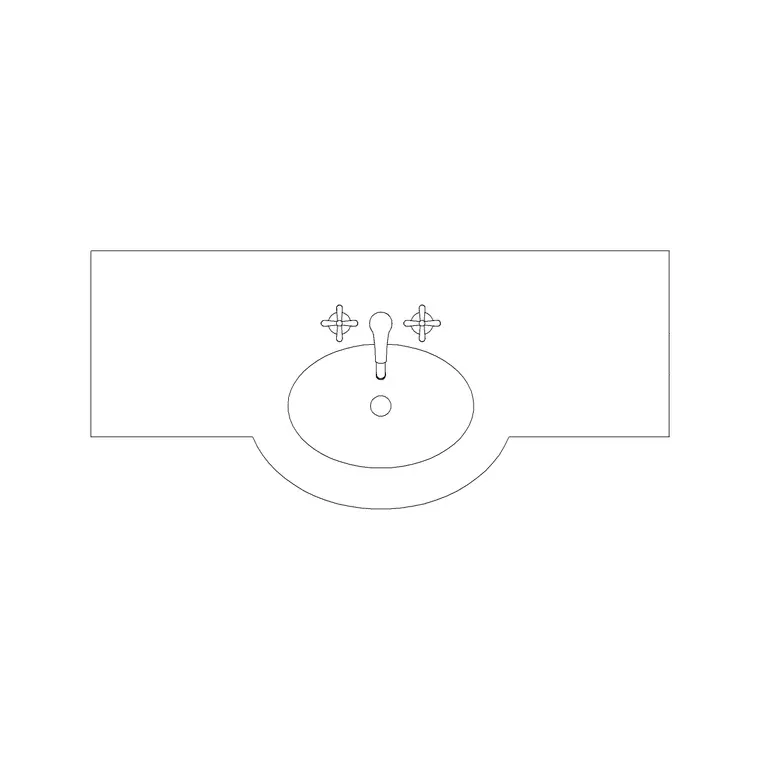
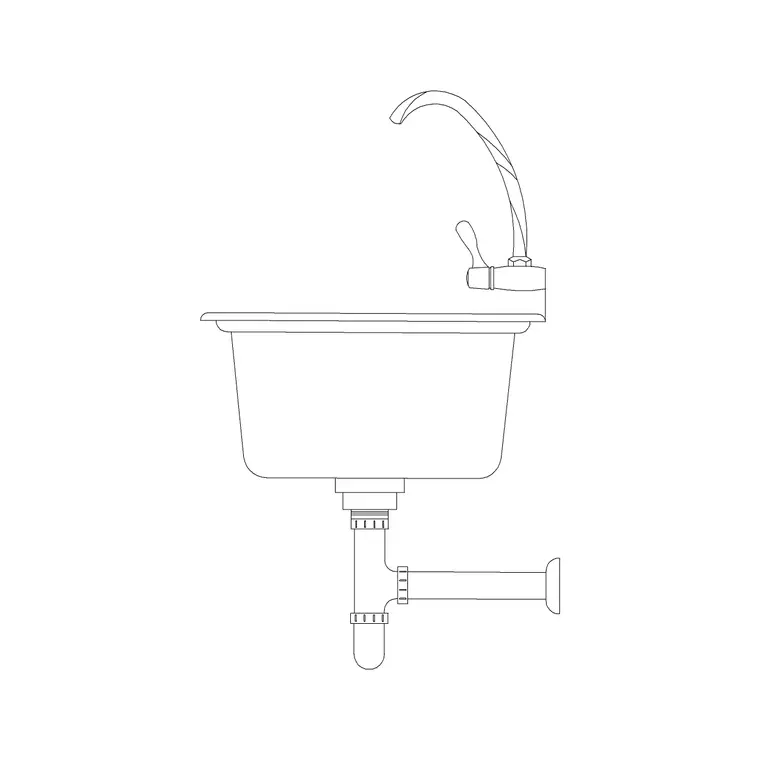
A curved or oval mirror mounted above a vanity basin tends to echo the basin's own soft edge, which is why it pairs naturally with an oval basin sitting in a block like vanity-single-basin-1, the two curves reinforce each other in the elevation rather than competing. Curved mirrors also read a little smaller visually than a rectangular one of similar area, since there's no hard corner drawing the eye to the full extent of the shape, worth knowing if the client wants the mirror to feel like a focal point rather than a quiet background element.
Rectangular mirrors and where they carry more weight
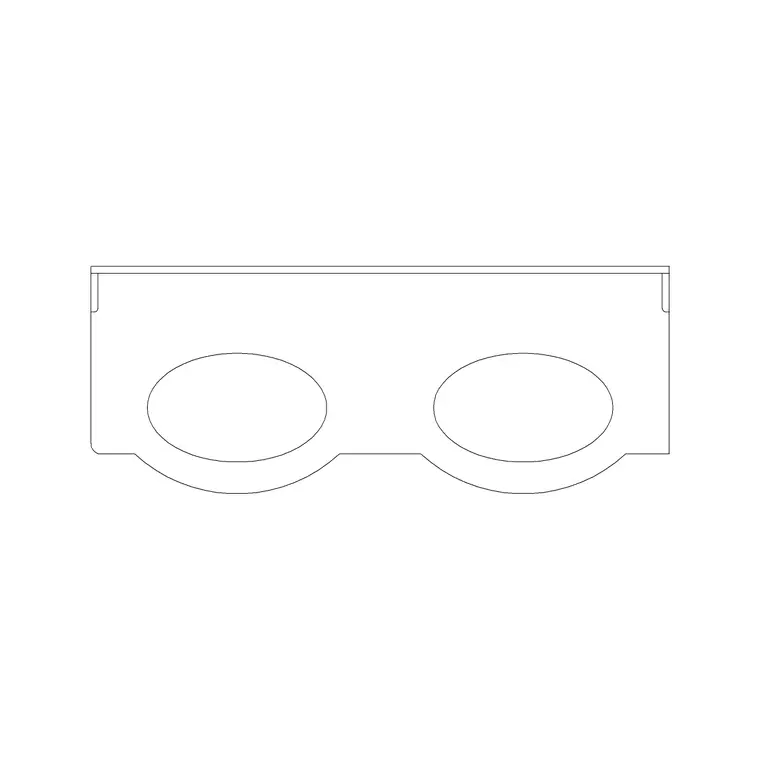
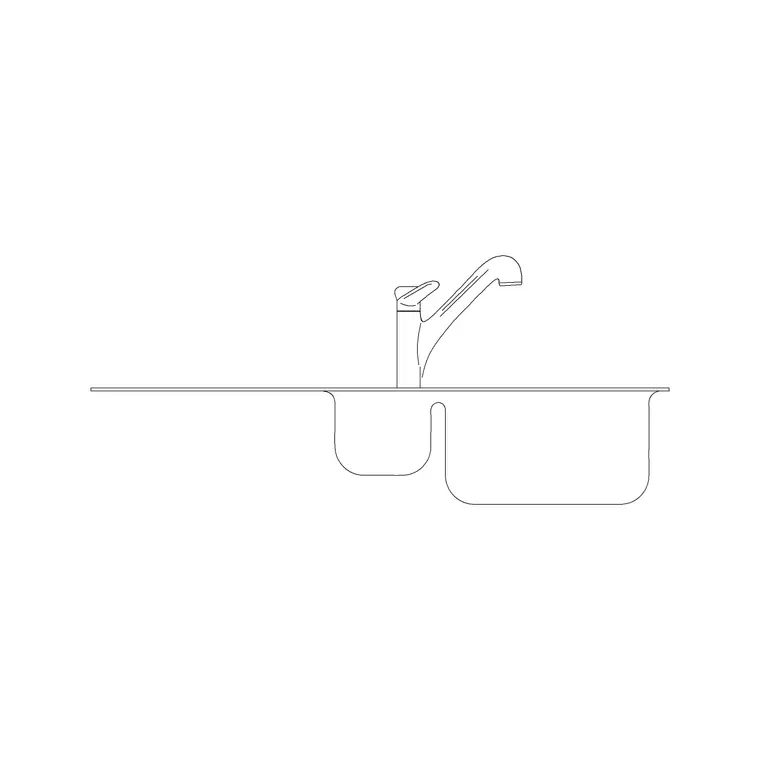
A rectangular mirror is the safer default over a double vanity like vanity-double-basin-1, mostly because it can span the full width of a double counter in a way a single curved mirror struggles to do without looking like an odd shape stretched too far. Two separate rectangular mirrors, one over each basin, or a single wide rectangular mirror spanning both, both read cleanly in elevation, while trying to run one oval mirror across two basins usually leaves an awkward gap or an oversized curve that doesn't relate to either basin centerline.
A medicine cabinet complicates this further if it's meant to double as the mirror, since a recessed medicine cabinet is usually a fixed rectangular shape by necessity, the door has to be rectangular to open cleanly, which effectively rules out a genuinely curved mirror wherever storage behind the glass is also required, worth raising early if the client wants both a curved aesthetic and hidden storage in the same fixture.
Sizing the mirror against the basin and counter width
A rough guide I use, and it's a guide rather than a rule, is keeping the mirror width somewhere close to the basin's own width or a little narrower, rather than letting it sprawl to the full counter width on a single vanity, since a mirror that's noticeably wider than the basin below it can look disconnected from the fixture it's meant to relate to. On a double vanity, if you're using two separate mirrors, center each one over its own basin centerline the same way you'd center a faucet symbol, not over the counter's overall midpoint.
On a double vanity specifically, I'd also think about whether the two mirrors should be identical or whether a single continuous mirror reads better given the room's proportions, a long narrow bathroom often suits one continuous mirror better since two separate mirrors with a gap between them can visually chop up an already tight wall, while a wider room can carry two separate mirrors comfortably without feeling fragmented.
Drawing the elevation so the pairing actually reads
When you build out the elevation, bring in the basin's height reference alongside the mirror, since the vertical relationship, how much wall shows between the counter and the bottom of the mirror, matters as much as the shape pairing does. A mirror hung too high above the basin reads as disconnected regardless of how well the shapes match in plan, so treat the elevation as its own composition to check, not just a formality after the plan's already settled.
A reasonable gap to check for is somewhere in the range of 150mm to 250mm between the basin's rim and the bottom edge of the mirror, enough to accommodate a soap dispenser or a small object left on the counter without it appearing to touch the mirror in the elevation, though this varies with counter depth and splash guard height, so treat it as a starting point to verify against the actual composition rather than a fixed rule.
My actual rule of thumb when specifying the pair together
At the end of the day, I default to matching curve for curve and straight edge for straight edge unless there's a specific design reason to mix them, oval basin with a curved or oval mirror, rectangular basin with a rectangular mirror, and I only break that rule deliberately, say a rectangular mirror over an oval basin to give a more architectural, less soft feel to an otherwise curved vanity. The mismatch can work, but it should be a choice made looking at the actual elevation, not a default that happened because two unrelated blocks got pulled from different folders.
Lighting placement changes how the pairing actually reads
Lighting placement is the piece that often gets decided after both the basin and mirror shape, and it shouldn't be, since sconces or a backlit mirror change how the pairing actually reads once the room's finished, not just how it looks in a flat elevation. A pair of wall sconces flanking a rectangular mirror reads as a classic, symmetrical composition, and it generally wants the mirror to be tall enough that the sconces sit comfortably above the basin's own splash zone rather than crowding it.
A curved or oval mirror is more often paired with a single light source above it or an integrated backlit edge, since two symmetrical sconces can fight visually with a shape that doesn't have the same hard vertical edges to anchor them against. If the project includes a mirror with integrated lighting, check its power and any mounting bracket requirement against the wall composition early, since that's a rough-in detail for the electrician in the same way a wall mounted faucet is a rough-in detail for the plumber, and it belongs on the elevation just as clearly.
Further reading
Questions
Frequently asked
Should a mirror always match the basin's shape?+
Not strictly, but matching curve for curve and straight edge for straight edge is the safer default. Mixing shapes deliberately can work well, but it's worth checking in the actual elevation drawing rather than assuming it'll look fine.
Can I use one curved mirror over a double vanity?+
It's harder to make work cleanly. A single wide rectangular mirror, or two separate mirrors centered over each basin's own centerline, usually reads better on a double vanity block like vanity-double-basin-1 than one oval mirror stretched across both.
How wide should a vanity mirror be relative to the basin?+
A reasonable starting point is keeping the mirror close to the basin's own width or a little narrower, rather than the full counter width, so it visually relates to the fixture below it rather than feeling disconnected.
Free downloads from this article
Free CAD block library
Download the blocks from this article — free, no signup