Motorcycle vs bicycle CAD blocks for mixed-mobility parking
Motorcycle and bicycle blocks need different bay dimensions and different placement logic. Here's how to draw both correctly on one plan.
Sumana KumarUpdated 6 May 20266 min read
Two-wheeled parking is easy to get lazy about
It's tempting to treat motorcycle and bicycle parking as an afterthought on a mixed-mobility site plan, a small block of hatching in a corner with no real vehicle drawn at all, but that's exactly the part of the drawing that gets scrutinised hardest on schemes chasing reduced car parking ratios. Drawing both vehicle types accurately, at the right scale and in the right bay format, is what makes that part of the plan actually credible.
I've sat in enough design review discussions to notice that reviewers who are sceptical of a reduced car parking ratio almost always turn their attention to the two-wheeled provision next, treating it as the tell for whether a scheme has genuinely thought through alternative mobility or just paid lip service to it on a policy checklist. A vague, unlabelled two-wheeled zone with no real vehicle blocks drawn into it invites exactly that scepticism, while a clearly dimensioned, clearly populated area tends to do the opposite.
The bicycle block and typical bay sizing
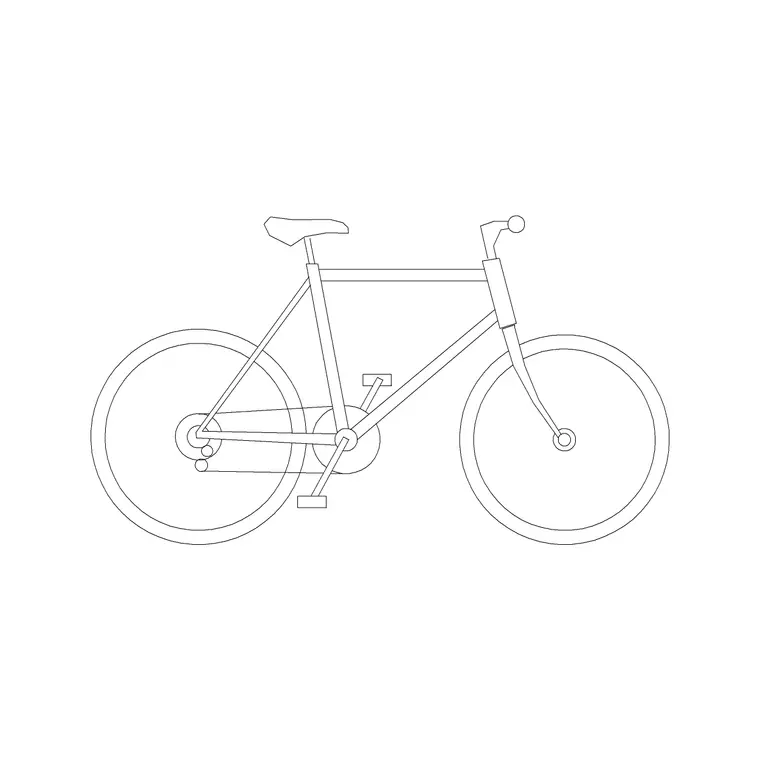
The Bicycle Elevation block on cadblockdwg.com gives you a clean side-profile silhouette, typically around 1.7 to 1.8 metres long, and I use it for populating bike shelter elevations and streetscape cycling infrastructure. For the bay itself, a standard bicycle stand allowance is usually a good deal narrower than a motorcycle bay, since you're mostly accounting for handlebar width and a small manoeuvring gap rather than the full width of a powered vehicle.
Motorcycle bays and how they differ
Motorcycle blocks in the wider vehicles category, distinct heavy-bike style silhouettes drawn separately from the bicycle family, are typically longer, often somewhere in the 2.0 to 2.4 metre range depending on the model, and considerably wider across the handlebars and mirrors than a bicycle. That difference matters because a bay sized for bicycles will genuinely feel cramped if a motorcycle tries to use it, and the reverse means you're wasting space if every two-wheeled bay is sized generously enough for a motorcycle when most of the demand is actually bicycles.
Heavier touring or cruiser-style motorcycles push toward the upper end of that range and also tend to need a bit more clearance either side for the rider to comfortably get on and off, so if the brief specifies or implies a heavier bike class, I'll size those particular bays a touch more generously than the minimum rather than assuming every motorcycle in the mix is the smaller, lighter end of the category.
Drawing an accurate mixed two-wheeled parking area
What I actually do on a mixed-mobility plan is zone the two-wheeled parking separately, bicycle racks in one clearly labelled cluster, motorcycle bays in another, rather than assuming one bay dimension covers both. The bicycle block scales down comfortably enough that you can pack several instances into a compact shelter elevation, while motorcycle bays need to be drawn at something closer to a compact car bay's footprint, just narrower, to avoid understating the space genuinely required.
The catch here is that planning briefs sometimes lump 'two-wheeled parking' into a single number without distinguishing bicycles from motorcycles, and it's worth pushing back on that ambiguity early, since the two vehicle types genuinely don't share a bay dimension.
Bringing it together with the rest of the plan
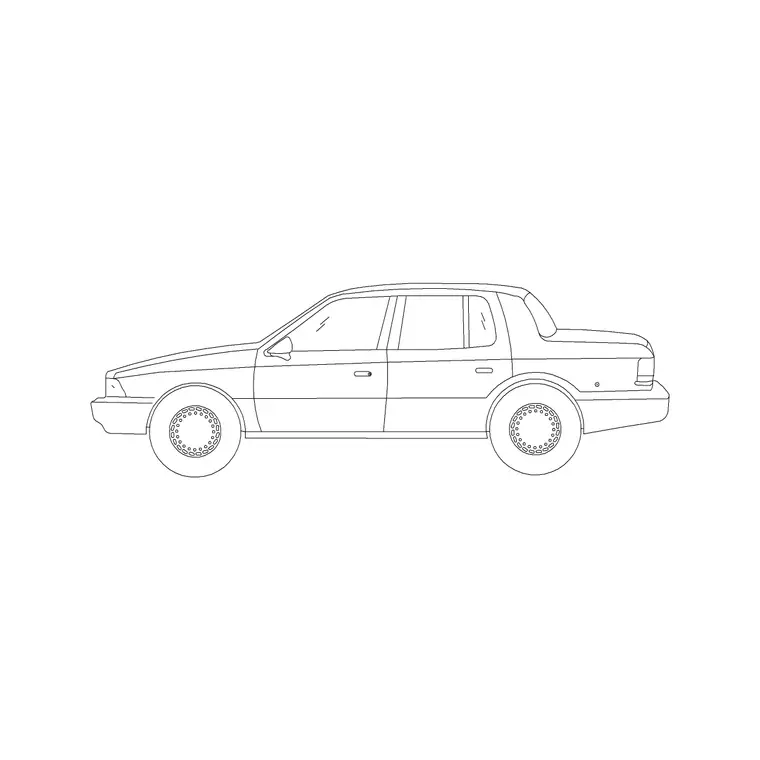
On the same mixed-mobility site plan, the passenger vehicle bays are usually sized around the Sedan Car or SUV Car blocks, and keeping the two-wheeled parking zone visually and dimensionally distinct from that car parking, rather than folding it into a generic 'vehicles' layer, makes the drawing much easier for a reviewer to check at a glance. All of these blocks come down as DWG files and insert cleanly with INSERT, verify scale against a known dimension for each, roughly 1.7 to 1.8 metres for the bicycle, before trusting bay dimensions built around them.
Accessibility is also worth thinking through here, not just the count of two-wheeled bays but whether the route from them into the building is genuinely usable for everyone on site, which is a planning consideration that goes well beyond just getting the vehicle footprints right.
Positioning matters as much as sizing
Beyond just getting the bay dimensions right, where you actually place motorcycle and bicycle parking on the plan tells its own story. Motorcycle bays close to a main entrance can create a slightly awkward visual clash with pedestrian sightlines if they're not set back or screened a little, while bicycle racks tucked too far from an entrance tend to go unused in practice regardless of how generous the provision looks on paper, since most cyclists simply won't walk an extra hundred metres from where they'd naturally lock up.
What I actually do is treat two-wheeled parking placement the same way I'd treat any other entrance-adjacent amenity, close enough to be genuinely convenient, but positioned so it doesn't compete with the main pedestrian desire line into the building. On a site where both motorcycle and bicycle provision are required, I'll often put bicycles closer still, since a cyclist arriving under their own power is usually more sensitive to that last stretch of walking distance than someone who's just ridden a motorcycle in.
For instance, on a mixed-use retail and residential scheme I worked through recently, the bicycle racks ended up directly beside the main residential lobby entrance while the handful of motorcycle bays were positioned along a side elevation nearer the general car parking, which matched how each vehicle type was actually going to be used on that particular site rather than defaulting to a single generic 'two-wheeled parking zone' near the main entrance for both.
Weather protection and long-term wear considerations
Two-wheeled parking, more than car parking, tends to suffer from being an afterthought when it comes to weather protection, and that's worth factoring in at the same stage you're deciding on bay dimensions, not as a separate conversation later. A bicycle left uncovered through a wet season degrades noticeably faster than one parked under even a simple canopy, and the same logic applies to motorcycles, where exposed seats and electronics don't hold up well to repeated soaking. If the brief allows for it, I'll try to route at least the bicycle racks under an existing building overhang or a simple lean-to canopy rather than treating covered parking as an optional upgrade, because in my experience it's one of the details that most visibly signals whether a scheme actually took cycling provision seriously or just met the policy minimum.
Motorcycle bays are a little more forgiving here since a parked motorcycle generally tolerates open-air standing better than a locked bicycle does, but even a simple sightline consideration, keeping the bays out of the worst of a site's prevailing wind and rain direction where the layout allows it, is a low-cost detail that's easy to fold into the plan while you're still at the stage of deciding where these zones sit.
Further reading
Questions
Frequently asked
Can I use the same bay dimension for bicycles and motorcycles?+
No, they need different bay sizes. A bicycle bay only needs to account for roughly 1.7 to 1.8 metres of length and handlebar width, while a motorcycle bay needs closer to 2.0 to 2.4 metres and considerably more width.
Should motorcycle and bicycle parking be drawn in the same zone?+
It's clearer to zone them separately with distinct labelling, since the two vehicle types have different bay dimensions and mixing them in one undifferentiated area risks understating the space either one actually needs.
What view type is the Bicycle Elevation block?+
It's an elevation, a side-profile silhouette, suited to bike shelter elevations and streetscape sections rather than a plan-view bay layout.
Free downloads from this article
Free CAD block library
Download the blocks from this article — free, no signup