How color-by-layer CAD blocks behave across drawing templates
A block set to ByLayer color looks completely different depending on your template's layer setup. Here's why that happens and how to check before you insert.
Sumana KumarUpdated 17 June 20265 min read
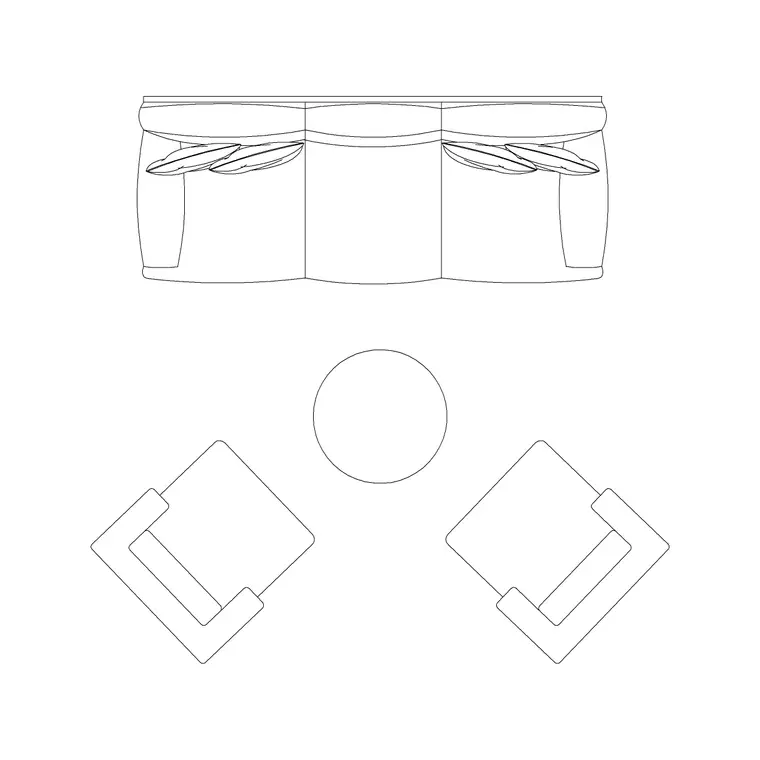
The block that looked totally different in the second project
I've had this happen more than once: a block that looked perfectly fine, sensible grey lines, in one project template comes out neon green or shows up on the wrong lineweight entirely the moment I insert it into a different template. Nothing about the block changed between the two insertions. What changed was the template's layer setup underneath it, and understanding why requires understanding the difference between an object set to ByLayer and an object set to an explicit color, which behave in genuinely opposite ways once a block crosses between templates.
ByLayer versus explicit color, the actual mechanism
An object set to ByLayer takes its color, and usually its linetype and lineweight too, from whatever layer it's currently sitting on, meaning if that layer is red in one template and blue in another, the same object displays differently depending purely on which template it landed in. An object with an explicit color assigned directly, sometimes called a hard-coded color, ignores the layer entirely and always displays that same color no matter what template or layer it ends up on. Most well-built blocks use ByLayer specifically because it's the flexible, predictable choice, letting the block inherit your project's color standards rather than imposing its own.
There's also a third setting worth knowing about, ByBlock, which behaves a bit differently again, an object set to ByBlock takes on whatever color is current at the moment the block itself is inserted, rather than the layer it lands on. It's less common in simple furniture or fixture blocks but shows up more in blocks meant to be inserted with a specific override color chosen at insertion time, and it's worth recognizing the distinction so you're not surprised when a block doesn't behave exactly like a plain ByLayer one would.
Why this specifically matters for blocks built on layer 0
This connects directly to something we've covered before, blocks built on layer 0 with ByLayer color assignment inherit the current layer entirely at insertion, color included. So the exact same Sofa Set Plan 1 block, inserted into a template where your furniture layer is set to a muted tan, displays as tan. Inserted into a different template where furniture is set to a bright cyan for visibility during a specific review phase, it displays as cyan. Same block file, same geometry, completely different appearance, and that's not a bug, that's the system working as intended, because ByLayer is designed to defer to whatever standard the current drawing has set.
Where it goes wrong: explicit colors buried inside a block
The trouble starts when a block author sets some object inside the block to an explicit color rather than ByLayer, usually without meaning to, often just because they drew that one element while a specific color happened to be current rather than ByLayer. That element then carries its hard-coded color into every project the block is used in, regardless of template, which is exactly the kind of inconsistency that makes a drawing look assembled from mismatched parts rather than drafted as a whole. A gate's hardware detail showing up bright yellow in an otherwise neutral grey elevation, for instance, when nothing else in the drawing uses that color, is a classic sign of a stray explicit color buried somewhere inside the block.
Linetype and lineweight can carry the exact same kind of inconsistency, and it's worth checking those alongside color rather than assuming they're fine just because the color looks right. A block with a hard-coded lineweight will plot at that weight regardless of your layer standards, which can mean one particular block prints noticeably heavier or lighter than everything around it on the same sheet, an easy thing to miss until the plot is already in someone's hands.
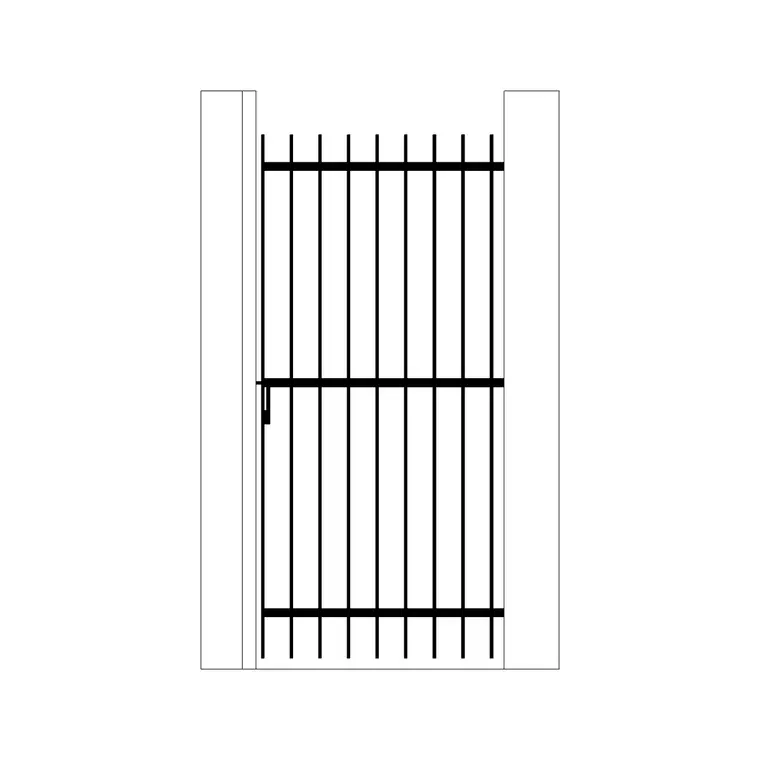
I ran into exactly this on a gate block once, where every element read ByLayer correctly except one small hinge detail, hard-coded to AutoCAD color 2, a bright yellow, presumably because whoever built the block had that color current on their screen for a completely unrelated reason at the exact moment they drew that one hinge and never noticed. It sat unnoticed through several insertions until the drawing finally got plotted in black and white for a permit submission, at which point that one hinge printed as a visibly different shade of grey from everything around it, on an otherwise clean, consistent elevation. Nobody had touched that hinge specifically, it had just been quietly wrong since the day the block was built.
How to check before you commit to a block across multiple projects
Select all the geometry inside the block and check the Color field in the Properties palette. If it reads ByLayer consistently, you're set, the block will adapt cleanly to whatever template you drop it into. If you see a specific color name or number reported instead of ByLayer, especially on just one or two objects while the rest read ByLayer, that's the inconsistency to fix, either by selecting those objects and resetting their color to ByLayer directly in Properties, or opening the block in BEDIT and correcting it at the definition level so every future insertion is fixed at once rather than needing a manual correction each time.
QSELECT is faster than checking object by object
For a block with a lot of individual objects, manually clicking through each one to check its color field is slow enough that people skip it, which defeats the purpose. QSELECT is the faster route: with the block exploded temporarily in a scratch drawing, or while inside BEDIT, run QSELECT and filter by Color, set to anything other than ByLayer. Whatever gets selected is exactly the set of objects carrying an explicit color, instantly, rather than needing to click through geometry one piece at a time hoping to spot the outlier. If QSELECT comes back empty, the block is clean straight through. If it returns two or three objects out of a hundred, you've found your inconsistency in about five seconds rather than five minutes of manual clicking.
The broader habit this points to
Basically, before adopting any block into a personal library you'll reuse across different clients or project templates, it's worth confirming its color behavior is consistent, all ByLayer, all the way through. It's a five minute check with an outsized payoff, because a color inconsistency is exactly the kind of small thing that doesn't show up in isolation but absolutely shows up the moment someone else opens your drawing in their own template and everything looks slightly, unaccountably off.
This matters even more if you regularly move between different clients or firms with their own established layer standards, since a block library that behaves consistently with ByLayer color is one you can carry between those different environments without any of it needing rework. That portability is quietly one of the more valuable properties a personal block library can have.
Further reading
Questions
Frequently asked
What does it mean for a CAD block to be set to ByLayer?+
It means the objects inside the block take their color, and often linetype and lineweight, from whatever layer they're currently sitting on, rather than carrying a fixed color of their own. This lets the block adapt automatically to whatever layer standard the current drawing uses.
Why does the same block look different in two different drawings?+
If the block is set to ByLayer and built on layer 0, it inherits the color of whatever layer is current at insertion. Different templates set that layer's color differently, so the exact same block file can display completely differently between projects.
How do I fix a block that has an inconsistent explicit color inside it?+
Select the affected objects, check the Color field in the Properties palette, and reset it to ByLayer. For a permanent fix across every future insertion, make the correction inside the Block Editor (BEDIT) at the definition level rather than object by object.
Free downloads from this article

Free CAD block library
Download the blocks from this article — free, no signup