Hatchback vs coupe CAD blocks: matching type to site context
A hatchback and a coupe read completely differently on an elevation. Here's how to pick the vehicle block that actually matches your site context.
Saumyajit MaityUpdated 26 June 20266 min read
Context first, silhouette second
The vehicles category on cadblockdwg.com carries a wide spread of body styles beyond the obvious sedan and SUV, including hatchback and coupe profiles among the elevation blocks, and I think this is the part a lot of drafters skip past. A hatchback silhouette in a streetscape elevation tells a completely different story than a coupe does, and if the block doesn't match the context of the site, the drawing subtly undersells or oversells what the place actually feels like.
What a hatchback block signals on the page
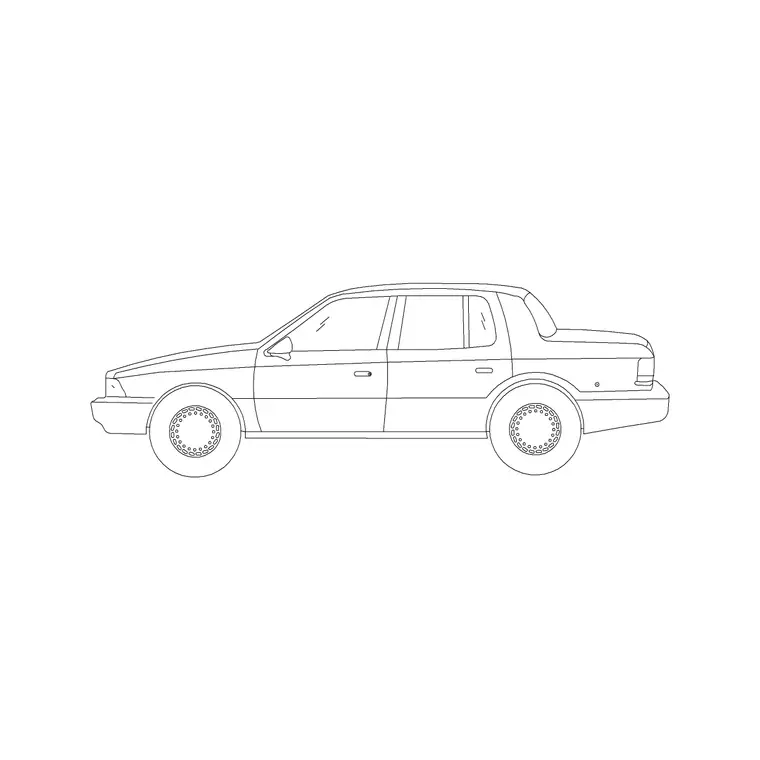
A hatchback body, short rear overhang, upright tailgate, is what I reach for on urban infill projects, dense residential streetscapes, and anywhere the design language is leaning practical and space-conscious. It reads as an everyday, unpretentious vehicle, which fits a mixed-use high street or a compact housing scheme far better than a sleeker body would. For scale reference, a hatchback in this class is typically somewhere in the 3.8 to 4.3 metre length range, noticeably shorter than a sedan, so it also happens to be genuinely useful when you're trying to convey a tighter parking or kerbside condition.
What a coupe block signals on the page
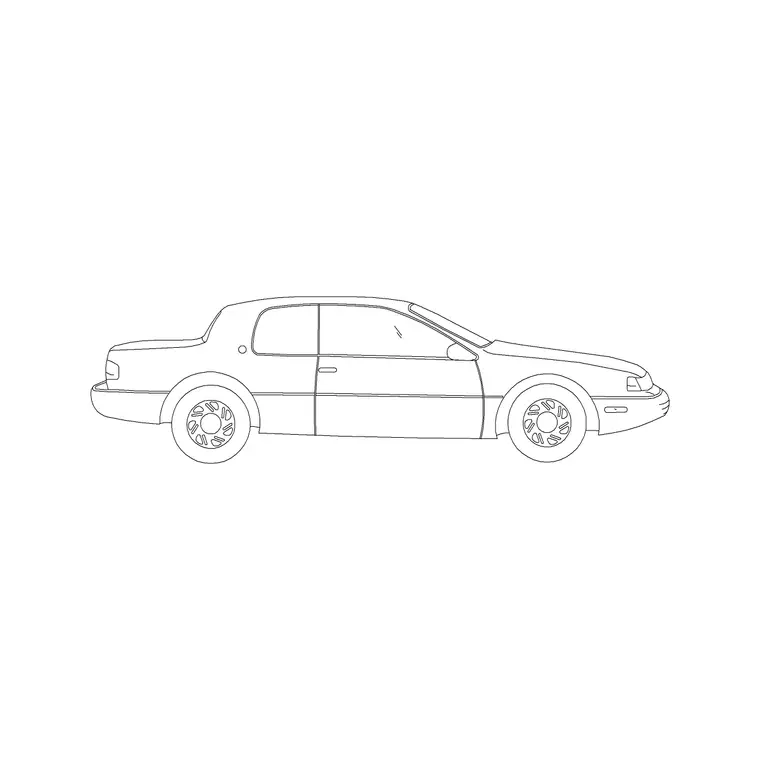
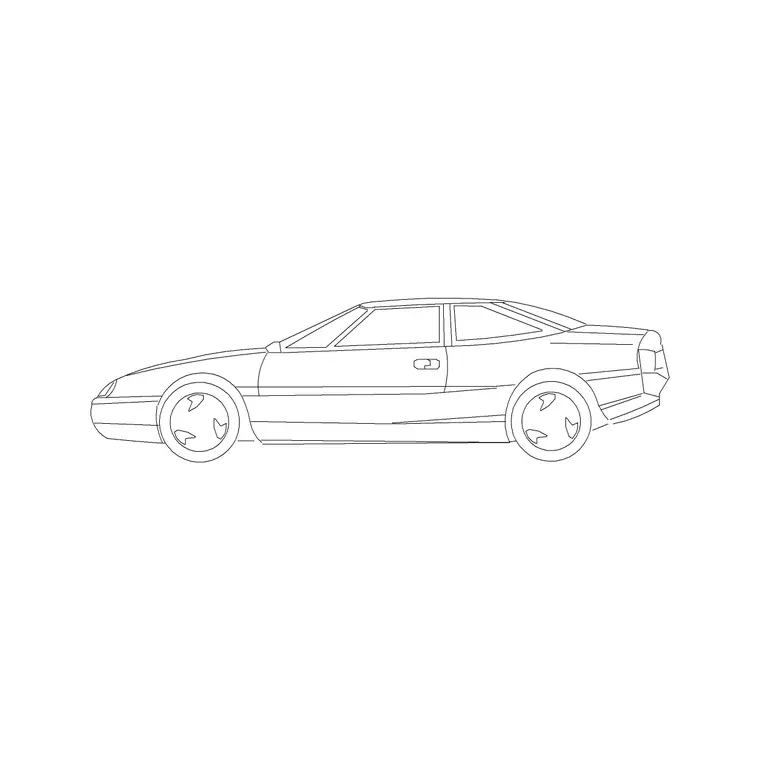
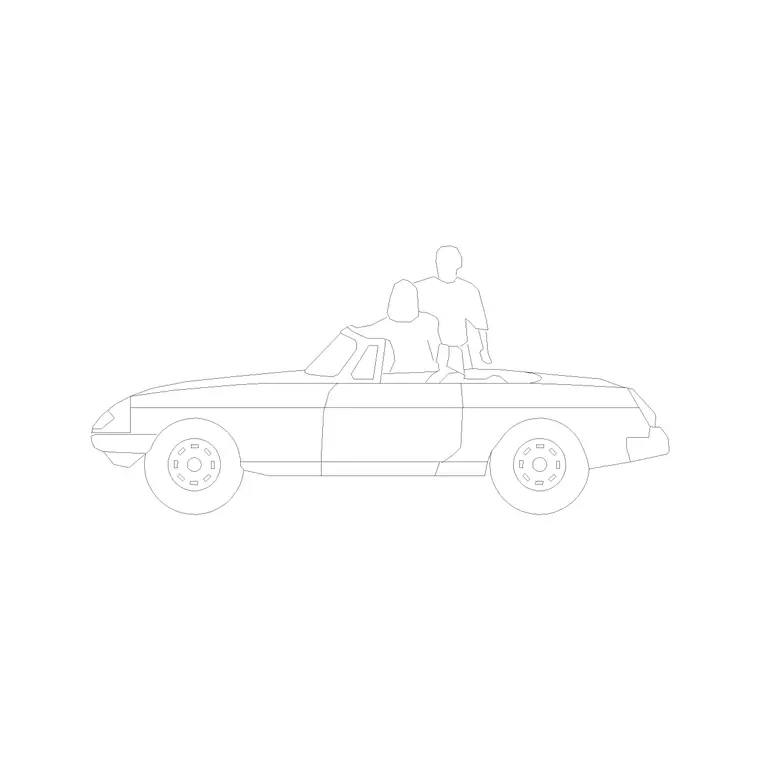
A coupe, by contrast, with its longer bonnet, lower roofline and two-door proportions, reads as a more aspirational vehicle, and I use it deliberately on premium residential elevations, boutique retail frontages, or dealership and showroom drawings where the client wants the streetscape to feel a step upmarket. The Sports Car block on the site leans into a similarly sleek profile if you want to push that even further, and for that reason it's worth treating the coupe and sports car blocks as a related pair when you're choosing between them for a high-end context.
Dimensionally a coupe usually sits close to a standard sedan's length, typically 4.4 to 4.8 metres, but with a noticeably lower roofline and a longer bonnet-to-cabin ratio in the silhouette, which is really what does the visual work here rather than any dramatic size difference. It's the proportions, not the footprint, that tell the story on the page, which is worth remembering if you're ever trying to explain to a client why swapping one body style for another changes the feel of a render without changing the bay dimensions underneath it.
Matching vehicle type to the building typology
For instance, if I'm elevating a suburban family home, a hatchback or a standard sedan sitting in the driveway feels honest to the project. Drop a coupe or a sports car silhouette into that same driveway and the drawing starts reading like a lifestyle render rather than an accurate depiction of the client's actual life, which can create a mismatch between what's promised and what gets delivered. The reverse is true for a luxury development marketing render, where an ordinary hatchback in the foreground can undercut the premium feel the client is paying for.
So the rule I follow is basically: match the vehicle to the income bracket and use-case the building itself is designed for, not just whatever block happens to be handy in your library.
Retail frontage is its own case worth separating out from residential, since a run of shopfronts on a high street usually has cars simply passing through the scene or parked briefly at the kerb rather than sitting in a driveway that's meant to say something about who lives there, so the body style matters less for narrative reasons and more for making sure the scale reads correctly against the shopfront glazing and signage, a hatchback or a small SUV silhouette both work fine there as long as the proportions are honest against the building height in the same drawing.
Practical notes on using these blocks
Both hatchback and coupe silhouettes in the vehicles category are elevation blocks, side profiles built for building elevations, street sections and renders rather than plan-view parking layouts. They come down as DWG files and drop in cleanly with INSERT at a scale of 1 if your drawing units already match the block's native units, and if a block comes in oversized or tiny, that's a units mismatch rather than a broken file, worth checking INSUNITS in both drawings before you assume anything else is wrong.
One habit worth building, keep a small personal folder of your preferred body styles, hatchback, coupe, sedan, SUV, sorted by the context you use them in, so you're not hunting through the full vehicles category every time you start a new elevation.
Layering these vehicle blocks onto a separate entourage layer, distinct from the building geometry layers, is worth doing as a habit even on a small project, since it makes it trivial to freeze or hide all the parked vehicles later if a client wants to see the elevation without them, which happens more often than you'd expect once a drawing moves from internal design review to a planning submission where the reviewer wants to focus on the building form itself.
Reading a site to pick the right body style before you even open the block library
The way I actually approach this on a new project is to walk the context first, either literally or through site photos, and note what's genuinely parked on the surrounding streets, because that's usually a better guide than guessing from the building typology alone. A converted warehouse district full of young professionals might genuinely have more coupes and hatchbacks parked outside than the building's industrial heritage would suggest, while a quiet cul-de-sac of detached houses might still be dominated by practical sedans and SUVs even if the architecture itself is fairly upscale.
For instance, I worked on an infill scheme a while back where the client kept pushing for sleeker, sportier vehicles in every rendered elevation because it 'looked more premium', and the honest answer was that it didn't match the surrounding streetscape at all, the neighbouring properties were solidly family-sedan territory, and populating the render with coupes made the scheme look like it belonged somewhere else entirely. Swapping half of them back to standard sedans and one or two hatchbacks made the whole presentation read as more credible, which mattered more to the planning outcome than the render looking flashier.
The catch here is that this kind of judgement call is subjective, there's no dimension table that tells you which body style 'belongs' in a given streetscape, so treat it as a design decision worth discussing with whoever's reviewing the drawing rather than something to decide alone at the desk five minutes before a deadline.
This same logic extends to colour and rendering treatment too, once you're past the CAD stage and into a rendered visualisation, since a fleet of uniformly grey or black rendered vehicles reads as slightly artificial next to a genuinely mixed streetscape, so I'll usually vary the rendered colour across the parked vehicles for the same reason I vary the body style, to avoid the scene reading as obviously generated rather than observed.
Further reading
Questions
Frequently asked
Is a hatchback or coupe better for a general streetscape drawing?+
A hatchback or standard sedan is the safer default for an everyday streetscape. Save the coupe for premium residential, dealership or showroom contexts where a more aspirational vehicle fits the brief.
How long is a typical hatchback compared to a sedan?+
A hatchback is usually shorter, typically in the 3.8 to 4.3 metre range, versus roughly 4.5 to 4.8 metres for a standard sedan, which is worth remembering when you're using either for a tight kerbside or driveway condition.
Are these body-style blocks plan view or elevation?+
They're elevation blocks, drawn as side-profile silhouettes for building elevations, sections and renders, not plan-view footprints for parking layouts.
Free downloads from this article
Free CAD block library
Download the blocks from this article — free, no signup