Drawing performance slows after inserting many CAD blocks
A sluggish drawing after adding a lot of downloaded blocks usually comes down to a handful of specific causes. Here's what actually drags AutoCAD down.
Saumyajit MaityUpdated 21 June 20265 min read
Blocks themselves are rarely the real weight
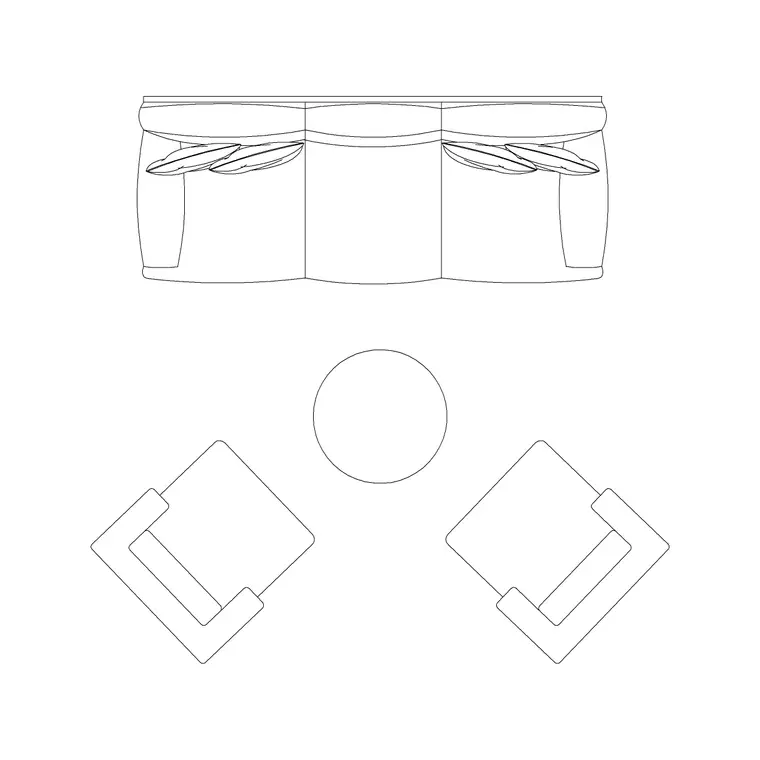
This one surprises people, because the instinct when a drawing gets sluggish after inserting a lot of downloaded furniture or site symbols is to assume the blocks are just heavy, but a well-built 2D block, even a detailed one like an office chair with cushion lines and a hatch fill, is genuinely lightweight, a few kilobytes of vector data at most. Insert two hundred instances of the same block and the file barely grows, because every instance references one shared definition rather than carrying its own copy of the geometry, that's the entire point of blocks as a data structure.
So when a drawing does slow down noticeably after a lot of insertions, the actual cause is almost always one of a handful of specific things, not simply "too many blocks" as a vague catch-all, and it's worth diagnosing which one you're actually dealing with rather than assuming blocks in general are the problem.
Too many unique block definitions, not too many instances
The real weight comes from unique definitions, not repeated instances. If you've downloaded fifty different products over the course of a project, a sofa here, a chair there, a gate, some paving, an arrow symbol, each one adds its own separate definition to the drawing's block table, and each definition can carry its own layers, its own hatch patterns, its own nested sub-blocks. Fifty unique, moderately detailed definitions add up to real weight in a way that two hundred copies of the same one definition never will, because uniqueness is what costs you, not repetition.
This is worth knowing because the fix is different depending on which situation you're in. If you have a lot of repeated instances of a small number of block types, that's healthy and shouldn't be slowing anything down meaningfully. If you have a large number of distinct block definitions, especially ones you inserted once and never used again, that's where PURGE earns its keep, covered below.
Accumulated over-exploding is a frequent culprit
If you or a previous drafter on the file has been in the habit of exploding blocks rather than leaving them intact, that's very often the real root cause of a slow, bloated drawing, since exploding turns compact shared references into hundreds of independent raw entities with no shared definition backing them anymore, and doing that across dozens of blocks compounds fast. If your drawing history involves a lot of exploding, that's the first thing I'd check before blaming anything else, and our piece on why a downloaded block explodes into more objects than expected walks through exactly why that command creates so much raw geometry in one step.
The fixes that actually move the needle
Run PURGE, and specifically use the "purge nested items" option and repeat it two or three times, since a single pass doesn't always catch everything on the first run, especially with nested block structures. This removes unused block definitions, layers, and other named objects that are sitting in the drawing's database but aren't actually referenced by anything visible, and on a drawing that's accumulated a lot of downloaded content over time, this alone can meaningfully shrink both file size and load time.
Follow it with AUDIT, which checks the drawing database for errors and inconsistencies and fixes what it safely can, this is particularly worth running on any drawing that's been through several rounds of inserting, exploding, and undoing content from external sources, since that kind of history is exactly where minor database inconsistencies tend to accumulate quietly in the background.
A habit that prevents this from building up
At the end of the day, the drafters I know who never seem to hit this problem share one habit, they purge periodically throughout a project rather than only when performance has already degraded to the point of being annoying. Running PURGE once a week, or at natural milestones like finishing a floor plan section, keeps the block table from quietly accumulating unused definitions from every product you tried, compared, and ultimately didn't use in the final layout, which is a completely normal part of the drafting process but leaves clutter behind if you never clean it out.
Other display settings worth checking too
If PURGE and AUDIT don't fully resolve a slowdown, it's worth checking a couple of general display settings that compound with a busy drawing regardless of how many blocks are involved. Solid fill display, controlled by the FILLMODE system variable, and the visual style you're working in both affect how much your graphics card has to render on every regen, and turning hardware acceleration on if it's currently off, or off if a driver issue is suspected as covered in our piece on blocks displaying as a bounding box, can noticeably change how a heavily populated drawing feels to navigate day to day, independent of anything about the block content itself.
One more technique worth trying if PURGE and AUDIT haven't fully resolved a stubborn slowdown, use SAVEAS to save the drawing under a new filename rather than an ordinary save. This forces AutoCAD to rebuild the drawing database from scratch rather than incrementally appending to the existing file structure, and on a drawing that's been saved hundreds of times over a long project with a lot of insert, explode, and undo activity in its history, that fresh rebuild can shave off a surprising amount of file size and load time that PURGE alone doesn't fully reclaim, since some database overhead accumulates from edit history rather than from named objects PURGE specifically targets.
If you manage drawings for a team, scheduling a periodic PURGE and SAVEAS pass, weekly on active projects, is a lightweight habit that keeps this from ever becoming a real problem rather than something you only address once a drawing has already gotten uncomfortably sluggish to work in.
Further reading
Questions
Frequently asked
Do more block instances slow down a drawing?+
Not meaningfully, since repeated instances of the same block all share one lightweight definition. It's the number of unique, distinct block definitions, and how detailed each one is, that actually adds weight.
What's the single fastest fix for a sluggish drawing?+
Run PURGE with the nested items option two or three times, followed by AUDIT. This clears out unused block definitions and other database clutter that accumulates from inserting and comparing many downloaded blocks over a project.
Could exploding blocks be why my drawing got slow?+
Yes, very commonly. Exploding turns compact shared block references into large amounts of independent raw geometry, and doing that repeatedly across a drawing is one of the more common causes of real slowdown. As a preventive habit, purging weekly or at natural project milestones keeps a drawing from ever reaching that degraded state in the first place.
Free downloads from this article


Free CAD block library
Download the blocks from this article — free, no signup