Top kitchen CAD blocks every kitchen designer needs
Cabinets, appliances, sinks and the work triangle — the kitchen blocks to download free, the module sizes to check, and how to lay out a kitchen that works.
Sumana KumarUpdated 25 May 20264 min read
A kitchen is a kit of standard modules
Kitchen design is unusually modular: base units, wall units, appliances and sinks all come in a small set of standard widths, and a good kitchen plan is mostly the art of arranging those modules well. That makes it the perfect candidate for a downloaded block kit. Once you have the cabinets, the appliances and the sink as trusted blocks, laying out a kitchen becomes a matter of snapping modules along a wall and checking the ergonomics — not redrawing a fridge for the hundredth time.
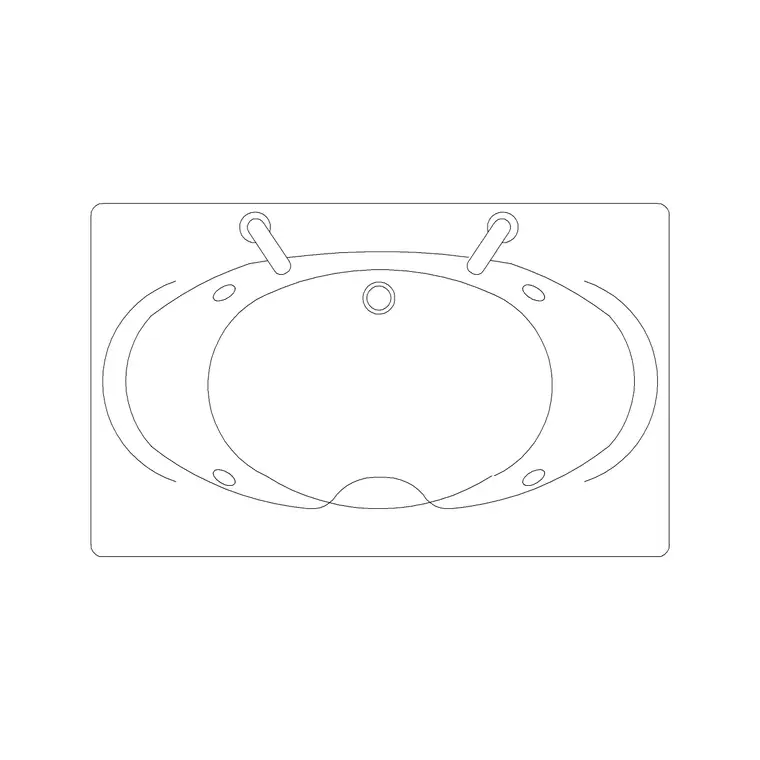
This post is the kitchen designer's standing kit: base and wall cabinets, the big-three appliances, sinks and the worktop logic that ties them together. Everything is in the Kitchen category on cadblockdwg.com, free in DWG with no signup and free for commercial use.
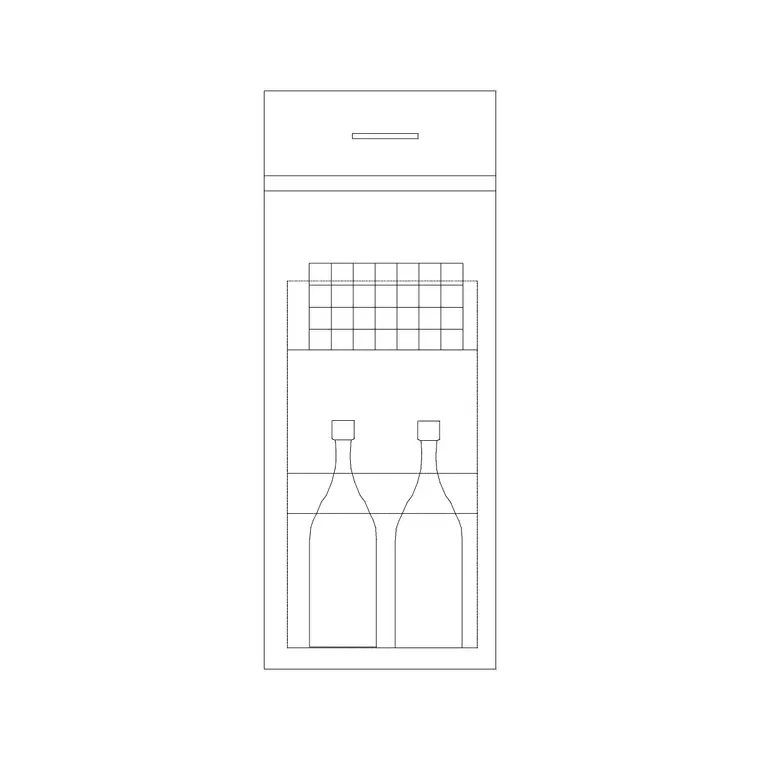
The Cabinet block is a clean base-unit footprint you can repeat along a run; combine it with appliance and sink blocks from the same category to build a full layout in minutes. Because every base unit is the same depth, snapping them end to end is fast and the worktop simply runs over the top — which is exactly the kind of repetition a block kit is built to absorb.
Cabinets — the standard widths to know
Cabinets are the backbone, so commit their sizes to memory. Base units are typically 600mm deep and come in widths of 300, 400, 500, 600, 800, 900 and 1000mm; a standard worktop sits 900mm above the floor. Wall units are usually 300 to 350mm deep and hang with their underside around 1400 to 1500mm off the floor so the worktop is usable beneath them. Tall units — larder and appliance housings — match the 600mm base depth and run full height.
When you lay out a run, snap base-unit blocks end to end along the wall and let the worktop run continuously over them. Check the block depth measures 600mm; a cabinet that comes in at 500 or 650mm will throw off every clearance downstream, and in a galley kitchen a 50mm error per side can be the difference between a workable aisle and a pinch point.
Corners are where kitchens get hard, so keep a corner unit in the kit and pay attention to how two runs meet — a clash there is far cheaper to solve on the plan than in a fitter's van. The plan block lets you see immediately whether two cabinet runs collide at the corner or leave an awkward dead space, which is the single most common kitchen-layout headache.
Appliances and sinks — the fixed points
Appliances are the fixed points a kitchen plan is organised around, so size them accurately. A standard freestanding cooker or built-in hob sits in a 600mm module, a dishwasher and a washing machine each in 600mm, and a freestanding fridge-freezer commonly 600 to 700mm wide, with American-style units wider at around 900mm. Pull each from the Kitchen category and place them in their module so the cabinet run flows around them without a gap or an overlap.
The sink is the other anchor. A single-bowl sink sits comfortably in a 600mm base unit, a one-and-a-half or double bowl in 800 to 1000mm. Place the sink under or near a window where you can, and keep a clear run of worktop on at least one side for draining and prep — a sink jammed into a corner with no landing space is a kitchen that fights the cook.
These fixed points — hob, sink, fridge — are the three corners of the work triangle, which is the next thing to get right. Place them first, before you fill in the cabinet runs between them, because their positions are driven by services and ergonomics while the cabinets simply fill the gaps. Get the appliances and sink right and the rest of the kitchen falls into place around them.
Lay out the work triangle and insert clean
The work triangle connects the three things a cook moves between constantly: the sink, the hob and the fridge. Keep the sum of the three legs roughly between 4 and 8 metres, with no single leg shorter than about 1.2 metres or longer than around 2.7 metres, and keep the triangle clear of major through-traffic. Once your appliance and sink blocks are placed, you can literally draw the triangle on the plan and read whether the kitchen will be comfortable or a constant shuffle.
Bring every block in with the INSERT command, keep scale at 1 since they are drawn at real size, and have your kitchen layer current so well-built blocks inherit it. Snap cabinet runs to the wall line and to each other so the worktop is continuous, and if a unit ever comes in oversized, treat it as a units mismatch and fix it with SCALE rather than redrawing.
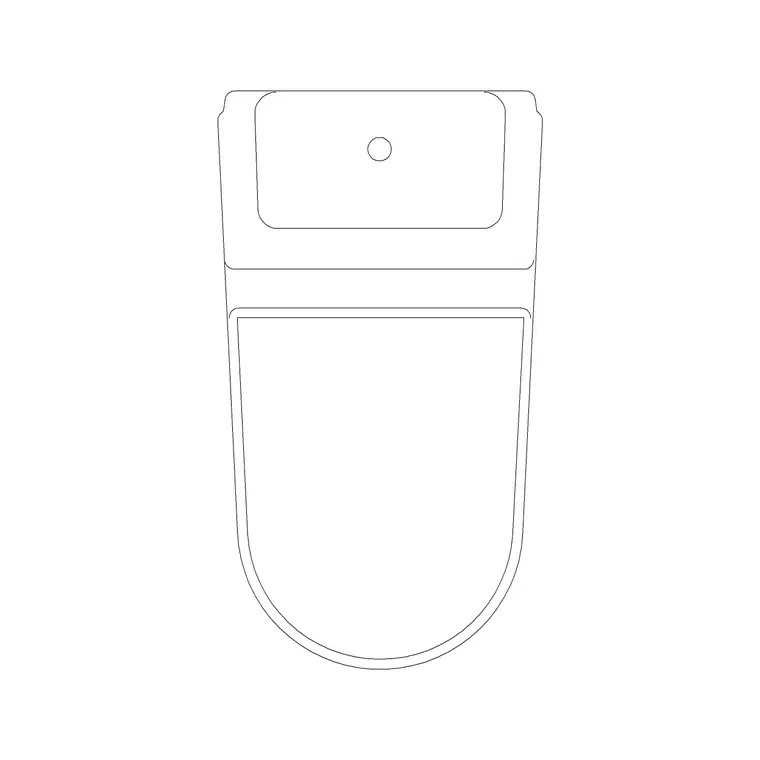
With cabinets, appliances and a sink on a Tool Palette, plus the work-triangle check in your head, you can lay out and ergonomically validate a kitchen in a single sitting. And because everything sits on the kitchen layer, you can restyle the whole thing from the Layer Manager when the client changes their mind about the finish — no block-by-block editing required. A bathroom fixture such as the Toilet Commode 1 block follows the same modular, fixture-first logic if your projects run into utility and WC spaces off the kitchen.
Questions
Frequently asked
What are standard kitchen cabinet sizes to check on a block?+
Base units are about 600mm deep in widths of 300–1000mm with a 900mm-high worktop; wall units are 300–350mm deep. Measure the block depth to confirm it matches before laying out a run.
What is the kitchen work triangle?+
It connects the sink, hob and fridge. Keep the three legs summing to roughly 4–8 metres, no leg shorter than ~1.2m or longer than ~2.7m, and keep major traffic out of the triangle.
Where can kitchen designers download free CAD blocks?+
The Kitchen category on cadblockdwg.com has cabinets, hobs, ovens, fridges, dishwashers and sinks as free DWG downloads, no signup, free for commercial use.
Free downloads from this article
Free CAD block library
Download the blocks from this article — free, no signup