How to scale a downloaded bathroom fixture block correctly
WCs, basins and baths must measure true so clearances pass. Here is how to scale a free DWG bathroom fixture to real size in AutoCAD and keep code gaps.
Saumyajit MaityUpdated 11 February 20264 min read
Fixtures are sized for clearances, so scale matters
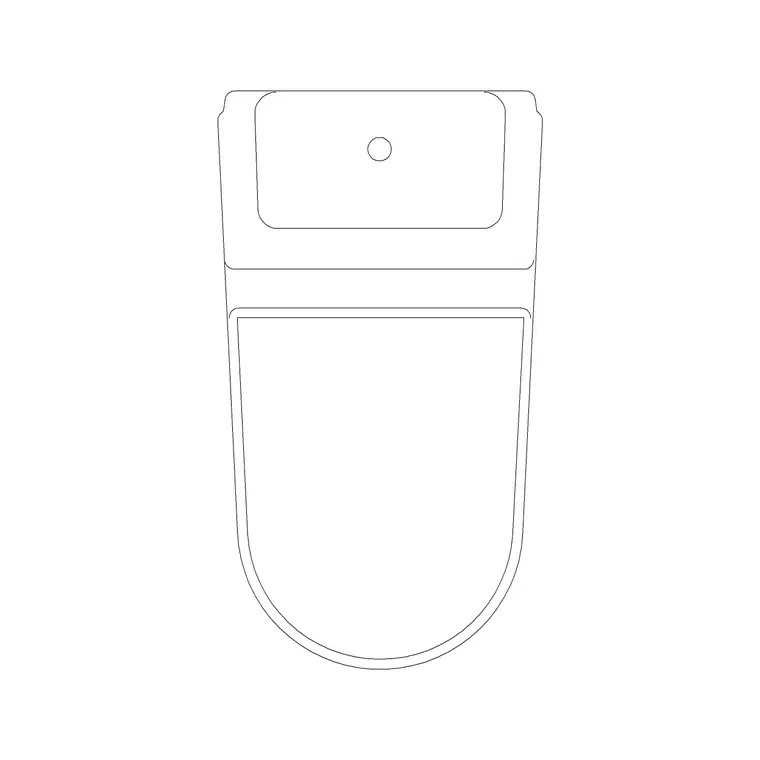
Bathroom fixtures look like simple shapes, but their sizes are anything but arbitrary — they exist to be checked against activity-space and clearance requirements. A WC pan projects about 700mm from the wall and needs roughly 600 to 700mm of clear space in front; a standard bathtub is 1700 x 700mm; a washbasin is commonly 550 to 600mm wide. Scale these fixtures wrong and your bathroom may look fine while quietly failing the clearances that make it usable or compliant.
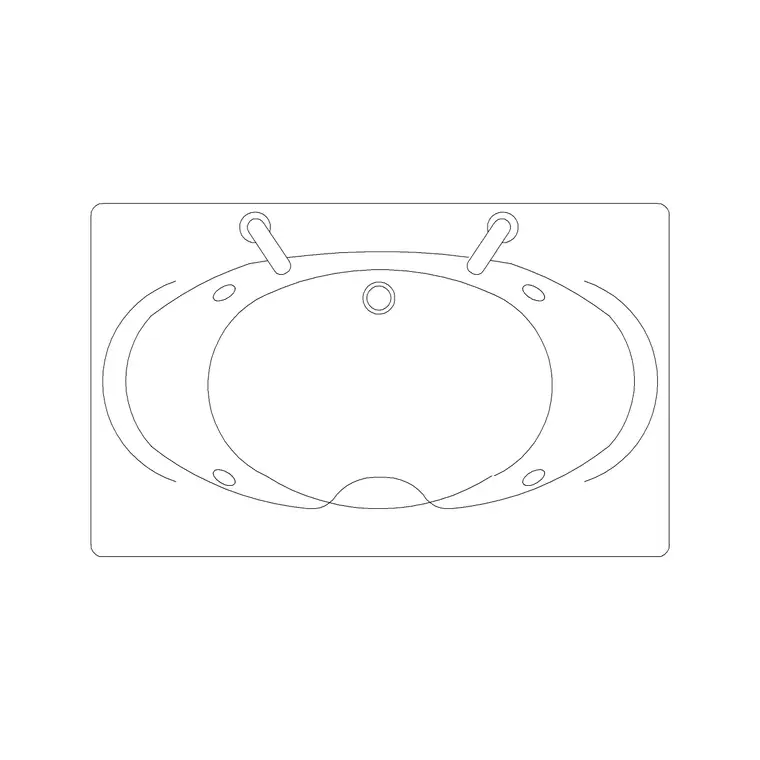
This library has the fixtures you need in the Bathroom category, including the free Toilet Commode 1 (a WC pan in plan) and the free Bath Oval Shape (an oval bathtub in plan). Both download as DWG with no signup, free for commercial use. The aim when scaling any of them is to land on the real fixture size so the activity space around it is honest, because a compact bathroom is exactly where a few millimetres of error turns a workable layout into one that fails.
Insert and measure against the standard size
Bring the fixture in with INSERT (type I, Enter, browse, place) and measure its defining dimension with DIST. For the WC, measure how far the pan projects from the wall — about 700mm is right. For the oval bath, measure the long axis, which should read about 1700mm. If the WC projection reports 700, it is in millimetres and correct for a millimetre drawing; 0.7 means metres; 700 in a metre drawing is the 1000x units mismatch that makes the fixture fill the room or vanish.
Measuring the dimension that drives clearance — projection for a WC, length for a bath, width for a basin — is more useful than measuring just any edge, because that is the number a reviewer checks and the one your activity space depends on. A basin measured across the wrong axis, or a bath measured on its short side, can read as 'fine' while the dimension that actually matters is still wrong.
Correct units, or set the exact fixture size
Two distinct fixes apply. For a 1000x error, the cause is units: set INSUNITS to 4 (millimetres) in your template so fixtures auto-scale on insertion, or apply a SCALE factor of 0.001 (millimetres into a metre drawing) or 1000 (the reverse). This is the common case and corrects the whole fixture at once.
If the units are fine but you want a specific fixture size — a 1500mm bath instead of 1700mm — use SCALE with the Reference option: pick the two ends of the bath to set the current length, then type 1500. The bath resizes to exactly that. Because most bathroom fixtures are fairly standardised, though, it is often cleaner to pick the block that is already the right size than to scale, especially for a WC where the projection and trap geometry should stay true to a real pan rather than being stretched to an arbitrary figure.
Place fixtures with their clearances in mind
Scale is only worth getting right if you then use it to test the room. Once the WC measures a true 700mm projection, you can confirm there is the required clear space in front of it; once the bath is a true 1700mm, you can check the door does not swing into it and that there is room to stand alongside. Snap fixtures to the wall with object snaps (F3) so they sit flush rather than floating, and place the WC and basin against the walls that carry the drainage.
A correctly scaled set of fixtures lets you lay out a compact bathroom with confidence that everything fits and every gap is real. That is the entire point of drawing the fixtures at true size rather than approximate — the plan becomes a clearance check, not just a picture of a bathroom. Drop a scale figure into the room and the test becomes even more legible: you can see at a glance whether someone could actually stand at the basin or step out of the bath.
Layer the sanitaryware cleanly
Put fixtures on a 'Sanitary' or 'Bathroom' layer so they can be isolated for a plumbing plan or dimmed on a general arrangement. Blocks built to inherit their host layer take that layer's colour and lineweight automatically when you set it current before insertion, so there is no manual tidying afterward.
The routine is the same for every fixture: insert, measure the clearance-driving dimension, correct units if it is off by 1000, choose the right size rather than distort it, and snap it flush to the wall on the sanitary layer. Do that and your bathroom plans will pass the clearance checks that matter, because every WC, basin and bath is at the real size the regulations assume. The same approach carries over to kitchen fittings and any other fixture where a published dimension governs whether the layout works, so the habit is worth building once and applying everywhere.
Questions
Frequently asked
What size should a WC and bathtub block be?+
A WC pan projects about 700mm from the wall; a standard bath is 1700 x 700mm; a basin is 550–600mm wide. Measure the fixture after inserting — a WC projection of 700 is correct in a millimetre drawing.
Why does my bathroom fixture block come in too big?+
Units mismatch — a millimetre fixture in a metre drawing is 1000x oversized. Set INSUNITS to millimetres so it auto-scales, or scale the placed fixture by 0.001.
Should I scale a bath to a smaller size or download a smaller one?+
For a non-standard size, scale with the Reference option to hit an exact length. For standard fixtures, downloading the right size keeps the WC trap and bath proportions true.
Free downloads from this article
Free CAD block library
Download the blocks from this article — free, no signup