How to set units when inserting a downloaded mm block
Most free DWG blocks are drawn in millimetres. Here is how to set INSUNITS and drawing units so an mm block inserts at the right size in AutoCAD.
Saumyajit MaityUpdated 28 June 20265 min read
Why most downloaded blocks are in millimetres
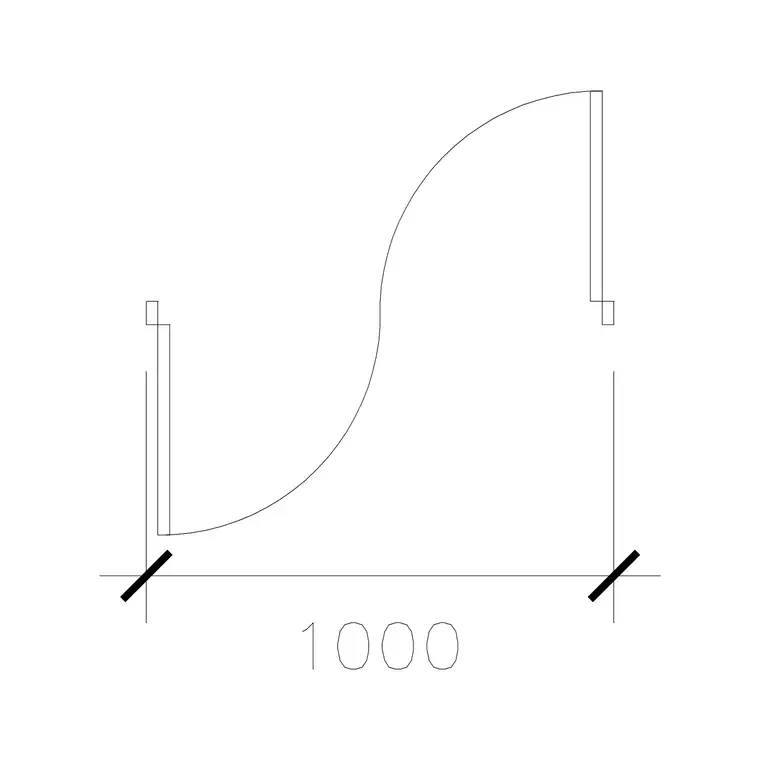
Across the CAD world, the great majority of 2D architectural blocks — including every block in this library — are authored in millimetres. It is the default unit for building drawings in most of the world, so a door reads as 900, a brick as 215, a single bed as 1900. When you download a free DWG here, you are almost always getting millimetre geometry. The question is whether your drawing agrees, because a block and a drawing that disagree about units is the number-one cause of a block landing far too big or too small.
The good news is that AutoCAD has a mechanism built specifically to reconcile this — INSUNITS — and once you set it up in your template you can insert millimetre blocks all day without ever doing a manual scale. This post is about configuring that once so the problem stops happening, rather than fixing it block by block forever.
Set INSUNITS so blocks auto-scale
INSUNITS is the system variable that tells AutoCAD what one drawing unit represents. Type INSUNITS at the command line and set it to 4, which means millimetres (other useful values: 1 = inches, 5 = centimetres, 6 = metres). When both your drawing's INSUNITS and the block file's INSUNITS are set, AutoCAD automatically scales the block to match on insertion. A millimetre block dropped into a millimetre drawing comes in at 1:1; dropped into a metre drawing (INSUNITS 6) it is auto-scaled by 0.001 and lands correct without you lifting a finger.
This is the cleanest possible fix because it is automatic and invisible. The blocks here carry their units, so as long as your drawing's INSUNITS is set, the auto-scaling does the work. Most scaling headaches simply never occur once INSUNITS is configured. You can confirm the current value at any time by typing INSUNITS and reading what AutoCAD reports back before you change it.
Set the display units with the UNITS dialog
INSUNITS handles the scaling maths; the UNITS dialog handles how measurements are shown to you. Type UNITS to open it and set the unit type (for a millimetre drawing you would typically choose Decimal) and the display precision. This does not change the geometry — a line is the same length regardless — but it controls how dimensions and the coordinate readout report numbers, so a 900mm door shows as 900 rather than 0.9 or 0.90000.
Setting UNITS and INSUNITS together gives you a drawing that both scales blocks correctly and displays dimensions the way you expect. They are two halves of the same setup: one governs insertion scaling, the other governs display. Configure both and a downloaded millimetre block behaves predictably from the moment it lands. A common point of confusion is expecting the UNITS dialog alone to fix a too-big block — it will not, because display format does not rescale geometry; that job belongs to INSUNITS.
Watch for the unitless insertion prompt
There is one situation where setting INSUNITS in your drawing is not enough: a block file that was itself saved as 'unitless' (its own INSUNITS is 0). AutoCAD has nothing to convert from, so it cannot auto-scale that block no matter how your drawing is configured, and it inserts at a raw 1:1. With the older Insert dialog you may even be prompted for a unit at insertion time; the Blocks palette simply drops it in unscaled.
When that happens the millimetre geometry lands as raw numbers, so in a metre drawing it arrives 1000x too big. The fix is the manual SCALE factor — 0.001 or 1000 — applied to that block after it lands. It is worth knowing this is the exception rather than the rule: the blocks in this library carry their units, so they auto-scale cleanly, and it is mainly old or stripped-down files from elsewhere that arrive unitless and need the manual nudge.
Verify with a quick measurement
After inserting a millimetre block, prove it worked by measuring a feature whose size you know. Drop a DIST or a dimension across a door leaf (should read about 900), a brick (about 215), or a single bed (about 1900). If the numbers match reality, your units are set correctly and you can trust the rest of the drawing.
If the measurement is off by exactly 1000 — a door reading 0.9 or 900000 — your INSUNITS is mismatched between the block and the drawing, and you can either correct the variable and re-insert, or apply a one-off SCALE factor (0.001 or 1000) to the block already placed. The measurement is your ground truth; it removes any doubt about whether the auto-scaling did its job. This is worth doing the first time you set up a new template, because once you have seen one millimetre block measure correctly you know the template is sound for every block that follows.
Bake it into your template so it sticks
The real win is to stop configuring units per drawing. Once you have INSUNITS set to 4 and UNITS set to Decimal the way your office works, save the file as your default drawing template (a DWT). Every new drawing then starts unit-correct, and well-authored millimetre blocks — including everything you download here — insert at the right size automatically forever after.
That one-time setup eliminates an entire category of bugs. Instead of fighting a too-big block on every project, you set the template once and millimetre blocks just work. If you also build your own blocks, set their INSUNITS before creating the definition, and they will play nicely in everyone else's drawings too. A correctly configured template is the quiet foundation that makes downloaded blocks effortless — and if you work in a team, sharing that one template means everybody inserts blocks at the right size without each person having to rediscover the setting for themselves.
Questions
Frequently asked
What should INSUNITS be for a millimetre drawing?+
Set INSUNITS to 4, which means millimetres. With the block file also carrying millimetre units, AutoCAD then auto-scales blocks correctly on insertion, including into a metre drawing where INSUNITS is 6.
What is the difference between UNITS and INSUNITS?+
INSUNITS controls how blocks are scaled when inserted; the UNITS dialog controls how measurements are displayed. Set both: INSUNITS for correct scaling, UNITS for the precision and format you want to read.
How do I stop blocks inserting at the wrong size every time?+
Set INSUNITS and UNITS in a drawing, then save it as your default template (DWT). Every new drawing starts unit-correct and millimetre blocks auto-scale on insertion from then on.
Free downloads from this article
Free CAD block library
Download the blocks from this article — free, no signup