How to spot an over-detailed CAD block that slows your drawing
Too much fine detail in a block quietly drags down regen time and file size. Here's how to spot it before it's baked into fifty places across your drawing.
Sumana KumarUpdated 15 July 20266 min read
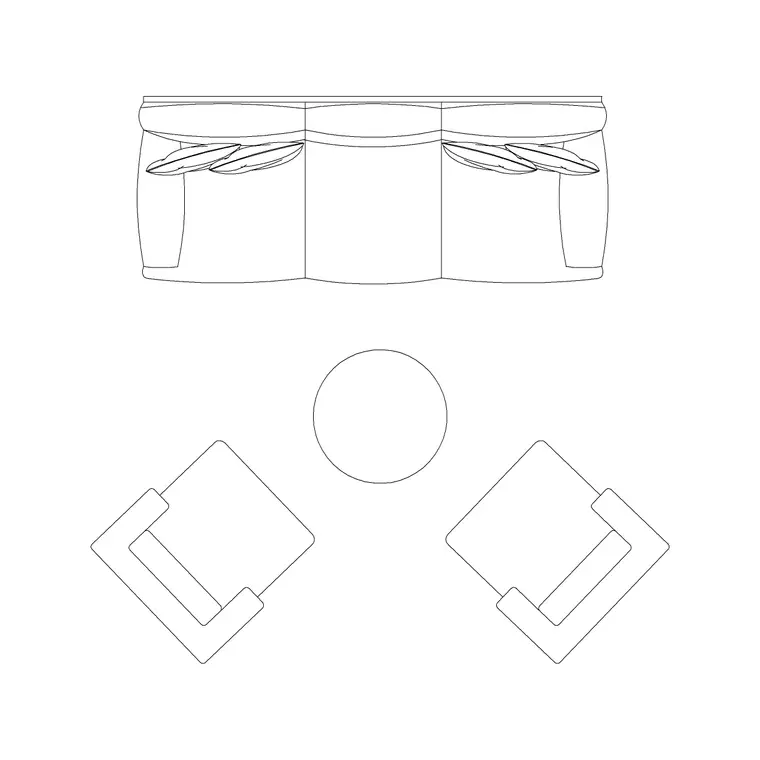
The drawing that started lagging and I couldn't figure out why
For instance, I once had a floor plan that started lagging noticeably somewhere around the third bedroom's furniture layout, nothing dramatic, just a half-second hitch on every pan that hadn't been there before. Turned out one particular sofa block, reused a dozen times across the plan, had a stitching pattern hatched in at a density that made sense for a 1:5 upholstery detail and made no sense whatsoever for a 1:100 floor plan. Multiply that hatch density by twelve instances and you've got a genuinely measurable drag on the file, invisible in any single insertion but very visible in aggregate.
The tell-tale signs of over-detailing
A few things reliably give it away. Hatch patterns set at a scale so fine they look almost solid at the zoom level you're actually working at, which usually means the hatch density is wrong for the intended view rather than intentional. Curves and fillets modeled with more segments or more precision than the line weight printing them could ever resolve, essentially detail that exists in the file but can never exist on the printed sheet. And object counts that don't match the block's apparent visual simplicity, something we've covered before but that shows up again here specifically as a performance symptom rather than just a structural one.
Regen time itself is actually a decent diagnostic. Insert a handful of copies of the suspect block into a scratch drawing, maybe ten or twenty, and time how long a REGEN takes compared to the same count of a simpler, similar block. If the gap is noticeable even at that small scale, it'll be a lot more noticeable once that block is reused fifty or a hundred times across a real project, and that comparison alone is often enough to settle whether a block is worth the detail it's carrying.
A concrete way to spot it, on that sofa block from earlier: opening it in the Block Editor and checking the hatch scale showed it set to 5, on a pattern meant to represent stitching detail, in a drawing where everything else was built and dimensioned in millimetres. At that scale, on a piece of furniture roughly 2000mm long, that hatch pattern was printing as close to solid grey, all the fine stitching lines merging together into a mass at any plot scale coarser than roughly 1:10, which no floor plan is ever going to be. Resetting that hatch scale to something like 50 to 100 made it print as an actual visible pattern rather than a grey blob, and cut the regen cost of that block dramatically in the process, since AutoCAD was no longer calculating and rendering thousands of tightly packed hatch lines that were never going to be individually visible anyway.
The scale test, applied specifically to performance
The same question that governs object count governs over-detailing generally: what scale is this actually going to be seen at. A wall lamp block meant for a 1:20 interior elevation can reasonably carry more surface detail, maybe a hint of the fixture's actual form, than the same fixture would need in a 1:100 site plan where it's really just a symbol marking a location. The mistake is building every block for its most detailed possible use case regardless of how it'll actually be deployed most of the time, which front-loads detail that ninety percent of insertions will never benefit from but every single insertion will still pay the performance cost for.
It helps to remember that a block library generally can't know in advance exactly what scale you'll use it at, so a certain amount of built-in generality is reasonable. The problem isn't detail existing at all, it's detail that's disproportionate to any plausible use of that specific block, ornamental stitching on a plan-view sofa that no one will ever plot at a scale fine enough to see it, which is effort spent on visual information nobody downstream will ever actually receive.
How to check before you commit to a block
Insert one copy into a scratch drawing, zoom to the scale you'll actually be working at, most commonly something in the 1:50 to 1:100 range for a floor plan, and honestly ask whether you can perceive the fine detail at all. If you genuinely can't tell the difference between the detailed version and a simplified one at that zoom, the detail isn't earning its keep. You can also check the file size of the block file itself; a plan-view furniture block sitting well above what similar simple blocks in the same category weigh in at is often a sign of unnecessary complexity rather than genuinely necessary geometry.
File size as a quick screening metric
Before you even insert a block, its raw file size on disk is a decent rough proxy for whether it's carrying unnecessary weight. A simple plan-view furniture block, a chair or a small side table, typically sits well under 100KB as a standalone DWG. A gate or a more detailed elevation piece might reasonably run a bit larger given the extra geometry a gate genuinely needs. But if you're comparing two superficially similar blocks, say two different sofa options, and one is several times the file size of the other for what looks like equivalent visual complexity in the thumbnail, that size gap is usually explained by exactly the kind of over-detailing covered above, dense hatching, unnecessarily high curve resolution, or redundant duplicate geometry rather than anything the eye can actually distinguish once it's inserted at real drawing scale.
What good blocks in this category look like
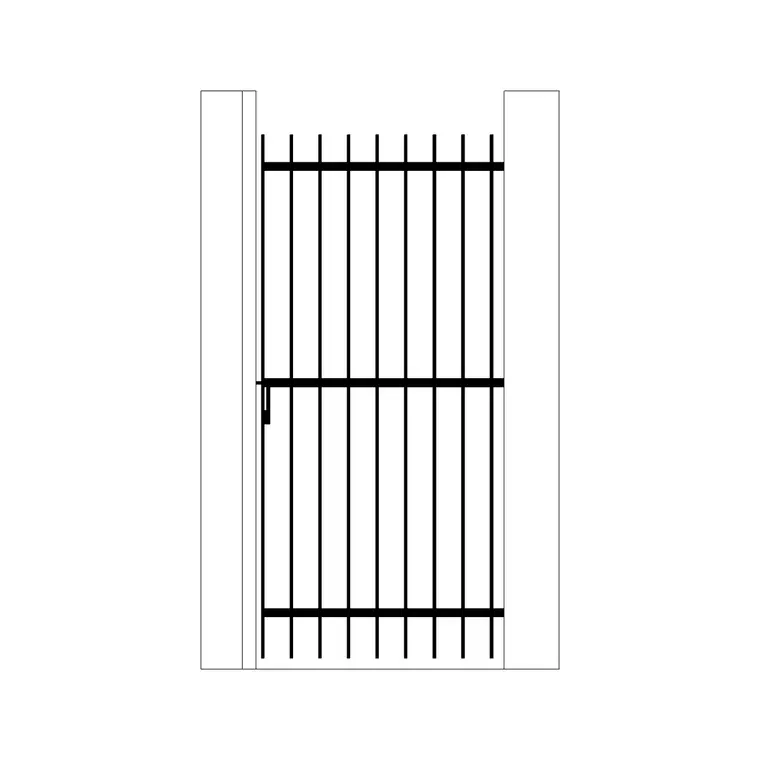
A well-built Iron Gate block, for example, should carry enough detail to read clearly as a gate with individual bars distinguishable at typical plan scale, without modeling every weld point or bolt head that would only matter in a fabrication drawing. A Wall Lamp elevation block should communicate its form clearly at interior elevation scale without hatch density that makes it print as a solid black blob. Good library blocks are built with a target scale in mind and stop adding detail once that target is served, rather than maximizing detail for its own sake.
Fixing an over-detailed block if you're stuck with one
If you've already got a block that's dragging on performance, open it in BEDIT and simplify directly, reduce hatch density with the HATCHEDIT command, delete geometry that's genuinely below the resolution of your intended plot scale, run OVERKILL to catch any duplicate detail hiding in there too. It's a bit of upfront work but it pays for itself the moment that block is reused more than a handful of times across a drawing, which for a common piece like furniture or lighting is basically guaranteed.
It's worth saving a simplified copy under its own name rather than overwriting the only version you have, especially if the original detailed version genuinely has a use case, a large-scale detail sheet, a hero render for a client presentation. Keep both, use the lean one for general plan and elevation work, and reach for the detailed one only on the rare sheet that actually calls for it.
Further reading
Questions
Frequently asked
How can I tell if a block is over-detailed for my drawing?+
Insert it and zoom to the scale you'll actually work at, typically 1:50 to 1:100 for a floor plan. If you can't visually distinguish the fine detail from a simpler version at that zoom, the detail isn't serving the drawing and is likely just adding weight.
Does over-detailing actually slow AutoCAD down?+
Yes, cumulatively. Dense hatch patterns and unnecessary geometry increase regen time, pan and zoom lag, file size, and plot processing, and the effect compounds across every instance of that block in a drawing.
How do I simplify an over-detailed block I already have?+
Open it in the Block Editor with BEDIT, reduce hatch density with HATCHEDIT, delete geometry below your intended plot scale's resolution, and run OVERKILL to remove any duplicate detail, then re-save the block definition.
Free downloads from this article

Free CAD block library
Download the blocks from this article — free, no signup