How many objects is too many inside a downloaded CAD block
Object count inside a block quietly drives file size and drawing performance. Here's how to check it and what counts as reasonable for common block types.
Saumyajit MaityUpdated 13 May 20266 min read
A question I get asked more than you'd expect
People ask me this constantly once they start building a real block library: how much detail is too much detail inside one block? And the honest answer is there's no single number that applies everywhere, it depends entirely on what the block is for and at what scale it'll actually be seen, but there is a way to reason about it that works across every category, furniture, doors, lighting, all of it.
The core question: what scale will this actually be viewed at
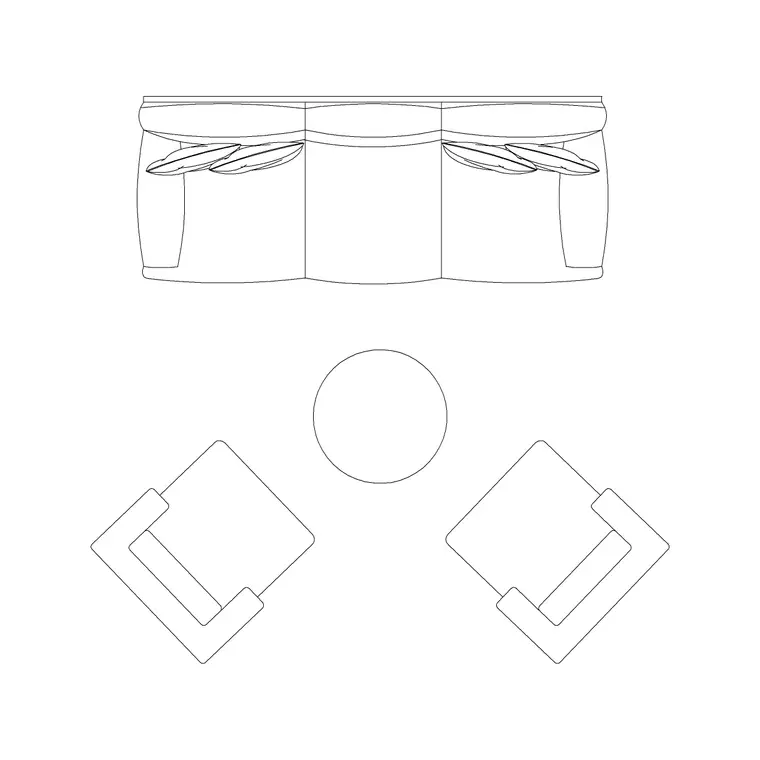
A block that's only ever going to appear in a 1:100 floor plan doesn't need door hinge screws modeled as individual circles, because at that scale a hinge screw is smaller than the width of the pen line printing it. A block that's going into a 1:5 detail drawing genuinely might need that level of resolution. So before you judge a block's object count as excessive, ask what view it's built for. A plan-view furniture block like a sofa set should be built from a relatively small number of objects, typically dozens rather than hundreds, because plan view is a simplified top-down representation, not a photorealistic rendering. An elevation block like a wall lamp can reasonably carry a bit more, since elevation views are meant to communicate more visual detail, but it still shouldn't be modeling every screw and wire.
How to actually count what you're dealing with
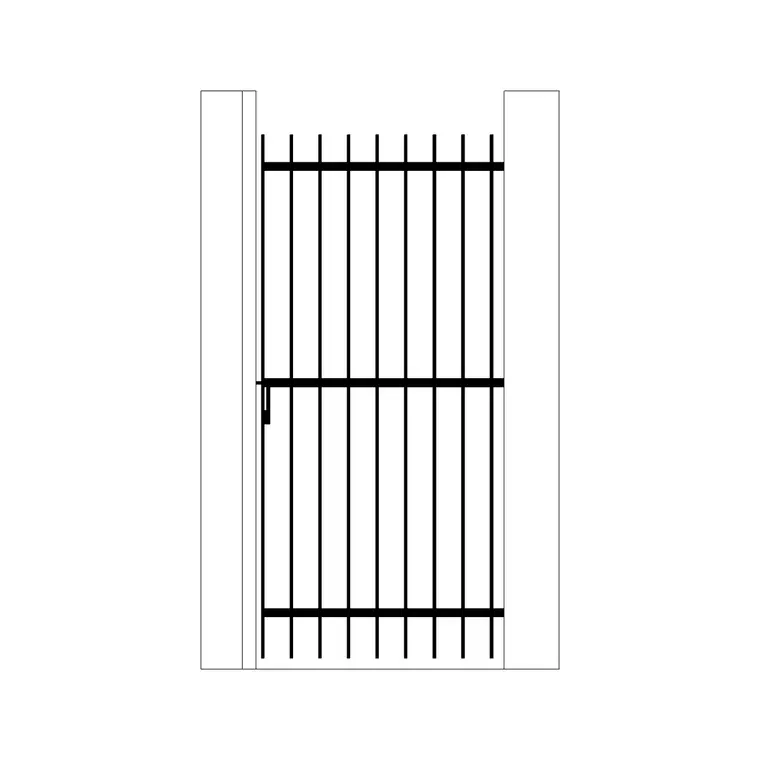
Select the entire block, either by clicking it once if it's a proper block reference or by window-selecting all the geometry if it's still loose lines, and check the Properties palette, which reports the object count for whatever's currently selected. If a single plan-view sofa block reports something in the many hundreds or low thousands of objects, that's worth a second look, because a top-down furniture symbol genuinely doesn't need that much underlying geometry to read correctly on a floor plan. Compare that to a gate block like the Iron Gate, where a moderate object count is expected because the geometry includes individual bars and panel details, but even there, a well-built version keeps that count proportional to what actually needs to be distinguishable at the scale the block is meant for.
It also helps to compare object count against a genuinely similar block, rather than judging it in isolation. If you've got two sofa blocks of roughly the same style and size and one reports three or four times the object count of the other, that difference is worth understanding before you pick one, because it usually isn't buying you anything visually at typical plan scale, it's just a heavier file doing the same job as a lighter one.
To put a rough number on it: a well-built plan-view sofa block in my own library typically comes in somewhere between 40 and 120 objects total, lines, arcs, and a cushion hatch or two. I've seen downloaded equivalents from other sources report object counts in the 800 to 1500 range for what is, visually, an identical looking piece of furniture at plan scale, and when I've dug into those heavier versions the extra weight is almost always redundant linework, duplicated cushion outlines, or a hatch pattern set far denser than the block will ever be plotted at. Same silhouette, wildly different cost.
What over-counting actually costs you
This isn't an abstract concern, it directly affects how a drawing behaves once you're fifty or a hundred blocks deep into a real floor plan. Regens get slower. Pan and zoom start to lag, especially with hatches layered inside heavily detailed blocks. File size climbs, which matters the moment you're emailing a drawing rather than handing it off on a shared server. And plotting can slow down noticeably too, since every extra object is something the plotter has to process, even if it's rendering at a size smaller than the width of the line weight printing it. None of this is fatal on its own, but for instance, a floor plan with forty over-detailed furniture blocks is a genuinely different experience to work in than the same plan built from forty lean ones, and you feel that difference every single time you pan across the sheet.
I've watched this play out directly on a hospitality project with maybe two hundred guest room furniture blocks spread across a multi floor plan, where switching from a heavier third-party furniture set to a leaner one cut regen time on that file by more than half, purely from object count, nothing else about the drawing changed. Nobody on that project was going to notice or care about the difference between the two furniture sets visually at 1:100, but everybody who had to actually work in that file for the next three months noticed the difference in how it handled.
A quick comparison test worth running on a new library
If you're evaluating a whole new block library rather than a single block, here's a fast way to get a read on it. Pick three or four common pieces you'd use constantly, a sofa, a chair, a door, a light fixture, insert one of each into a scratch drawing, select all, and check the total object count in Properties. Compare that total against the same handful of pieces from a library you already trust and know performs well. If the new library's total comes in at roughly the same order of magnitude, you're probably fine. If it comes in at three, five, ten times heavier for visually equivalent geometry, that's a strong early signal the whole library was built without much thought for performance, and it's worth knowing that before you commit a whole project to it rather than discovering it block by block over the following months.
The rule of thumb I actually use
If I can't tell the difference visually between a detailed version and a simplified version at the scale the drawing will actually be printed or viewed at, the simplified version wins every time. That's basically the whole rule. A sofa's stitching pattern doesn't need to survive into a 1:50 plan. A gate's individual bolt heads don't need to survive into a 1:100 site plan. Save the fine detail for blocks specifically built for large-scale details, and keep general-purpose plan and elevation blocks lean.
What to expect from well-built library blocks
On a site like this, the blocks are built with their intended view in mind, plan-view furniture pieces kept lean, elevation fixtures like the Wall Lamp given enough detail to read clearly without becoming bloated, gate and door blocks proportioned to their actual use in a floor plan or elevation set. If you're auditing any library, this is one of the fastest quality signals to check, because a library that consistently over-details every block is a library that'll slow down every project you use it on, even if each individual block seems fine in isolation.
This is one of those checks that pays off disproportionately given how little time it takes. A quick Properties glance across a handful of blocks from a new library tells you within a minute or two whether the whole set was built with performance in mind, and that single data point saves you from discovering the answer the hard way, months into a project, when the file's gotten heavy enough that you finally notice.
Further reading
Questions
Frequently asked
How do I check how many objects are in a CAD block?+
Select the block or window-select its geometry and check the Properties palette, which reports the object count of whatever is currently selected. For a proper block reference, selecting it once and checking Properties shows the total.
Is a high object count always a problem?+
Not always, it depends on what view the block is built for. A detail-scale block genuinely needs more resolution than a general plan-view symbol, so judge object count against the scale the block will actually be viewed at, not against a fixed number.
Does object count really affect drawing performance?+
Yes, cumulatively. Regen time, pan and zoom responsiveness, file size, and plot processing time all scale with total object count across a drawing, and it's the sum across dozens or hundreds of blocks that you actually feel, not any one block alone.
Free downloads from this article

Free CAD block library
Download the blocks from this article — free, no signup