How to insert a downloaded bathtub block in AutoCAD
Insert a free bathtub DWG into a bathroom plan — fitting it into an alcove, getting the tap end right, and checking it against a standard 1700mm tub.
Saumyajit MaityUpdated 1 April 20265 min read
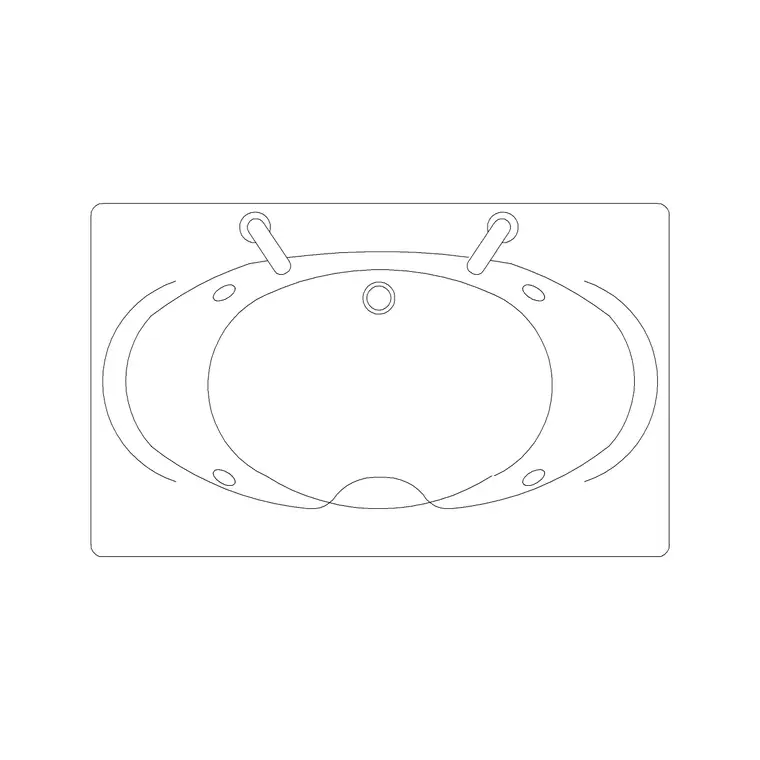
Pick a tub shape and download it
Bathtubs vary in shape — a standard rectangular tub, an oval freestanding bath, a corner bath — and the right block depends on your bathroom. The Bathroom category has baths drawn in plan: the top-down outline of the rim with the inner tub shape and the tap position shown. Open the shape that suits your layout, such as an oval bath for a feature bathroom or a rectangular tub for an alcove, and download the DWG. It is free, no signup, commercial-cleared.
A plan bath block shows the outer rim, the inner bathing well, and usually a small mark for the taps and waste at one end — the 'tap end'. That tap end tells you which side faces the plumbing wall, which matters when you place the bath, because the taps and waste need to reach the supply and drain. Knowing your tub shape before downloading means it will actually fit the space you have rather than needing a fight to squeeze in.
Fit a rectangular tub into its alcove
The most common arrangement is a rectangular bath dropped into a three-sided alcove. Open your plan, type I, Enter, Browse to the bath DWG and select it. Turn on snaps (F3) and place the tub so it fills the alcove — snap one corner of the bath to a corner of the alcove, with the long side against the back wall. Leave scale at 1; a standard bath is 1700mm long and 700 to 750mm wide, sized to fit a typical 1700mm alcove.
Click to place. The tub should sit snugly between the three walls with the rim meeting the walls on three sides and the open (access) side facing into the room. If the bath is slightly short of the alcove, that gap is normal and gets tiled or panelled; if it is too long to fit, you have either the wrong size block or a units issue. Check the tap end is against the plumbing wall so the taps can connect.
Orientation, tap end and the open side
Three things must line up: the tap end against the plumbing wall, the open side facing the room for access, and the tub squared to the alcove. If the downloaded bath comes in with the taps on the wrong side, use MIRROR to flip it end-for-end so the tap end meets the supply wall. Use ROTATE to square it to the alcove if it inserted at an angle.
For a freestanding oval bath, the rules relax — it sits away from the walls as a feature — but you still want the tap end near the plumbing and clear space all around it for access and cleaning (commonly at least 600mm of clearance on the accessible sides). Place the oval centred where it is meant to be a focal point, and check the room around it still works: a freestanding bath eats floor area, so confirm the basin, WC and door all still have their clearances.
Check the size against a real bath
If the bath inserts at a strange size, it is the usual units mismatch — millimetres versus metres. Set INSUNITS consistently in both files for auto-scaling, or insert and run SCALE with 0.001 or 1000. Then verify with a DIST along the length: a standard bath is 1700mm long, with compact baths down to 1500mm and longer luxury tubs up to 1800mm. Width is typically 700 to 800mm.
These figures matter because a bath that does not fit its alcove on site is an expensive mistake. Confirming the block measures a real 1700 by 700mm before you build the bathroom around it means the tiling, the panel and the plumbing all set out correctly. If you are designing for a non-standard tub, measure the actual product and scale or stretch the block to match its real dimensions rather than assuming the generic size.
Layer it and complete the suite
Put the bath on a sanitary or fixtures layer with the rest of the bathroom fittings, so they can all be controlled together — frozen for a structural plan, recoloured for a presentation. Blocks built on layer 0 inherit the current layer, so set that layer current before inserting and the bath adopts it.
A bath rarely sits alone, so use the same INSERT workflow to add the WC, basin and shower, each snapped to its wall and checked for clearances against the bath and the door swing. Lay the whole suite out together and you can immediately see whether the bathroom works: whether there is room to step out of the bath, whether the door clears the tub, and whether the plumbing wall sensibly serves the bath, basin and WC together. That coordination is exactly what a furnished bathroom plan is for.
Show the bath in elevation too
The plan settles where the bath sits, but a bathroom is often detailed in elevation as well, and the tub needs to appear there consistently. An elevation of the bath wall shows the tub's height (a bath rim sits around 500 to 600mm above the floor), the tiling above it, the taps and any shower over the bath. If you place an elevation bath block, set its base on the floor line at the same position it occupies in plan, so the two drawings describe the same fixture in the same place.
This is where keeping the bath as a coordinated block pays off: change the bath in plan and you know to update the elevation to match, rather than letting the two drift apart. For a shower-over-bath arrangement, the elevation is where you show the screen, the rail height and the tiled splash zone, all of which the plan cannot convey. A bath that reads consistently across plan and elevation, at the right rim height and in the right spot, gives the tiler and the plumber a drawing set they can build from without guessing.
Questions
Frequently asked
What size is a standard bathtub block?+
A standard bath is 1700mm long and 700 to 750mm wide, sized to fit a typical alcove. Compact baths go down to 1500mm and luxury tubs up to 1800mm. Draw a DIST along the length to confirm.
How do I get the tap end of a bath on the right side?+
Use MIRROR to flip the bath end-for-end so the tap end meets the plumbing wall, and ROTATE to square it to the alcove. The open (access) side should face into the room.
How much clearance does a freestanding bath need?+
Commonly at least 600mm of clear space on the accessible sides for access and cleaning. A freestanding tub eats floor area, so check the WC, basin and door clearances still work around it.
Free downloads from this article
Free CAD block library
Download the blocks from this article — free, no signup