How to evaluate a CAD block library's drawing quality
Before you commit to a library for a real project, sample a handful of blocks against a consistent checklist. Here's the method I actually use.
Saumyajit MaityUpdated 6 June 20266 min read
Why I stopped judging libraries by their homepage
Early on I judged a block library the way most people do, by how good the preview thumbnails looked and how many blocks were in the catalog. That's basically judging a book by its cover count. What actually matters for real work is whether the blocks themselves, the geometry sitting underneath those thumbnails, hold up to the kind of scrutiny we've covered across this whole series, correct scale, clean layers, sensible object counts, a properly placed base point, consistent color behavior, dimensions that are actually accurate rather than estimated. A library can look great in a gallery view and still be frustrating to actually draft with, and the only way to know the difference is to sample it directly rather than trust the preview images.
The sampling method that actually works
Don't try to audit an entire library, that's not realistic and it's not necessary. Instead, pull five to ten blocks spanning a few different categories, say a furniture piece, a door or gate, a lighting fixture, and run each one through a quick checklist: DIST a known feature to check it's true to scale, open LA to check the layer structure is clean, select the geometry and check Properties for a sane object count relative to its intended view, glance at the base point placement, and check whether color is set to ByLayer consistently. If four or five out of five sampled blocks pass cleanly, that's a strong signal the library was built carefully throughout, since block libraries tend to be consistent in their construction habits across the whole catalog, good or bad.
What consistency across categories tells you
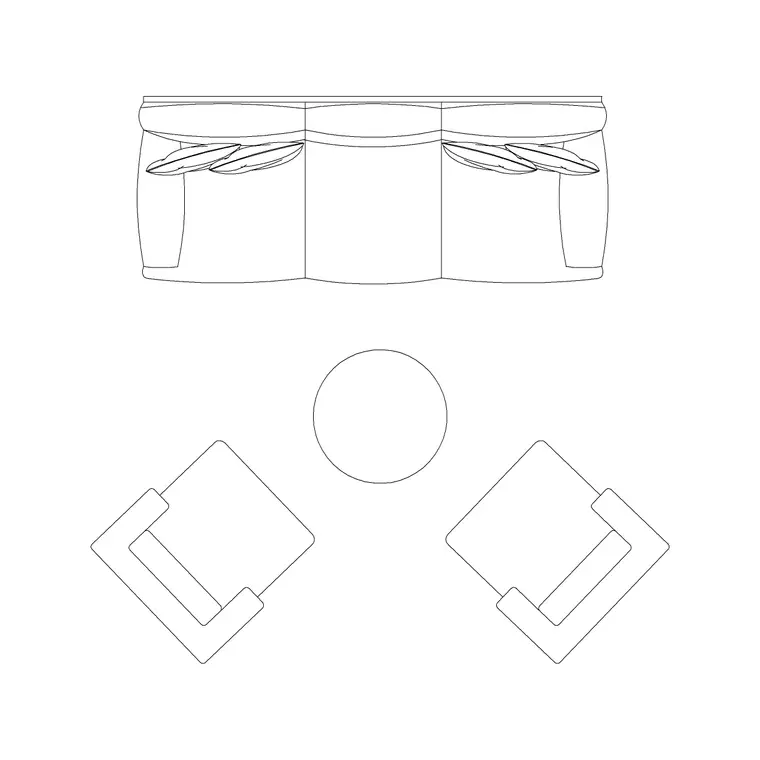
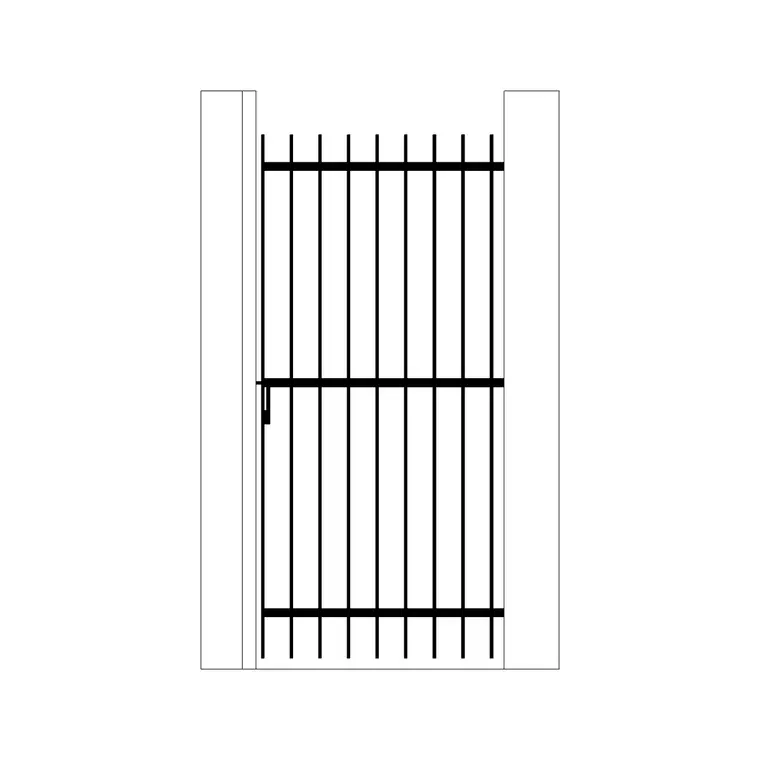
This is exactly why sampling across categories matters rather than just checking five sofas. A library like this one, built around categories including furniture, doors, and lighting among others, should show the same construction discipline whether you're looking at a Sofa Set Plan 1 in the furniture section, an Iron Gate in doors, or a Wall Lamp in lighting. If the furniture blocks are clean but the lighting blocks are a mess, that tells you the library's quality is uneven, possibly sourced from different contributors or built at different times with different standards, which means you can't extend trust from one category to another and need to keep verifying per category rather than per library.
It's also worth paying attention to how a library was actually assembled if that information is available at all, whether it was drawn in-house by people who draft professionally, or aggregated from many outside contributors of varying skill. Neither origin guarantees quality on its own, but a library that's transparent about its own construction process tends to also be the kind of library that took quality seriously in the first place, which is a soft signal worth weighing alongside the direct checks.
Beyond geometry: check the practical basics too
Drawing quality isn't the whole picture. Confirm what formats are actually offered, DWG is the baseline and DXF is a bonus for cross-software compatibility, and check what AutoCAD version generation the files are saved to, since a file saved to a very recent format can fail to open in older software while a widely compatible generation like AutoCAD 2004 or later opens cleanly almost everywhere. Also confirm the licensing terms explicitly rather than assuming, specifically whether commercial use is actually permitted and whether there's any signup or attribution requirement buried in the fine print, since that affects whether you can actually use the block on paid client work without a licensing headache later.
A worked example: running the checklist on one block
To make this concrete, here is roughly how a single check plays out in practice, say you are looking at a Wall Lamp block from a lighting category before committing to the rest of that library. First DIST across the fixture's stated width, a typical wall sconce runs somewhere in the range of 150 to 250mm across the shade or shield, so if the measurement comes back matching that kind of real world range rather than something wildly off like 15mm or 1500mm, scale passes. Next LA to open the layer list and check that the block is not just dumped onto layer 0 with everything hard-set to a single color, a well built block usually spreads its geometry across a small handful of sensibly named layers, something like an outline layer and a hatch or fill layer, with color left on ByLayer rather than baked into individual objects. Then select the whole block and glance at the Properties palette for object count, a wall lamp elevation should typically sit somewhere in the range of a few dozen objects at most, and if it is sitting in the hundreds for what is visually a fairly simple fixture, that is usually a sign the block was drawn inefficiently, maybe traced from a raster image without ever being cleaned up into simplified polylines afterward. Finally check the base point sits at a sensible insertion location, for a wall mounted fixture that usually means the point where the fixture actually meets the wall, not floating somewhere off to the side, since an oddly placed base point makes the block annoying to align correctly every single time you insert it. Run through those four checks in under two minutes, and you already know more about that one block than a five minute look at its preview thumbnail would ever tell you.
Red flags that should make you pause
A few patterns are worth treating as warning signs across a whole library rather than just one block. Preview images that look suspiciously identical to blocks you've seen elsewhere with different filenames, suggesting the library may just be redistributing someone else's work without having actually built or verified any of it. Wildly inconsistent file sizes for visually similar blocks, which often signals a mix of carefully built and carelessly imported geometry sitting side by side. And an absence of any stated format or version information at all, which usually means nobody on the library's end actually checked, and you're the first person verifying compatibility rather than the tenth.
One more pattern worth watching for is a library that never gets updated or corrected, no changelog, no sign that flagged issues ever get fixed. A library that's actively maintained will occasionally show small, sensible improvements over time, cleaner geometry, corrected dimensions, better organization, while a static dump of files uploaded once and never revisited tends to carry whatever quality problems it launched with indefinitely.
What a library passing this test is actually worth
At the end of the day, a library that passes a sample audit like this earns something valuable, the ability to pull a block from it without re-verifying every single one individually going forward, which is a real time saving across a career's worth of projects. That's the whole point of doing this once properly rather than skipping it: you're not just checking ten blocks, you're deciding whether you can trust the other several hundred you haven't looked at yet, and that trust, once earned, is what actually makes a library worth committing to.
Worth remembering too that this is not a one time judgment you make and then forget, a library that passes today is worth re-checking occasionally, especially after it adds a large batch of new blocks or a new contributor category, since the sampling method described here works just as well as a periodic spot check on a library you already trust as it does on a brand new one you are evaluating for the first time.
Further reading
Questions
Frequently asked
How many blocks should I check before trusting a library?+
Five to ten, sampled across a few different categories rather than all from one type, gives a reasonably reliable read on overall construction quality, since libraries tend to be consistent in their building habits across the whole catalog.
What's the fastest checklist for evaluating a single block?+
Check scale with a DIST measurement on a known feature, check layers with LA, check object count and base point in Properties, and confirm color is set to ByLayer. That covers the checks that catch the great majority of quality issues quickly.
What non-geometry factors matter when judging a block library?+
Which formats are offered (DWG at minimum, DXF as a bonus), what AutoCAD version generation the files are saved to for compatibility, and the explicit licensing terms, particularly whether commercial use is genuinely permitted without hidden signup or attribution requirements.
Free downloads from this article

Free CAD block library
Download the blocks from this article — free, no signup