What happens to a block's layers when opened in DraftSight
How a downloaded DWG block's layers, colors and linetypes carry over when the drawing is opened in DraftSight instead of AutoCAD.
Saumyajit MaityUpdated 3 April 20266 min read
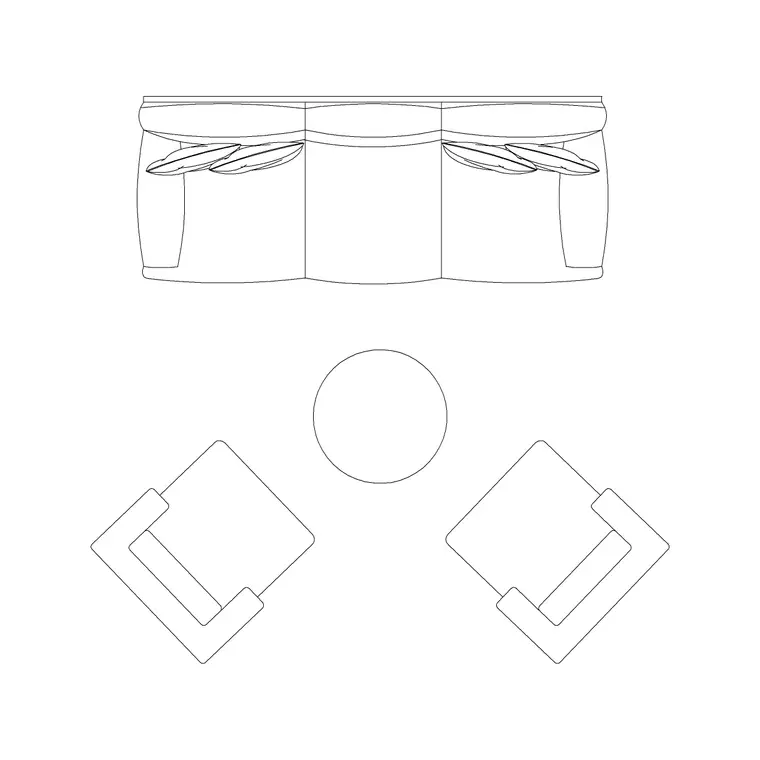
DraftSight is more capable than people give it credit for
DraftSight gets treated by a lot of AutoCAD users as an afterthought, something you'd only reach for if you genuinely couldn't afford a full seat, but I've opened plenty of block-heavy drawings in it over the years and the layer handling in particular is solid. It's built to read and write native DWG rather than converting through an intermediate format, which is the main reason layer structure survives the trip largely intact rather than getting flattened or renamed the way you sometimes see with lower quality converters.
DraftSight started life as a free program before moving to a paid subscription model, and that history means a lot of smaller firms and independent contractors adopted it early and never left, so it shows up in client handoffs more often than its market share alone would suggest. Knowing what actually happens to your layers when a drawing lands there is worth understanding rather than guessing at.
I have also found DraftSight handles layer filters reasonably well, the saved groupings that let you quickly isolate, say, everything on furniture and lighting layers while hiding structural content, which is a feature that a lot of lighter weight DWG viewers either skip entirely or implement in a limited way. For an office that leans on layer filters to manage a busy drawing during review, that is one less thing to worry about losing when a file crosses over to a collaborator running DraftSight instead of AutoCAD.
Layer 0 and ByLayer behavior hold up
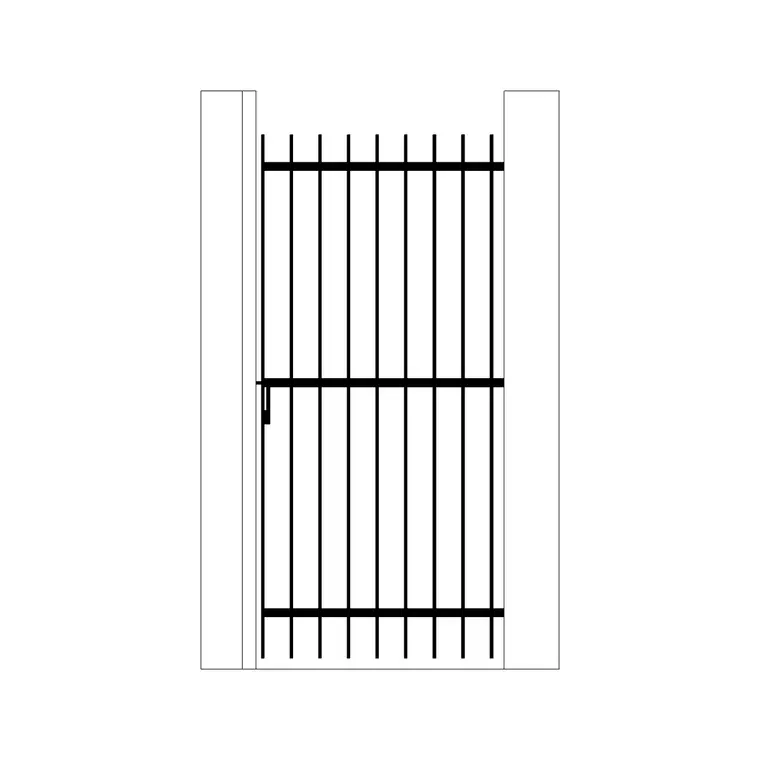
The core convention that makes blocks controllable, drawing the geometry on layer 0 with color and linetype set to ByLayer so the block inherits whatever layer it's inserted onto, works exactly the same in DraftSight as it does in AutoCAD. So if you insert a downloaded block like the Iron Gate onto a layer called A-DOOR-HARDWR that's colored green, the gate geometry turns green in DraftSight the same way it would in AutoCAD, because that inheritance rule lives in the DWG format itself rather than being an AutoCAD-specific behavior.
Layers built with explicit, hard-coded colors rather than ByLayer also travel over unchanged, they just won't respond to layer color changes afterward in either program, which is a block-authoring habit issue rather than a DraftSight compatibility issue.
Layer states, the saved combinations of on, off, frozen and locked that a lot of drafters set up to quickly toggle between, for instance, a furniture layout view and a bare structural view, also carry across correctly in my experience, which isn't something I'd have assumed going in given how much variation exists across DWG-compatible programs on smaller quality of life features like this one.
This inheritance behaviour also holds for blocks nested inside other blocks, a common pattern where a furniture group block contains several individual pieces each drawn on layer 0, so the whole assembly still correctly takes on whatever layer the outer block lands on in DraftSight, exactly as it would in AutoCAD, since the nesting itself does not interfere with how the ByLayer inheritance resolves.
Where colors and plot styles can shift
Color itself is stored as either an AutoCAD Color Index value, the standard 1 through 255 palette where red is 1 and yellow is 2, or as a true color RGB value, and both map over to DraftSight correctly since it supports the same color model. Where I've seen small shifts is in plot styles specifically, the CTB or STB tables that decide how a layer color translates to a printed lineweight. If a drawing arrives with a custom CTB file and that file isn't included alongside the DWG, DraftSight will fall back to its own default plot style behavior, which can mean a block that was meant to plot as a thin hairline instead plots at whatever the default lineweight happens to be. That's not really a DraftSight quirk, it's the same thing that happens if you hand that CTB-dependent file to any other AutoCAD-adjacent program without the plot style file attached.
The fix, when you know a drawing is heading to DraftSight, is simply to include the CTB or STB file alongside the DWG rather than assuming it travels with the drawing automatically, since plot style tables are stored as separate files on disk rather than embedded directly inside every DWG the way layer definitions are.
It is also worth checking whether the drawing uses colour dependent plot styles, CTB, or named plot styles, STB, since a drawing built around one system will not automatically translate to the other if DraftSight or the receiving office happens to default to a different one, and mixing the two within the same office is a surprisingly common source of plotting confusion that has nothing to do with DraftSight specifically but shows up clearly the first time a file crosses between two offices with different plot style conventions.
Linetypes and scale need a quick glance
Standard linetypes drawn from the default library, dashed, center, hidden and so on, are included with DraftSight and display correctly without any extra setup. Custom linetypes defined in a nonstandard LIN file, less common on furniture or hardware blocks but occasionally used for things like fencing or gate mesh patterns, will only display correctly if that LIN file is present on the DraftSight machine too. Linetype scale itself, the LTSCALE and PSLTSCALE settings, reads the same value from the DWG regardless of which program opens it, so a dashed gate outline that looks right in AutoCAD should look right in DraftSight without you touching anything, as long as the underlying linetype definition itself is available.
One small habit worth building is loading the linetypes you actually use into a shared LIN file that ships alongside any block library heading to a mixed DraftSight and AutoCAD office, rather than assuming the receiving machine already has whatever nonstandard pattern the original drafter had loaded locally years ago.
A five minute check worth doing on the first open
When I get a block-heavy drawing into DraftSight for the first time, I open the Layers panel and just scan down the list, checking that every layer I expect is present and that none show up as an unexpected color, which usually points to a missing CTB or a color that was set explicitly rather than ByLayer somewhere upstream. Then I zoom into one or two blocks specifically to confirm linetypes rendered as dashed or hidden rather than solid, since that's the fastest visual tell that a linetype definition didn't come across. For downloaded blocks built cleanly on layer 0 with standard linetypes, which is how a library like this one builds its content specifically so it travels well, this check takes about as long as it took you to read this paragraph and comes back clean almost every time.
Worth adding to that same first-open routine, if you're going to print or export a PDF from the drawing at any point, do a single test plot early rather than waiting until the deadline to discover the plot style table didn't come along with the file.
Further reading
Questions
Frequently asked
Does DraftSight preserve layer names and colors from a DWG file?+
Yes. DraftSight reads native DWG directly, so layer names, ACI colors, true colors and ByLayer behavior all carry over the same as they would opening the file in AutoCAD.
Why does a block plot differently in DraftSight than in AutoCAD?+
This usually comes down to a missing CTB or STB plot style file. If the file that maps layer colors to printed lineweights isn't included with the DWG, DraftSight falls back to its own default plotting behavior.
Do custom linetypes show up correctly in DraftSight?+
Standard linetypes from the default library display fine. Custom linetypes defined in a nonstandard LIN file only display correctly if that same file is loaded on the DraftSight machine.
Free downloads from this article
Free CAD block library
Download the blocks from this article — free, no signup