Opening a downloaded CAD block in BricsCAD vs AutoCAD
What actually changes when a downloaded DWG block opens in BricsCAD instead of AutoCAD, from fonts and hatches to dynamic block behavior.
Saumyajit MaityUpdated 29 March 20265 min read
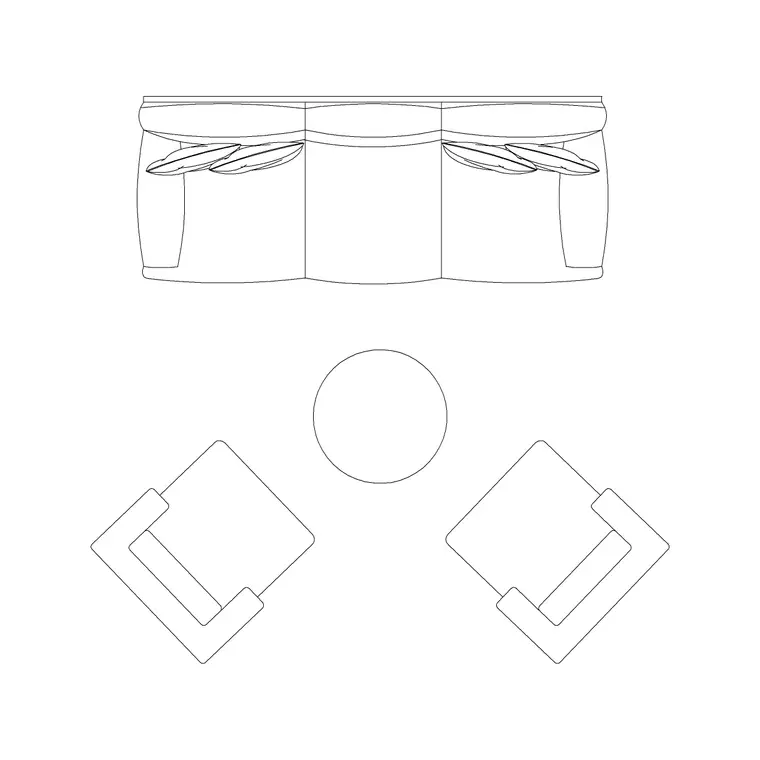
The question I get asked most from firms switching CAD platforms
I've spent years drafting mostly in AutoCAD, and over the last few years I've watched a steady stream of firms move part or all of their seats over to BricsCAD, usually because the licensing cost adds up fast once you're past four or five workstations. So the question that comes up constantly is whether a downloaded DWG block, something like our Sofa Set Plan 1 or the Iron Gate block, is going to open cleanly the moment someone drags it into BricsCAD instead of AutoCAD, and the honest answer is that most of the time it does, but there are a handful of specific things worth checking before you trust it blindly on a live project.
BricsCAD reads and writes native DWG, which is the same file format AutoCAD uses, so at the file level you're not converting anything the way you would going from a Revit file to DWG. What you're really asking is whether every feature used inside that block was built with cross-platform behavior in mind, and that's where the differences start to show up.
What stays identical almost every time
Plain 2D geometry, lines, polylines, arcs, circles and simple hatches, travels basically untouched between AutoCAD and BricsCAD, which is good news because that describes the bulk of what a furniture or door block actually is. Layer names, colors set to standard AutoCAD Color Index values, and linetypes drawn from the default acad.lin or iso.lin libraries also carry over cleanly, since BricsCAD ships with equivalent linetype and hatch pattern definitions out of the box.
Block insertion points, the base point you snap to when placing the block, also stay exactly where the original author set them, so a block built to insert from its bottom left corner in AutoCAD will insert from that same corner in BricsCAD. That consistency is one of the reasons DWG has remained the de facto standard file format across the CAD industry for as long as it has, as the Wikipedia entry on AutoCAD notes when covering the format's wide adoption beyond Autodesk's own products.
Block attributes, the editable text fields you see on things like a title block or a labeled fixture tag, also survive the trip intact, including whatever default values and prompts were set when the attribute was defined. I've never once had an attribute definition silently vanish going from AutoCAD to BricsCAD, which is more than I can say for some of the cheaper third-party DWG converters floating around online.
Where the differences actually show up
Fonts are the first place I'd check. If a block uses a custom SHX font or a TrueType font that isn't installed on the BricsCAD machine, you'll get a substitution, usually to a generic sans serif, and any text on the block, dimension labels or annotation tags, will shift in width because character spacing differs between fonts. Custom hatch patterns are the second thing, since a hatch pattern defined in a nonstandard PAT file that isn't present on the BricsCAD install will often fall back to a solid fill or the nearest standard pattern rather than the intended one.
The third and honestly the trickiest one is dynamic blocks. BricsCAD has its own parametric block system that's genuinely capable, arguably more flexible than AutoCAD's Block Editor in some respects, but it isn't a one to one implementation of Autodesk's dynamic block engine. A block with visibility states, stretch parameters or lookup tables built in AutoCAD will usually insert and display correctly in BricsCAD, but I've seen edge cases where a specific grip or parameter behaves slightly differently once you actually try to manipulate it.
A smaller thing that trips up newer BricsCAD users specifically is the interface itself rather than the geometry, since the ribbon and command aliases are laid out differently by default, though BricsCAD also ships a classic mode that mimics the AutoCAD toolbar layout closely enough that most drafters adjust within a day. None of that affects how the block itself looks or behaves, it's purely a muscle memory adjustment on the human side of the equation.
A quick five minute check before you trust the block
What I actually do when a block-heavy drawing moves over to BricsCAD for the first time is run through a short routine rather than assuming it's fine. Open the drawing, run AUDIT to catch any silent errors, then check the Layer Manager against what you expect, followed by zooming into any text or dimension labels on the block to confirm the font substitution hasn't pushed text outside its intended boundary.
Then I explode a throwaway copy of the block, never the original insert, just to see what geometry is actually inside it and confirm nothing collapsed or dropped during the open. For anything with dynamic parameters, I'll grab the grips and run it through its states once, since that takes thirty seconds and tells you immediately whether the parametric behavior held up.
I'll also run PURGE once after the first open, mostly out of habit, since occasionally a handful of unused dimension styles or empty layers get carried along with a downloaded block and there's no reason to let those accumulate in a live drawing. It's a cheap step and it keeps the file tidy for whoever opens it next, regardless of which program they're on.
If you're evaluating a full switch, not just opening one file
If your firm is genuinely weighing a move from AutoCAD to BricsCAD rather than just occasionally opening a client's file, the smart move is to pull ten or fifteen representative blocks from your actual library, the ones you use every week, and open every one of them in BricsCAD's free trial before committing seats. At the end of the day a compatibility question like this is much cheaper to answer with a trial license than after you've already paid for a year of seats and discovered your dynamic door block doesn't behave the way your drafters expect.
BricsCAD's trial period typically runs long enough to test a real project end to end rather than just poke at a sample file, which is exactly the point, you want to see how your actual content behaves under actual working conditions, not a demo drawing someone else built. For blocks downloaded from a library like this one, which are built as plain 2D geometry on layer 0 with standard fonts and no exotic dynamic parameters specifically so they travel well, you should see close to zero friction either way, which is exactly the point of building them that way in the first place.
Further reading
Questions
Frequently asked
Will a downloaded DWG block look different in BricsCAD than in AutoCAD?+
Usually not, as long as it uses standard fonts, standard hatch patterns and plain geometry on layer 0. Differences show up mainly with custom fonts, custom hatch patterns, or dynamic block parameters.
Do I need to convert a DWG file to use it in BricsCAD?+
No. BricsCAD reads and writes native DWG directly, so there's no conversion step, though saving down to an older DWG version can help if you're also sharing with other software.
Can BricsCAD edit dynamic blocks created in AutoCAD?+
It can insert and use them, and BricsCAD has its own capable parametric block system, but authoring and editing the exact same dynamic parameters can behave slightly differently than in AutoCAD's Block Editor.
Free downloads from this article
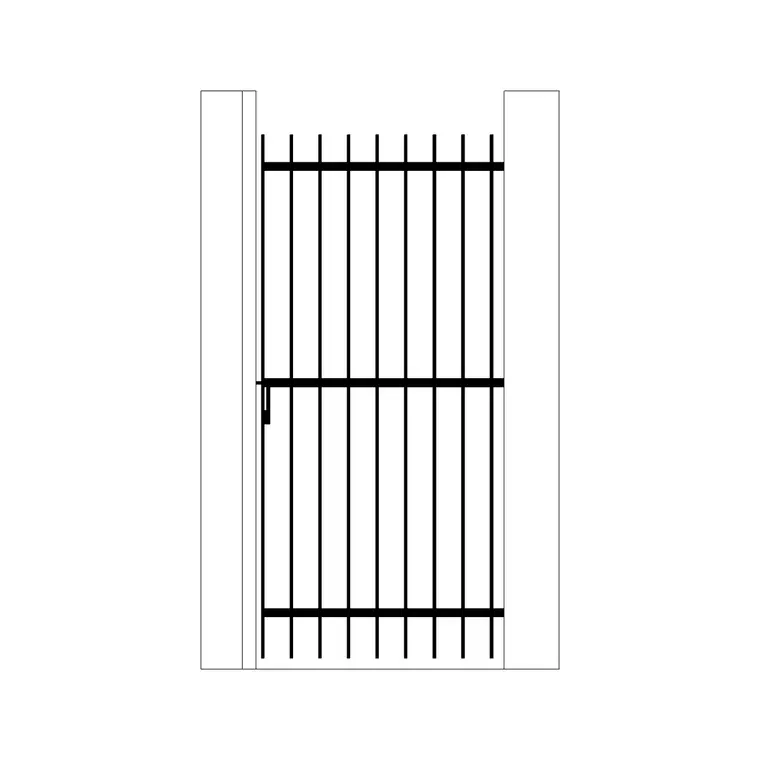
Free CAD block library
Download the blocks from this article — free, no signup