Top office CAD blocks every workplace designer needs
Desks, meeting tables, seating and circulation — the office blocks to download free, the workstation sizes to check, and how to plan an open-plan floor.
Sumana KumarUpdated 17 February 20264 min read
Fit out a floor, not a single room
Workplace design works at the scale of the floorplate. You are not furnishing one room — you are placing dozens of workstations, several meeting rooms, breakout zones and the circulation that stitches them together, all while hitting a target occupancy and keeping escape routes clear. That repetition is exactly why a downloaded office block kit pays off so heavily: a workstation you place fifty times should be one trusted block, not fifty hand-drawn desks.
This post is the workplace designer's standing kit: desks and workstations, meeting and conference tables, task and visitor seating, and the people blocks that prove occupancy. Everything is in the Office category on cadblockdwg.com, free in DWG with no signup and free for commercial use.
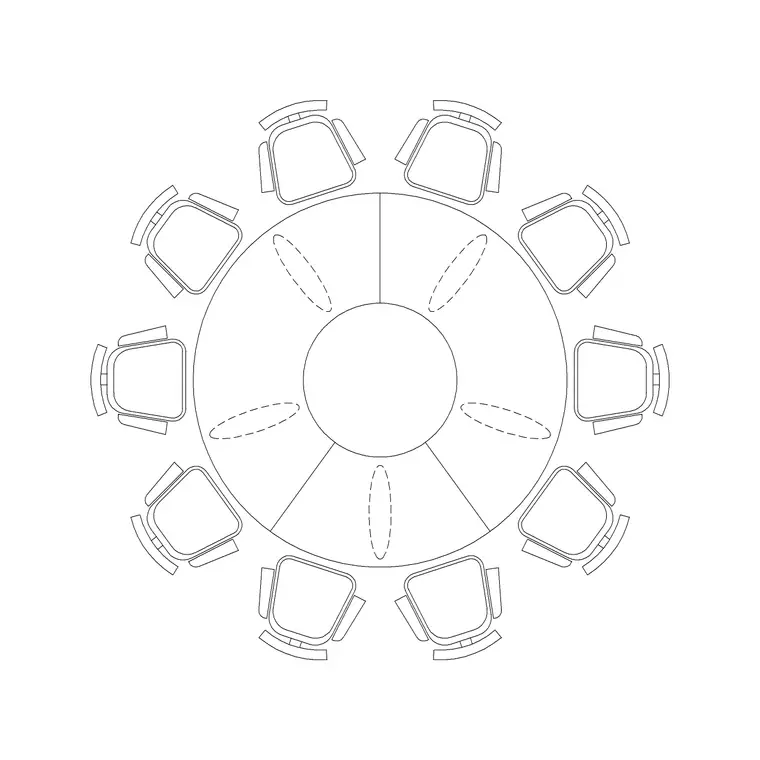
The 10P Round Table block is a ready-made ten-person conference table that drops a boardroom in with a single insertion — pair it with desk and seating blocks from the same category for the open-plan areas. When a conference table that would take ten minutes to draw becomes one click, fitting out a floor of meeting rooms stops being the slow part of the job.
Workstations — the unit you place most
The workstation is the atom of an office plan, so get its size and spacing right first. A standard desk is 1200 to 1600mm wide by 600 to 800mm deep, and a task chair needs around 600mm of swing clearance behind it to roll back. Bench-style runs share a continuous worktop with desks back to back, which packs density efficiently; allow a circulation aisle of at least 1000 to 1200mm between desk rows so people can pass behind a seated colleague without a squeeze.
When you lay out an open-plan zone, place one workstation block, confirm its footprint and clearances, then array it to build a neighbourhood. Because it is a single block, you can re-space the whole grid in one operation if the density target shifts — and density targets always shift, usually late in the project when the headcount changes.
Check the desk block measures the width you specified; a 1400mm desk array built from blocks that are actually 1200mm will quietly cost you a desk per row, and on a full floor that adds up to a real capacity error. Density and comfort both live in this number, so verify it before you array, not after the layout is signed off.
Circulation, occupancy and clean layering
Once desks and meeting rooms are placed, the workplace designer's value-add is the space between them: primary circulation routes wide enough for two-way flow at around 1500mm on main spines, secondary aisles at 1000 to 1200mm, and clear escape routes that planners and fire officers will scrutinise. Getting these right is not just comfort — it is compliance, and a route that is too narrow is a problem you want to find on the plan.
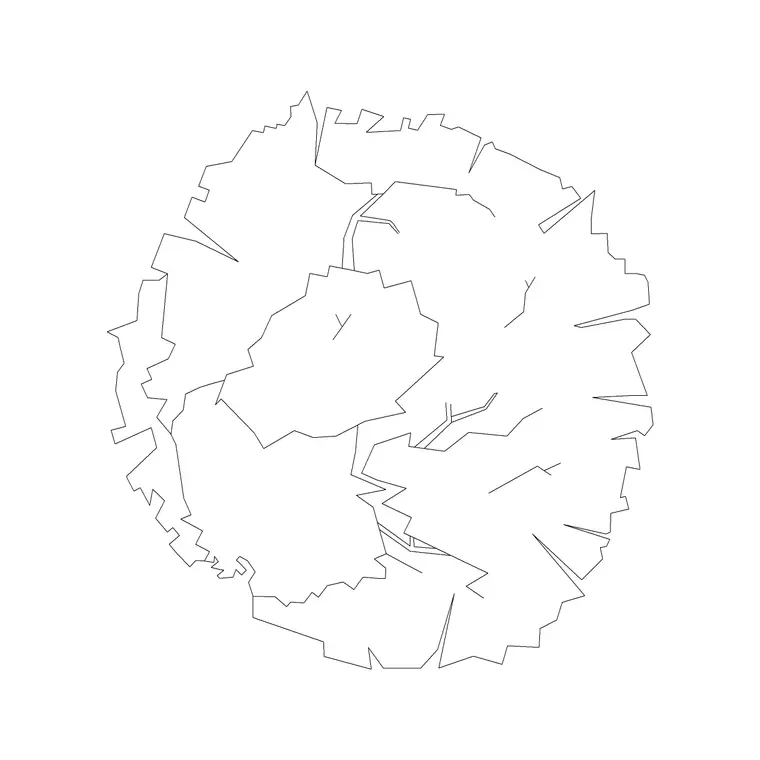
Drop a few people blocks at workstations and around meeting tables to make occupancy and crowding legible at a glance — a layout that looks fine empty can read as cramped the moment you populate it. The Human Figure Plan 1 block is a clean plan occupant for exactly this, and a row of them down a desk bank shows instantly whether the spacing is generous or mean.
Keep furniture, partitions and people on their own layers so you can issue a furniture plan, a partition plan or a fully populated presentation from the same drawing. Blocks built on layer 0 inherit whichever layer you insert them onto, so set the right layer current before placing, and bring everything in with the INSERT command at scale 1. A vetted office kit on a Tool Palette plus disciplined layering lets you lay out, populate and validate a whole floor plate fast — and restyle it for any audience without touching a block.
Questions
Frequently asked
What is a standard office desk size to check on a block?+
A desk is typically 1200–1600mm wide by 600–800mm deep, with about 600mm of chair-swing clearance behind it. Measure the block to confirm before arraying a workstation grid.
How much circulation should I leave around a meeting table?+
Around 1000mm of clear space all the way around so chairs pull out and people reach their seats, plus extra for a credenza or screen wall where the room calls for it.
Where can workplace designers download free office blocks?+
The Office category on cadblockdwg.com has desks, workstations, and round, rectangular and curved meeting tables as free DWG downloads, no signup, free for commercial use.
Free downloads from this article
Free CAD block library
Download the blocks from this article — free, no signup