Single vs Double vs King Bed CAD Blocks: Dimensions Compared
Real single, double and king bed block widths compared against typical published mattress size ranges, so you pick the right footprint first time.
Sumana KumarUpdated 9 June 202610 min read
Why the size label on a bed block matters more than it looks
I've dropped enough bed blocks into live floor plans to know that the label a library gives a block, single, double, king, whatever, is really just a starting point and not a guarantee of what actually lands in your drawing. The footprint that gets inserted is a mm by mm rectangle standing in for a mattress and frame, and if that rectangle doesn't match what your room can actually hold, you end up with a nightstand jammed against a wall, or worse, a bedroom that reads as spacious on the plotted sheet and turns out cramped the day the real furniture goes in. So before comparing three blocks side by side, it's worth being upfront about what single, double and king are doing for you as words, because at the end of the day the label is a convenience name and the dimension is the only thing genuinely load bearing for your drawing.
This matters doubly for anyone drafting at 1:50 scale, where a 200mm error barely shows as a pencil width discrepancy on screen but becomes a very real furniture collision once the layout gets handed off for construction. Getting the right block on the first pass, rather than eyeballing a shape and resizing it later by feel, saves a whole layer of rework that's easy to skip when you're moving fast through a bedroom plan.
Single, double and king are naming conventions, not one universal standard
Here's the thing that trips up a lot of drafters moving between regions or between vendor libraries: there's no single global standard bed size the way there is for something like paper, where ISO 216 fixes A4 at a locked 210 by 297 millimetres everywhere in the world. Bed sizing is a manufacturing and retail convention that shifts by country and even by brand, so a double in one market typically sits somewhere in the 1350mm wide range, while what gets marketed as king can run anywhere from around 1500mm up past 1900mm depending on which region's convention you're working under.
That's exactly why, in a CAD block library, the actual millimetre dimension baked into the block name and drawn into the geometry matters more than the marketing word sitting next to it. When I'm speccing a bedroom layout for a client, I stop trusting the word double the moment I need an accurate clearance measurement, and I go straight to the block's real footprint instead, because that's the number the wall, the wardrobe run and the door swing all actually have to agree with.
Reading the naming pattern before you insert anything
Once you notice it, every bed block in this library follows the same naming logic, which is worth spelling out because it saves you opening every candidate block just to check its footprint. The leading number pair, something like 1500x2000 or 3200x2095, is width by length in millimetres, width first, and everything after that describes what else is in the drawing, single or double or king, and whether side tables are included. So 1590x2030-double-bed-without-side-tables reads as a 1590mm wide, 2030mm long double bed with no flanking furniture, and you can work that out from the file name alone before you've inserted a single block into your drawing.
This matters because a library with forty six bedroom products, which is roughly what this category holds once you count every bed, headboard and elevation variant together, isn't something you want to browse thumbnail by thumbnail every time you need a specific width. Learning to read the number pair directly off the name, and treating the words after it as a checklist of what's included rather than a vague description, turns block selection from a search task into something closer to a lookup, which is a meaningfully faster way to work once you're doing it across more than one or two bedrooms in a project.
It's also worth double checking insertion units once a block is actually in your drawing, since a bed drawn correctly at 1500x2000mm in the source file can still land wrong if your working drawing is set up in a different unit or a stray scale factor gets typed into the insert dialog. I make a habit of drawing a quick reference dimension across the bed the moment it's placed, before I move on to anything else in the room, precisely because that thirty second check catches an insertion error immediately rather than three drawings later when a wardrobe run suddenly doesn't fit against a bed that's quietly ten percent oversized.
The single bed block: real footprint, not a guess
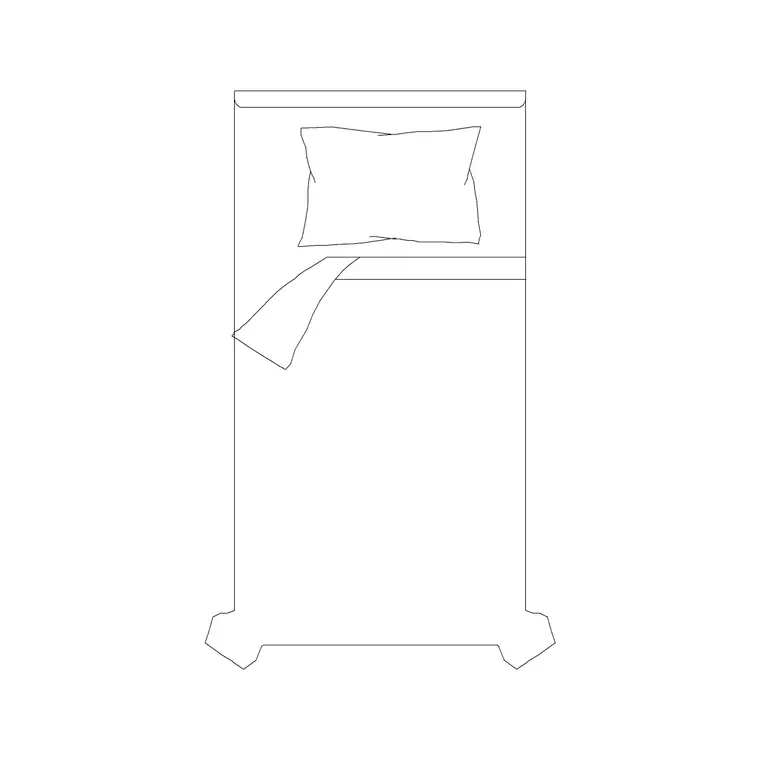
The single bed block in this library, 1050x2000-single-bed-without-side-table, is drawn at 1050 millimetres wide by 2000 millimetres long, footprint only, no side table included since that's explicit in the name itself. That width sits comfortably in the range you'd typically expect for a single or slightly generous single bed, most published single mattress ranges land somewhere between 900mm and 1050mm, so this block reads as being at the roomier end of single rather than the tightest possible option.
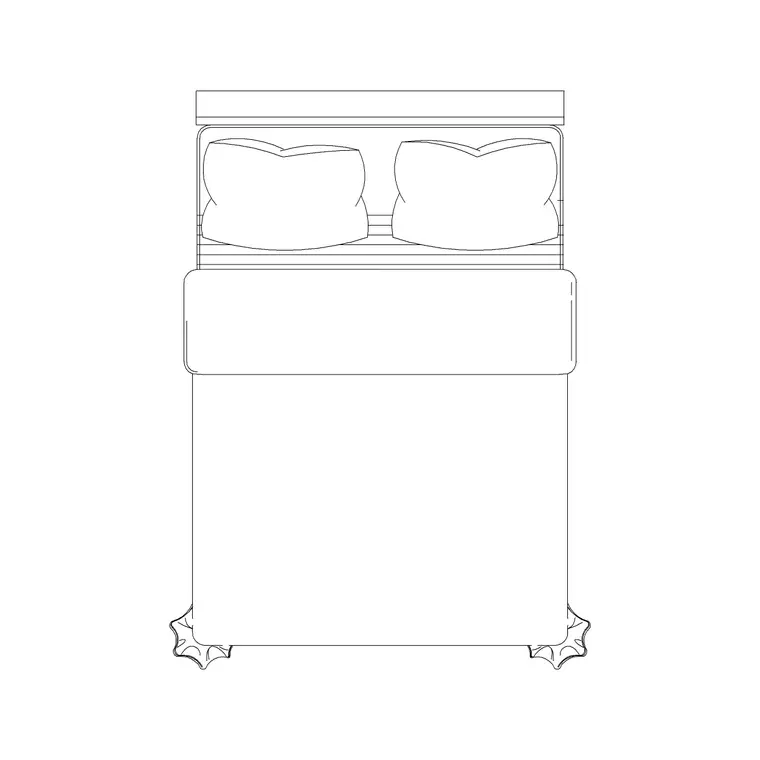
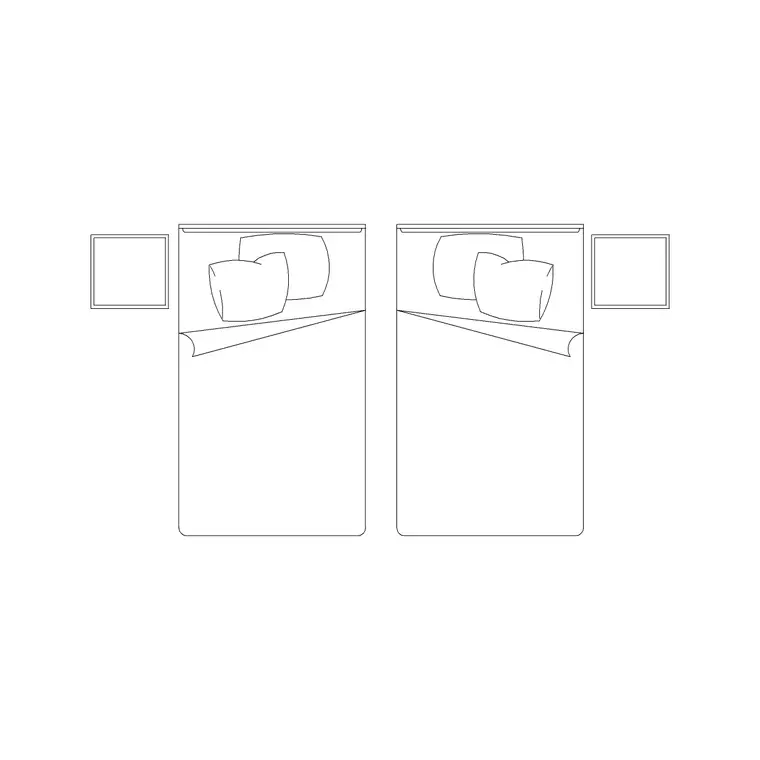
If you need a narrower footprint for a tighter room or a bunk style layout, there's also 1220x2000-single-bed-without-side-table and 1220x2080-single-bed, both landing at 1220mm wide, which is really a wider single that starts creeping toward what some markets would separately label a three quarter bed. And if the room plan already needs fitted furniture flanking the bed, 1050x2080-single-bed-2-seater-with-common-side-table plus the 1200x2000-single-bed-2-seater variants, one with a shared side table and one with two separate ones, come pre drawn with that grouping already built in, so you're not assembling the arrangement from separate blocks by hand every time.
The double bed range: several real widths, not one number
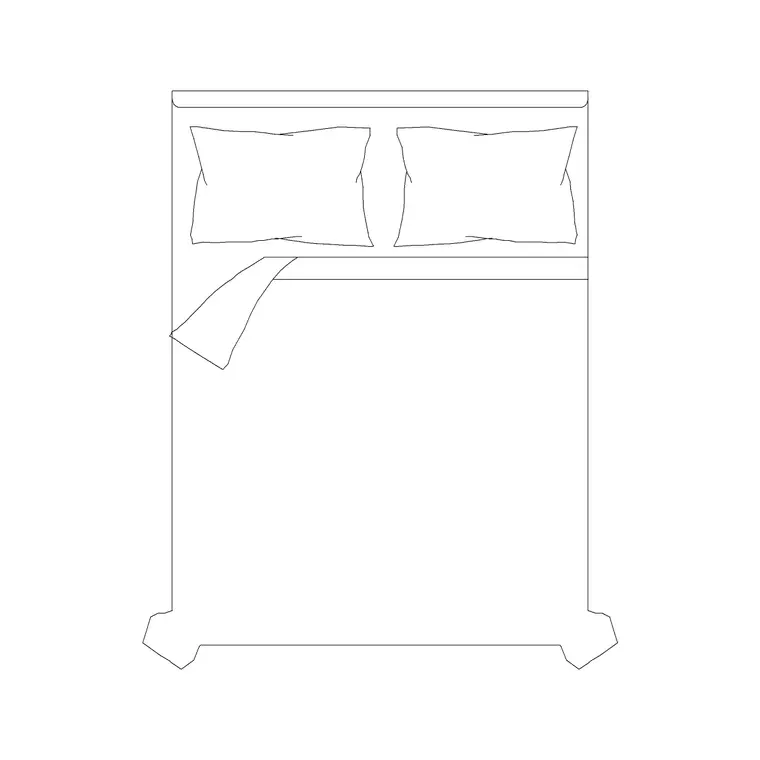
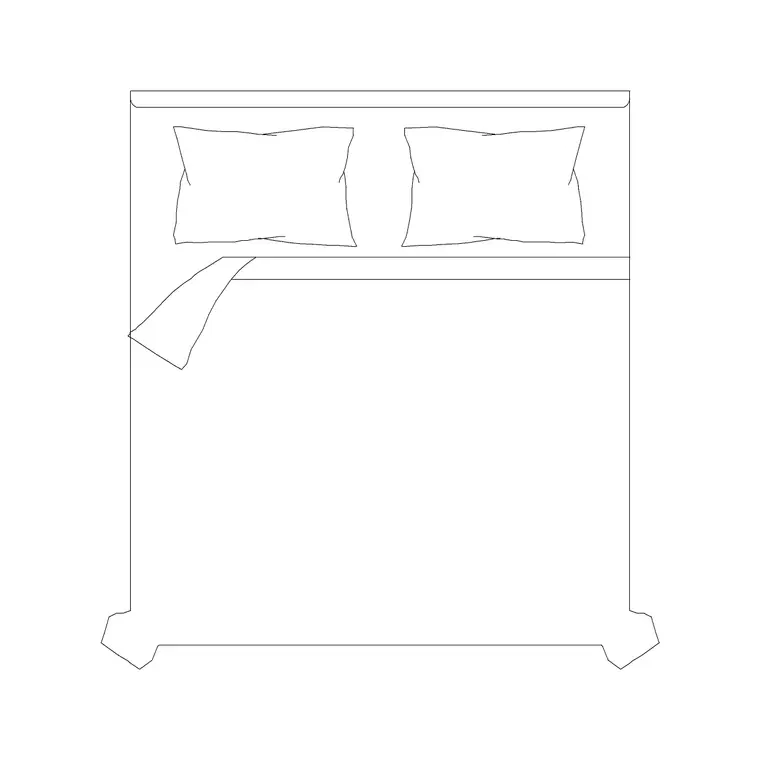
This is where I'd push back on treating double as a single fixed number. This library alone carries eleven distinct double bed blocks, running from 1400x2110-double-bed at the narrower end up through 1890x2030-double-bed-without-side-table and 1895x2030-double-bed-without-side-tables near the top, and the middle of that spread, blocks like 1500x2000-double-bed-without-side-tables and 1590x2030-double-bed-without-side-tables, is really where most residential double style layouts settle.
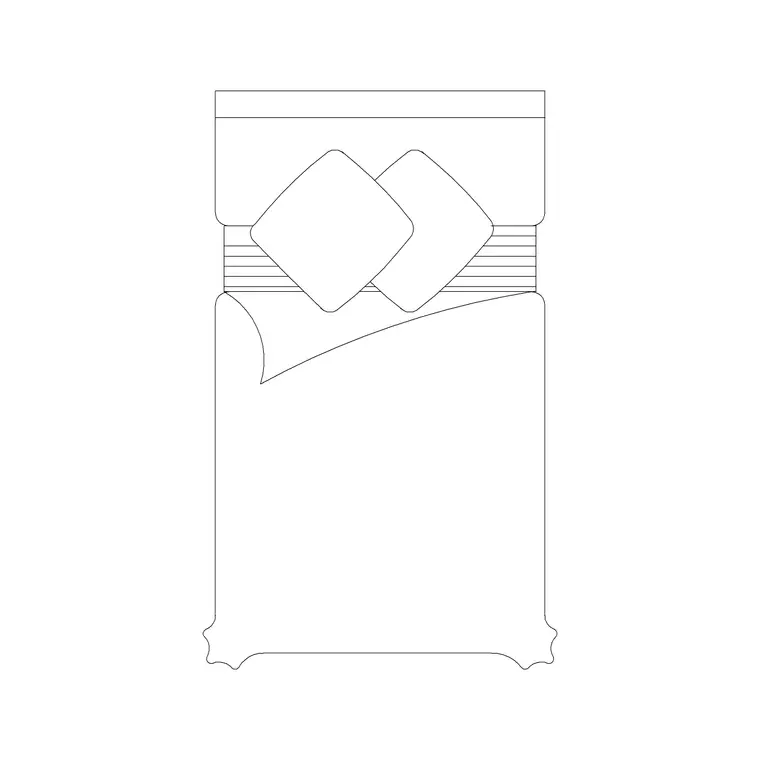
The catch here is that width alone doesn't tell you whether a block includes flanking furniture. 1600x1950-double-bed-with-side-tables and 1650x1970-double-bed-with2-side-tables both build the nightstands into the drawn footprint, so if you insert one of those expecting just a bed and then add your own separate side tables on top, you'll double up the furniture, and the room will read as overcrowded even though nothing is technically wrong with either block on its own. Always read the with versus without side table naming before you insert, not after you've already built the rest of the room around it.
The king size block: what 3200x2095 is actually showing you
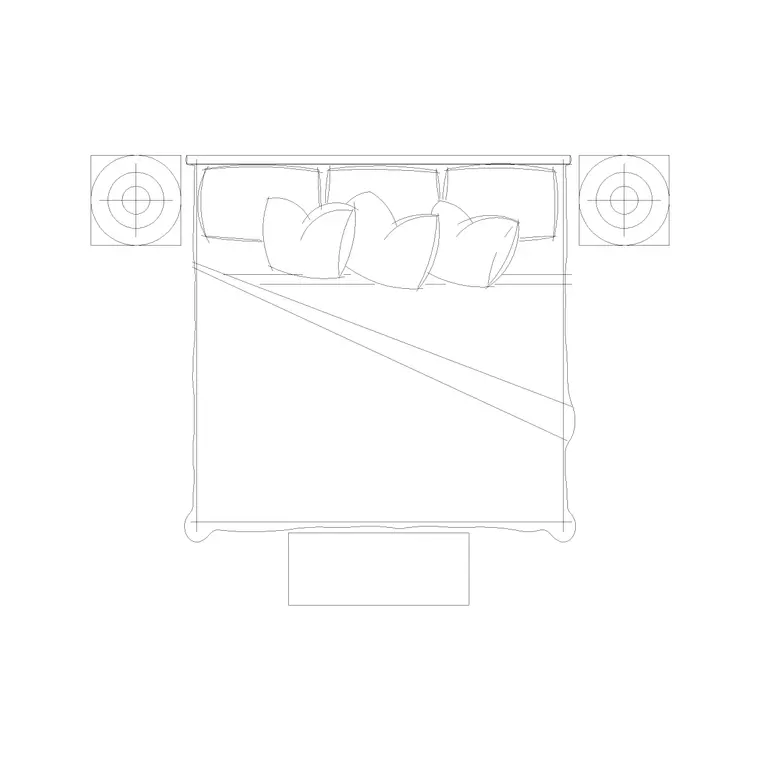
The king size block, 3200x2095-king-size-bed, is the one where I want to be straightforward about what that number is measuring. At 3200 millimetres wide, this isn't a mattress footprint on its own, no published king mattress range runs anywhere near that wide, a genuine king mattress typically sits somewhere between roughly 1500mm and 1950mm depending on region. What this block actually draws is a composite bedroom grouping, the bed itself plus the flanking elements built into the same piece of geometry, delivered as one plan view insert rather than several pieces you'd have to assemble and align by hand.
That's genuinely useful once you know what you're looking at, since it means you can drop a full king bedroom grouping into a floor plan in a single insert rather than four separate ones, but it also means you shouldn't treat 3200mm as the answer to how wide is a king mattress if you're running a clearance calculation for the bed frame alone. Open the block, check what geometry is actually inside it, and measure the bed rectangle specifically if that narrower number is what your layout math actually needs.
Choosing the right block against your room width, not the label
In practice, the way I pick between these when laying out a bedroom is to start from the room's clear floor width, not from the word on the block. A 3000mm wide bedroom simply can't take the 3200mm king grouping and still leave circulation space on either side, so that block only really makes sense in a genuinely large master suite, typically 3600mm and up if you also want a walkway down both flanks of the bed. For anything in the 3000mm to 3400mm range, one of the double bed blocks in the 1500mm to 1650mm width band, paired separately with a side table block if the composite you've chosen doesn't already include one, tends to fit with enough clearance left for a wardrobe run or a window seat along the opposite wall.
Single bed blocks are the forgiving choice in this comparison, since even the wider 1220mm variants leave generous circulation in anything but the smallest box room, which is part of why they show up so often in hostel, dorm and compact apartment layouts where floor area, not furniture ambition, is the constraint the whole plan is drafted against.
Room function is worth weighing alongside room width too, since the same 3400mm wide room can justify a double or a king depending on who's actually going to sleep in it and how the rest of the house is arranged. A kids room or a guest room that occasionally doubles as a study tends to work better with a single, typically the 1050mm or 1220mm variants covered above, because the leftover floor area goes toward a desk or storage rather than sitting empty around a bed nobody needed that wide. A primary bedroom is where the double and king blocks, and the with side tables composites in particular, earn their keep, since that room is more likely to actually need the flanking nightstands baked into the block, rather than a single occupant room where a nightstand might only be needed on one side. None of this is a rule enforced by the library itself, it's just a pattern that tends to hold up across enough residential layouts to use as a first pass filter before committing to a specific width.
Common mistakes when swapping between these sizes
The mistake I see most often, and one I've made myself early on, is inserting a with side tables block and then adding two more nightstand blocks from a different set because the drawing looked bare without them. Check the block name first; if it already says with side table or with 2 side tables, that furniture is already accounted for in the geometry. A second common mistake is scaling a block visually to look about right rather than checking the actual insertion scale, which is an easy way to end up with a bed that measures 1800mm in the library but reads as 2200mm in your drawing because someone typed a scale factor of 1.2 into the insert dialog at some point and never noticed it afterward.
A third, subtler mistake is swapping a without side tables double for the king grouping late in a design and forgetting that the king block's overall footprint is roughly double the width of the double bed it's replacing, which can quietly break a wardrobe run or a door swing that was perfectly fine against the smaller block.
A fourth mistake, easy to make on a busy project, is trusting the word single, double or king in a client brief without confirming it against an actual dimension before you insert anything at all. Since these words genuinely mean different things across regions and even between individual furniture retailers, I've learned to ask for or measure the client's actual mattress width whenever it's available, rather than assuming their double matches this library's 1500mm or 1800mm variants by default. It usually does land close, but close isn't the same as confirmed, and confirming it up front is a lot cheaper than a furniture delivery that doesn't match the drawing.
Quick reference for this specific set of blocks
If you just want the practical shortlist, 1050x2000-single-bed-without-side-table covers a standard single with no attached furniture, 1500x2000-double-bed-without-side-tables or 1800x2000-double-bed-without-side-tables covers a mid range double footprint, 1600x1950-double-bed-with-side-tables gives you the nightstands pre built into the block, and 3200x2095-king-size-bed is the one to reach for when you're laying out a full master bedroom grouping in a single insert and the room width can actually support it.
- Single: roughly 1050mm to 1220mm wide across the variants in this library, all drawn in plan and side view - Double: roughly 1400mm to 1895mm wide, with both with side table and without side table versions available across most widths - King: one composite block at 3200x2095mm covering the bed plus flanking furniture as a single grouping, not a bare mattress footprint
None of these numbers are universal law the way a paper size or a court dimension is, they're the real, verified footprints of the blocks in this library today, and that's exactly the information you need when you're picking a block instead of guessing at one and hoping it fits once it's inserted.
Further reading
Questions
Frequently asked
Is there one universal standard for single, double and king bed sizes?+
No. Unlike paper sizes under ISO 216, bed sizing is a manufacturing and retail convention that varies by country and brand. Always check the block's actual drawn dimension rather than relying on the size label alone.
Does the 3200x2095 king block represent just the mattress?+
No. At 3200mm wide it is a composite bedroom grouping, the bed plus flanking elements drawn as one piece of geometry, not a standalone mattress footprint. Open the block and check the geometry if you need the bed frame's width specifically.
How do I know if a bed block already includes side tables?+
Read the block name. Blocks in this library are named explicitly, for instance 1600x1950-double-bed-with-side-tables versus 1800x2000-double-bed-without-side-tables, so you can tell before inserting whether nightstands are already part of the drawing.
What room width do I need for the king size grouping?+
Since the composite block is 3200mm wide, you generally want a room in the region of 3600mm or more if you also want circulation space along both sides of the bed, rather than treating 3200mm as a tight fit.
Free downloads from this article
DWG3200X2095 King Size Bed
 DWG
DWG1500x2000 Double Bed Without Side Tables
 DWG
DWG1050X2000 Single Bed Without Side Table
 DWG
DWG1800x2000 Double Bed Without Side Tables
 DWG
DWG1600X1950 Double Bed With Side Tables
 DWG
DWG1220X2080 Single Bed
 DWG
DWG1400X2110 Double Bed
 DWG
DWG1200x2000 Single Bed 2P With 2 Side Tables
Free CAD block library
Download the blocks from this article — free, no signup