Curated pack · wardrobe cad block pack
Free wardrobe and closet CAD block pack
By Sumana Kumar · Published 20 Jun 2022 · Updated 4 Jan 2026
Wardrobes are deceptively important blocks: they're the deepest piece in most bedrooms, the storage capacity is set by their run length, and whether the doors are hinged or sliding can decide a whole room's layout. This free wardrobe and closet CAD block pack collects the storage you draw on every residential scheme — single and multi-door fitted wardrobes, sliding wardrobes and walk-in closet layouts — in DWG and DXF, drawn at true millimetre sizes and ready to insert into AutoCAD 2004 or later. Free for personal and commercial work, no signup, no watermark.
Use the pack to set out bedroom storage walls, dressing rooms, built-in closets and hallway storage. Because the wardrobes are drawn to a standard depth with the door swings shown, you can check the one thing that catches people out — whether a hinged door clears the bed or the circulation — the instant the block lands.
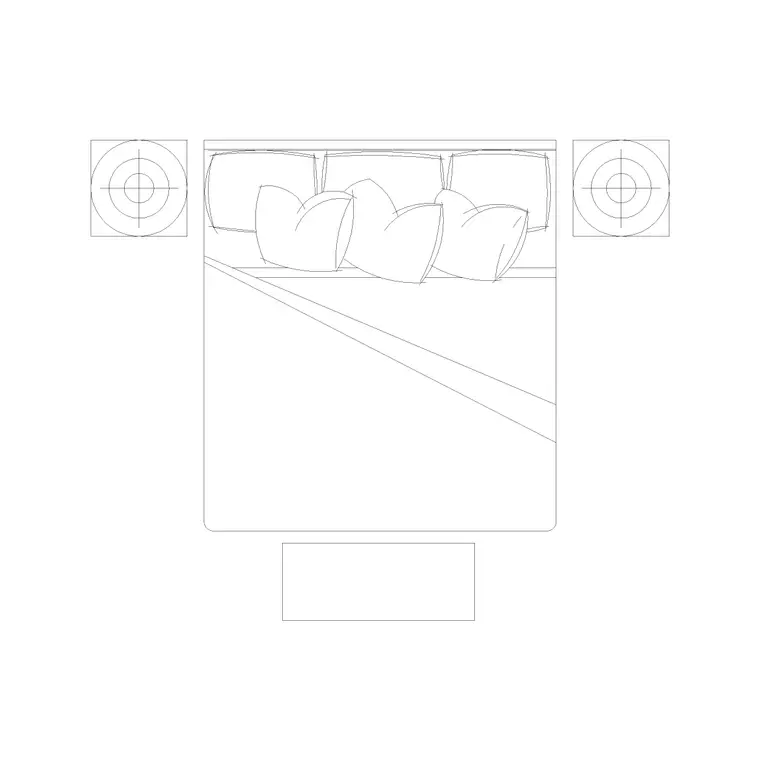
The blocks are made to fit against the bedroom set: place the wardrobe run on the storage wall, confirm the doors clear the bed, and the room's storage is resolved against real dimensions.
What's in the wardrobe pack
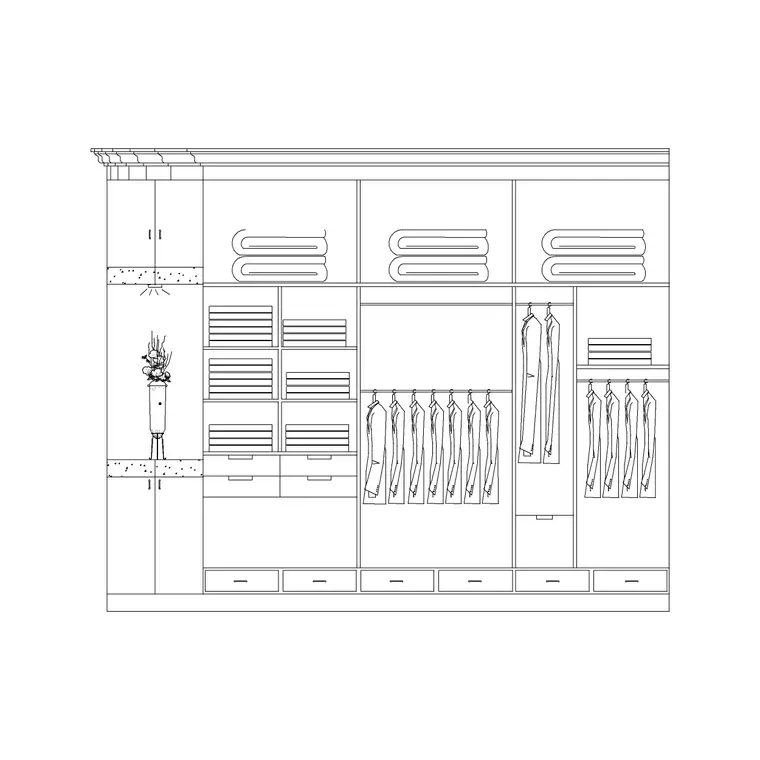
The pack spans the storage types you specify most. Fitted wardrobes run from single units to long multi-door runs — including a seven-door wardrobe block for a full storage wall — drawn so you can stretch or trim the run to the wall length. Sliding-door wardrobes are included for tight rooms where a hinged swing won't fit, and walk-in closet layouts give you the hanging rails and shelving arrangement for a dressing room.
Each is a clean plan-view block you can copy, mirror and array as a unit. The carcass, the doors and the internal rails sit on a sensible layer convention, so you can show a clean carcass on the architectural plan and the door swings or slide direction on the joinery drawing. Keep the lot on a furniture layer and the storage toggles on and off with the rest of the room.
How to use the set together
Pick the wall first. A wardrobe wants the longest free wall in a bedroom, away from the window so it doesn't block daylight, and ideally on the route between the door and the bed so it's reached naturally. Place the wardrobe run along that wall, then make the call that drives the layout: hinged or sliding doors.
Hinged doors are cheaper and give full access, but they need swing space on the plan — draw the door arc and confirm it clears the bed and the circulation. Sliding doors need no swing space, which can rescue a narrow room, but they only ever open half the run at once. The seven-door run is ideal for a master storage wall; for a walk-in, drop the closet layout into the dressing room and set the hanging rails and shelves around the perimeter, leaving a clear central aisle.
Fitted wardrobe notes
A fitted wardrobe is typically around 600 mm deep — enough to hang clothes on a front-to-back rail — and that depth is what eats the floor, so it's the figure to respect when you set out the room. The run length sets the capacity: a multi-door run like the seven-door block gives a full wall of hanging and shelving, which you'd dimension as a single joinery unit rather than door by door.
Draw the doors on their own layer so you can produce a clean architectural plan with just the carcass and a joinery plan with the swings or slides shown. For a fitted run that closes an awkward gap, stretch the end module or add a filler — the block is drawn to be adjusted to the wall rather than left floating with a gap at one end.
Sliding and walk-in options
Sliding wardrobes earn their place in tight rooms. Because the doors run on tracks rather than swinging, they reclaim the floor a hinged door would need — often the difference between a wardrobe fitting beside a bed and not. The trade-off, worth noting on the drawing, is that only part of the run is open at any time, so a walk-in is better where full simultaneous access matters.
A walk-in closet or dressing room is set out differently: the storage lines the perimeter as hanging rails, shelves and drawer banks, and you protect a clear central aisle — at least 900–1000 mm — so two people can pass and dress. Drop the walk-in layout in, then adjust the rail and shelf runs to the room shape, keeping the aisle clear and the corners usable rather than dead.
Plan view for layouts
Wardrobe work is almost entirely plan: the carcass, doors and internal rails seen from above with the swing or slide checked against the bed and circulation. The plan blocks are what you mirror when a guest room's storage wall is the handed twin of the master, or array when a development repeats the same fitted run across units.
For interior elevations — the face of a fitted wardrobe wall, say — you'll draw the door heights and handle lines in elevation, but the critical layout decisions, depth and door clearance, are made in plan. Keep the storage on the furniture layer so it freezes and thaws with the room's other furniture.
Who uses the wardrobe pack
Interior designers and joinery specialists use it to set out bedroom storage and dressing rooms quickly. Architects use it to confirm a bedroom has room for adequate storage without fouling the bed or the door. Fit-out designers use the fitted runs to draw built-in wardrobes once and repeat them across a multi-unit residential scheme.
Because the blocks are free and licence-clear, the same pack serves a single fitted-wardrobe job or a whole development's storage walls. Pair it with the bedroom set so the wardrobe and the bed are drawn against each other and the door clearances are checked from the start.
Free download
Browse the full library — DWG & DXF, no signup.
Questions
Frequently asked
What wardrobe types are in the pack?+
Single and multi-door fitted wardrobes (including a seven-door full-wall run), sliding-door wardrobes for tight rooms, and walk-in closet layouts with hanging rails and shelving — all as scaled plan-view blocks.
How deep should I draw a wardrobe?+
Fitted wardrobes are typically around 600 mm deep, enough to hang clothes on a front-to-back rail. That depth governs how much floor the run eats, so it's the figure to respect when setting out the room.
When should I use sliding instead of hinged doors?+
Use sliding doors in narrow rooms where a hinged swing would foul the bed or circulation — they need no swing space. The trade-off is that only part of the run opens at once, so a walk-in is better where full access matters.
Are the wardrobe blocks free for commercial use?+
Yes. Every block downloads free in DWG and, where available, DXF, with no signup, no watermark and no attribution requirement, cleared for commercial projects.
Related downloads
Blocks for this guide
Popular blocks to download
Related categories
Related guides
Curated pack
Free Bedroom CAD Block Pack — DWG & DXF
Free bedroom CAD block pack in DWG and DXF — double beds, side tables, wardrobes and seating in plan and side view for AutoCAD. No signup, commercial OK.
Curated pack
Free Living Room CAD Block Pack — DWG & DXF
Free living room CAD block pack in DWG and DXF — sofa sets, coffee tables, rugs and seating in plan for AutoCAD lounge layouts. No signup, commercial OK.
Curated pack
Free Balcony & Terrace CAD Block Pack — DWG
Free balcony & terrace CAD block pack in DWG and DXF — outdoor seating, bistro sets, planters and loungers in plan for AutoCAD. No signup, commercial-use OK.