How to scale a human-figure block to real height in AutoCAD
Scale figures only convey scale if they are the right height. Here is how to set a free DWG human-figure block to a true 1.7–1.8m in AutoCAD.
Sumana KumarUpdated 12 May 20264 min read
A scale figure has one job: be the right height
Human-figure blocks — scale figures, entourage, people — exist to give a drawing a sense of size that everyone reads instantly. A door, a tree or a ceiling height all become legible the moment there is a person beside them. But that only works if the figure is at a believable adult height: roughly 1.7 to 1.8 metres standing. A figure drawn at half that turns every space around it into a giant's hall; drawn at double, it makes a normal room look like a doll's house.
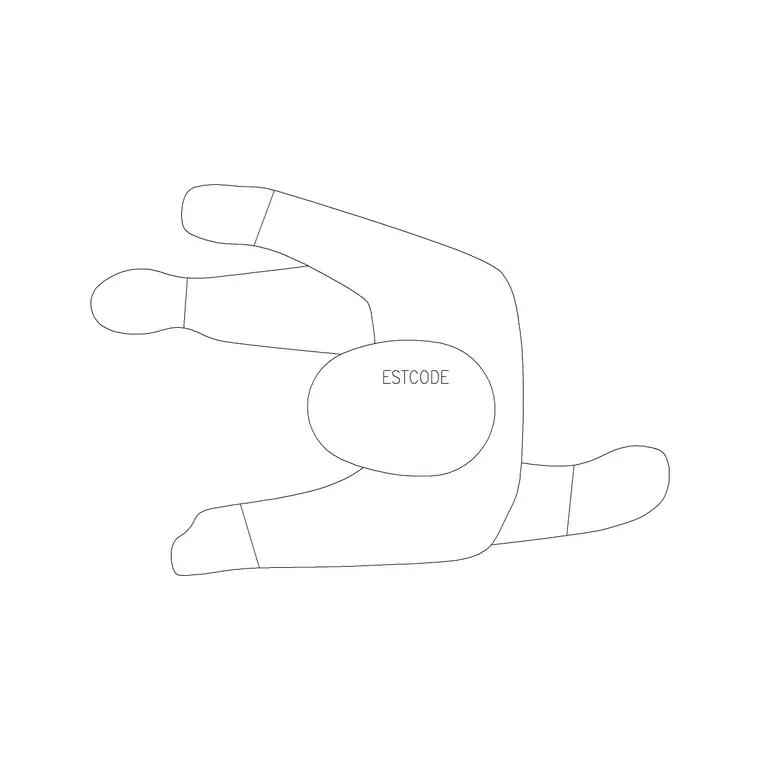
The free Human Figure Plan 1 block in the People category is a plan-view figure (the top-down footprint used on floor plans). For elevations and sections you will want a standing front-view figure instead. Either way, download as DWG — no account, free for commercial use — and the dimension you care about is height for elevation figures, or simply correct footprint scale for plan figures. Because figures so often set the scale for everything else on a sheet, getting them right matters more than their small size suggests.
Plan figures versus elevation figures
It is worth being clear which figure you are scaling, because the calibration differs. A plan-view human figure is seen from above and reads as a small footprint with shoulders; you scale it so that footprint is roughly 450 to 550mm across, the space a standing person occupies. An elevation figure is the full standing silhouette, and you scale it by height to about 1750mm.
Using the wrong view is a common and obvious error — a top-down plan figure dropped into a street elevation looks bizarre, as does a standing silhouette lying on a floor plan. This library labels blocks by view, so confirm you have the plan figure for plans and a front-view figure for elevations before you scale. Matching the view is half of using entourage well. The other half is restraint: a few well-placed figures read as real, while a crowd of identical ones reads as wallpaper, so scale a small number carefully rather than stamping many.
Set an elevation figure to true height
For a standing elevation figure, the Reference method nails the height every time. Insert the block, type SCALE, select the figure, pick a base point at the feet, type R for Reference, then click from the feet to the top of the head to define the current height. Type 1750 (in a millimetre drawing) and the figure resizes to a true 1.75 metres, still standing on the same ground line because you anchored at the feet.
Anchoring at the feet is the trick that keeps the figure planted on the floor or pavement as it scales, rather than floating up or sinking through the ground. If you prefer a plain factor, the usual units conversions apply — 0.001 for millimetres into a metre drawing, 1000 the other way — but Reference is faster because you are aiming at a known height. The same method sets a seated figure or a child to its own correct height; just measure feet-to-head (or seat height) and type the real number you want.
Fix the units mismatch first if it is wildly off
If the figure comes in as a vast shape filling the screen, or so small you cannot find it without Zoom Extents, that is units, not height. A millimetre figure in a metre drawing is 1000x too tall; the reverse makes it microscopic. Set INSUNITS to millimetres in your template so figures auto-scale on insertion, or apply the 0.001 / 1000 factor manually for a unitless legacy block, and then fine-tune the height with Reference.
Keeping the two corrections in order — units to get it roughly right, Reference to set the exact height — stops you from chasing a moving target. Once your template carries the right INSUNITS, most figures simply drop in at a sensible size and only need a small Reference tweak, if any. This is the same units-then-size sequence that fixes a too-big sofa or a giant car, so once it is habit it serves you across every block family, not just entourage.
Use figures to pressure-test the space
A correctly scaled figure does more than decorate — it audits the drawing. Stand one beside a reception desk and you immediately see whether the counter height works; place a few along a corridor and the width either feels generous or tight. Vary the figures (different poses, a mix of standing and seated, the occasional mirrored instance) so a group reads as people rather than as a cloned cut-out, exactly as you would vary trees in a planting plan.
Keep entourage on its own 'People' or 'Entourage' layer so you can dim or freeze it for technical sheets and bring it back for presentation drawings. The figures inherit that layer automatically when the block is built well. Used at true height and varied a little, scale figures make a drawing both more honest and more persuasive — and because they share the page with cars, trees and furniture, a figure at the right height is also the quickest way to spot when one of those other blocks has been scaled wrong.
Questions
Frequently asked
How tall should a scale figure be in AutoCAD?+
About 1.7–1.8m for a standing adult. In a millimetre drawing set the height to roughly 1750; in a metre drawing to about 1.75. Use SCALE Reference, anchored at the feet, to hit it exactly.
How do I scale a person block to an exact height?+
Run SCALE, pick a base point at the feet, choose Reference, click feet-to-head to set the current height, then type 1750. The figure resizes to true height while staying on the ground line.
Why is my human-figure block the wrong size?+
Usually a units mismatch — a millimetre figure in a metre drawing is 1000x too tall. Set INSUNITS to millimetres so it auto-scales, then fine-tune the height with the Reference option.
Free downloads from this article
Free CAD block library
Download the blocks from this article — free, no signup