Curated pack · free people cad blocks
15 free people and scale figure CAD blocks in 2026
By Sumana Kumar · Published 5 Apr 2026 · Updated 30 May 2026
Nothing communicates the size of a space faster than a human figure standing in it. A people block — what architects often call a scale figure or entourage — is the reference that lets anyone reading a drawing instantly grasp how big a door, a room or a public square really is. This round-up gathers 15 free people and scale figure CAD blocks in DWG and DXF — standing, walking, seated and grouped figures in both plan and elevation — drawn to scale and free for commercial use, no signup.
People blocks do two jobs. In elevation and section they give the drawing scale and life: a figure beside a building façade tells you the storey heights at a glance. In plan they populate a layout so a public space, an office floor or a transport concourse reads as used rather than empty, and they let you check that circulation routes are wide enough for the number of people they'll carry.
Below we cover what the 15 figures include, how plan and elevation people are used differently, why a real human dimension matters for scale checks, and how to place figures so they enhance a drawing rather than clutter it.
What the 15 people blocks include
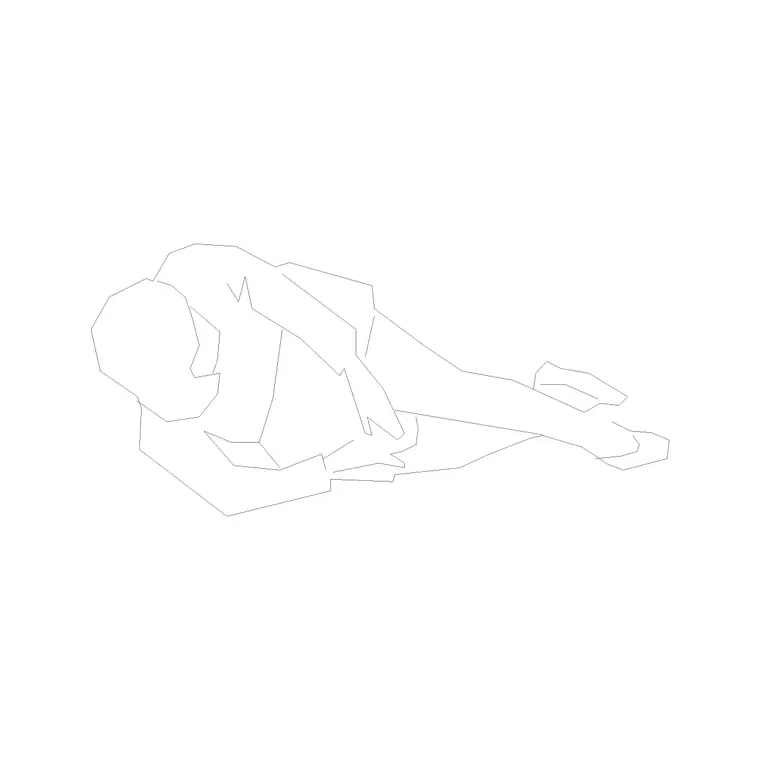
The set covers the figures you reach for most. Standing figures — front and side — for elevations and to mark people at a counter, a threshold or a viewpoint. Walking figures for circulation routes, concourses and street scenes. Seated figures for restaurants, waiting areas, auditoria and offices. Small groups and pairs for plazas, lobbies and social spaces. And a few plan-view figures — the simple human footprint seen from above — for populating floor plans and checking densities.
The figures are drawn as clean, neutral silhouettes rather than detailed characters, which is deliberate: a scale figure should read as 'a person, about so tall' without drawing attention to itself. Neutral entourage works across project types and never dates the drawing the way a fashion-specific figure would.
Plan figures vs elevation figures
Plan-view people are used to populate and test a layout. Drop figures into a public space, a waiting room or an open-plan office and you can see whether the circulation reads, whether seating groups have room, and whether a space feels appropriately busy or sparse. A plan figure is essentially a human footprint — roughly a 450–550 mm shoulder width and 250–350 mm depth — useful for checking how many people fit through a doorway or along a corridor.
Elevation and section figures are about scale and presentation. A standing figure beside a building elevation, a section through a stair, or a streetscape gives the drawing an instant, intuitive sense of size. These are the figures that make a presentation drawing feel alive, and they belong in nearly every external elevation and section.
Why a real human dimension matters
A scale figure only works if it's the right size. Use a standing adult height of roughly 1.7–1.8 m as the reference — that's the dimension your whole drawing is implicitly measured against when someone looks at a figure beside it. If your scale figure is wrong, every judgement a viewer makes about the drawing's size is wrong too.
Because these blocks are drawn at true human scale, a figure inserted into a correctly-set-up drawing immediately reads the storey heights, the door heights and the space proportions for you. That's also why a figure is the fastest sanity check on a drawing: drop one in, and if it looks like a giant or a doll against the building, your units or scale are off somewhere.
Placing people without cluttering the drawing
Restraint is everything with entourage. A few well-placed figures read as scale and life; a crowd of them turns a technical drawing into a cartoon and obscures the architecture underneath. For an elevation, one or two figures at the entrance and maybe one mid-façade is usually plenty. For a plan, place figures where they tell a story — a queue at a counter, people seated at tables, a couple walking the main route — rather than scattering them evenly.
Vary the figures too: mix standing, walking and seated, flip some so they don't all face the same way, and avoid lining identical figures up in a row. The goal is to suggest natural human use, not to fill space. And always keep figures on their own layer so you can freeze them instantly for a clean technical drawing.
Keeping people on a dedicated entourage layer
Put every people block on a dedicated entourage or scale-figure layer — never on the architecture. People are presentation furniture: you want them visible on a rendered or marketing drawing and gone on a dimensioned construction drawing. A dedicated layer with its own colour and lineweight makes that a one-click freeze.
This matters more for people than for almost any other block, because figures over a façade or a plan can obscure the lines a contractor needs to read. Keep them isolated, and the same drawing produces a lively presentation view and a clean technical view. Pair the people set with the vehicle, tree and street-furniture blocks to build complete, scaled streetscapes and public-realm drawings from one free library.
Free download
Browse the full library — DWG & DXF, no signup.
Questions
Frequently asked
What people blocks are in the 15-figure set?+
Standing figures (front and side), walking figures, seated figures, small groups and pairs, and plan-view figures seen from above — drawn as neutral silhouettes for use in plan, elevation and section.
What height should a scale figure be?+
Use a standing adult height of about 1.7–1.8 m as the reference. The figures are drawn at true human scale, so a figure inserted into a correctly set-up drawing reads the storey and door heights for you automatically.
Should people blocks go in plan or elevation?+
Both. Plan-view figures populate and test layouts and circulation; elevation and section figures give the drawing scale and life. Several uses overlap, so the set includes figures for each.
Are the people CAD blocks free for commercial use?+
Yes. Every figure downloads free in DWG and DXF with no signup, no watermark and no attribution requirement, and all are cleared for commercial project use.
Related downloads
Blocks for this guide
Popular blocks to download
Related categories
Related guides
Curated pack
Free CAD Block Bundle for Site Plans
Free CAD block bundle for site plans in DWG — trees, cars, people, furniture and external symbols ready for AutoCAD masterplans. No signup, commercial-use OK.
Curated pack
Free Reception Furniture CAD Block Pack
Free reception furniture CAD block pack in DWG — desks, waiting seating and tables in plan and elevation for AutoCAD lobbies. No signup, commercial-use OK.
Curated pack
Free Landscape & Tree DWG Pack — Plan & Elevation
A free landscape and tree DWG pack — trees, palms, shrubs and potted plants in plan and elevation for AutoCAD site plans. DWG and DXF, no signup, commercial-use OK.