How to insert a downloaded human-figure block in AutoCAD
Add free scale-figure people DWGs to your drawings — placing them at 1.7m height, choosing plan vs elevation, and scattering them naturally for scale and life.
Saumyajit MaityUpdated 8 April 20265 min read
Why scale figures matter
A human figure is the single most effective way to give a drawing scale. The eye reads a person instantly and uses them to gauge how big everything else is — a door, a counter, a tree, a room. Drop a figure into an elevation and suddenly the viewer understands the heights; leave it out and the same elevation could be a doll's house or a cathedral. That is why architects call them scale figures or entourage.
The People category has figures in both plan and elevation views — standing, walking, sitting, individuals and groups. Open the one that fits your scene and download the DWG. It is free, no signup, commercial-cleared. The key thing a figure must get right is height: a standing adult is about 1.7 to 1.8m tall, and if your figure is not close to that, the scale it implies will be wrong and will quietly mislead everyone reading the drawing.
Plan figures vs elevation figures
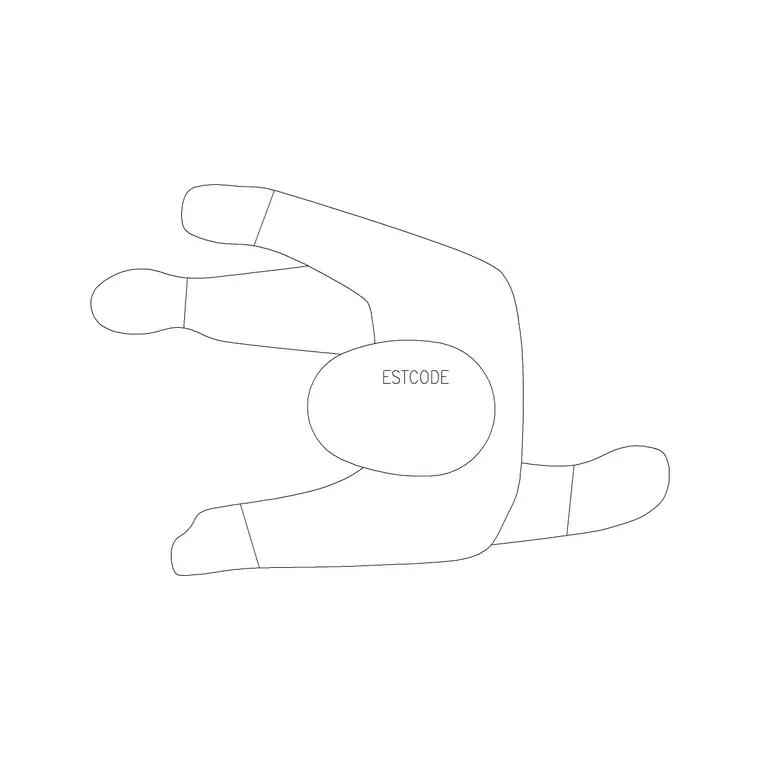
Plan-view people are the top-down silhouette — head and shoulders seen from above — used on floor plans and site plans to show occupancy and circulation. Elevation people are the full standing silhouette seen from the front or side, used on elevations, sections and renders to give vertical scale and life. The two look completely different and are not interchangeable.
The People category labels each block's view, so grab the plan figure for a plan and the elevation figure for an elevation. A plan figure placed in an elevation (a top-down blob standing on the ground) or an elevation figure laid flat in a plan is an instant tell of an inexperienced drawing, so always confirm the view matches the sheet. For a plan, figures are mostly about showing how spaces are used; for an elevation, they are about height and atmosphere.
Insert at the right height
Open your drawing, type I, Enter, Browse to the figure DWG and select it. For an elevation, place the figure standing on the ground line — snap its feet to the ground with object snaps (F3) on — and check the height: the top of the head should reach about 1.7 to 1.8m above the ground. If it does not, you have a scale problem to fix before going further.
Leave scale at 1 if the figure is drawn at real height. Click to place. On a plan, position figures where people would actually be — seated at the dining table, standing at the kitchen counter, walking along a corridor — so they communicate how the space works. A figure standing in the middle of an empty room says little; a figure using a fixture or moving along a route tells a story about the design.
Fix the height if it is wrong
If a figure inserts as a giant or a speck, it is a units mismatch — the same millimetre-versus-metre issue every block can have. Set INSUNITS consistently, or insert and run SCALE with 0.001 or 1000. Then verify against the 1.7 to 1.8m benchmark: draw a DIST from the feet to the top of the head. Because figures are a scale reference, getting their height exactly right matters more than for almost any other block — a mis-scaled person makes the whole drawing lie about its size.
If you need a child or a taller adult, you can scale a standard figure deliberately: a child reads at roughly 1.1 to 1.3m, so scale a 1.75m figure by about 0.65 to 0.75. Just do it knowingly, as a design choice, rather than letting a units error decide the height for you.
Scatter them naturally and layer them
The fastest way to make entourage look fake is to line people up evenly or repeat one identical figure. People are never arranged in a grid, so vary it: use several different figures — standing, walking, in groups — mirror and rotate some, and place them at irregular spacing and in natural clusters. A couple chatting, someone walking past, a person paused at a window reads as a real scene; ten identical clones in a row reads as clip art.
Keep all figures on a dedicated entourage or people layer so you can turn them off for a clean technical drawing and on for a presentation. Built on layer 0, the figures inherit whichever layer you make current before inserting. With the right view, the right height and a natural scatter, a few well-placed people will do more to sell a drawing than almost any other single addition.
Use figures to check the design, not just decorate it
Scale figures earn their place by testing the design as well as dressing it. A plan figure placed at a counter, a desk or a basin shows whether there is genuinely room for a person to use that fixture — a kitchen worktop with no standing room in front, or a corridor too narrow for two people to pass, becomes obvious the moment you drop figures in at real size. The person is, in effect, a 600mm-wide ergonomic check you can move around the plan.
This is why getting the height and width right matters so much: an honest figure tells the truth about the space, while an over-scaled one flatters it. Use a walking figure to test that doorways and routes are wide enough, a seated figure to confirm there is leg and pull-out room at a table, and a group to check a waiting or gathering area is not cramped. Treated this way, entourage stops being mere decoration and becomes a quick, intuitive way to confirm the spaces you have drawn actually work for the people who will use them.
Questions
Frequently asked
How tall should a human scale figure be?+
A standing adult is about 1.7 to 1.8m. Place an elevation figure with its feet on the ground line and check the head reaches that height; if not, it is a units issue — set INSUNITS or scale by 0.001 / 1000.
What is the difference between a plan and elevation people block?+
A plan figure is the top-down head-and-shoulders silhouette used on floor and site plans; an elevation figure is the full standing silhouette used on elevations and sections. Match the view to the sheet.
How do I make people in a drawing look natural?+
Use several different figures, mirror and rotate some, place them at irregular spacing in natural clusters, and have them use the space — seated, walking, paused — rather than lining up identical clones in a grid.
Free downloads from this article

Free CAD block library
Download the blocks from this article — free, no signup