Football Pitch Dimensions: 11-a-Side vs 5-a-Side Compared
Real FIFA football pitch and goal dimensions for 11-a-side play compared against 5-a-side and futsal court sizes, with drafting notes.
Saumyajit MaityUpdated 1 April 202610 min read

One sport, two very differently sized playing surfaces
Full 11-a-side football and 5-a-side football share a name and a set of rough principles, kick a ball into a goal, but they're drafted from completely different dimension sheets, and treating a 5-a-side pitch as a scaled-down version of the full pitch is where most first attempts at this drawing go wrong. The full pitch has a tightly defined range of legal sizes under the Laws of the Game, while 5-a-side and its close relative futsal are built to a much smaller, differently proportioned court that behaves more like an indoor court sport than a shrunken outdoor pitch.
I'd treat these as two separate drafting problems from the start rather than one pitch you resize, because the goal size, the penalty area proportions and even the general shape of the playing surface change between the two, not just the overall footprint.
It's worth adding that youth football, played by younger age groups, commonly uses its own smaller pitch sizes distinct from both the full adult 11-a-side range and the 5-a-side or futsal figures covered here, generally scaled to the players' age group by the relevant national association, so a brief mentioning a specific junior age group is worth checking against that association's own age-banded pitch guidance rather than either of the two standards discussed above.
Full 11-a-side pitch dimensions
FIFA's Laws of the Game allow a length between 90 and 120 metres and a width between 45 and 90 metres for general play, a genuinely wide legal range that reflects how football pitches have historically been built to fit whatever site was available rather than one fixed footprint. For international matches that range narrows considerably, typically 100 to 110 metres long and 64 to 75 metres wide, and the pitch most people picture when they think of a professional football ground, roughly 105 by 68 metres, sits comfortably inside that international range and is the figure used at most major stadiums and World Cup venues.
The goal itself is fixed regardless of overall pitch size, 7.32 metres wide by 2.44 metres high, a dimension that hasn't moved in over a century of the modern game and is worth treating as a hard constant on any elevation drawing. The penalty area extends 16.5 metres out from each goal line and 40.3 metres wide, with the six yard box, more accurately the goal area, sitting at 5.5 metres out and 18.32 metres wide, both proportioned around the fixed goal rather than scaling with the overall pitch size.
It's also worth noting that the centre circle, penalty spot distance and corner arc are all proportioned from the pitch's fixed features, the goal and the halfway line, rather than scaling with the overall pitch length or width, which means these markings stay identical whether you're drafting a 100 or a 110 metre pitch, only the outer touchlines and the distance from halfway to each goal actually change.
5-a-side and futsal court dimensions
This is where the comparison gets genuinely interesting, because 5-a-side football doesn't have one single governing dimension the way 11-a-side does. Outdoor 5-a-side pitches vary considerably by league and facility, since FIFA's formal rulebook for this format is really the futsal code, which specifies an indoor court of 38 to 42 metres long and 18 to 22 metres wide for international futsal matches, with 40 by 20 metres being the commonly cited standard size in practice. That's roughly a fifth of the area of a full 105 by 68 metre pitch, which tells you why the game itself plays so differently, more like an indoor court sport with constant ball contact than the wide open spaces of the full game.
Futsal goals are considerably smaller too, 3 metres wide by 2 metres high, reflecting the tighter court and the faster, closer-range shooting the format encourages. If you're drafting an outdoor 5-a-side facility rather than a formal futsal court, it's worth confirming the specific dimensions with whatever league or operator the facility is built for, since outdoor 5-a-side venues genuinely vary more in size than the futsal rulebook alone would suggest.
Artificial turf pitches are increasingly common for both formats and are worth a construction note distinct from the pure geometry covered here, since an artificial surface changes drainage, base preparation and maintenance access requirements considerably compared with natural turf, even though the painted line dimensions themselves stay identical regardless of surface type.
Surrounding clearance and run-off
Full-size football pitches need a clear run-off zone beyond every touchline and goal line for player safety and for technical areas, advertising hoardings and, at higher levels, camera positions, and that clearance is typically planned in addition to the marked pitch rather than eating into it. Smaller 5-a-side and futsal courts, being indoor or semi-enclosed formats more often than not, usually rely on perimeter boarding or fencing directly at or near the court edge instead of an open run-off zone, since the smaller, faster-paced game is designed around that tighter enclosed boundary rather than open space to chase the ball into.
Either way, the clearance strategy is different enough between the two formats that it's worth deciding early in a site plan which type of pitch you're building, since a full-size pitch's generous run-off assumption doesn't transfer to a 5-a-side layout, and vice versa, a tight enclosed 5-a-side boundary would be unusually cramped if applied to a full pitch.
Floodlighting for evening play is also worth resolving early on any 5-a-side facility specifically, since these courts are very often built for evening league use and lighting pole positions need to sit clear of any perimeter fencing or boarding rather than competing for the same tight edge space a smaller court naturally has less room to spare.
Drafting both pitch types in AutoCAD
For the full pitch, draft the outer touchlines and goal lines first at your chosen dimension within the legal range, then build the penalty areas, goal areas, centre circle and goals as blocks referenced off the goal line position, since all of the interior markings are proportioned from the goal rather than the overall pitch size. That means the same block set of markings works whether you're drafting a 100 by 64 metre pitch or a 110 by 75 metre one, only the outer rectangle and the halfway line position change.
For a 5-a-side or futsal court, build it as its own smaller drawing rather than a scaled copy of the full pitch, since the proportions genuinely differ, the futsal penalty area and goal size don't scale down linearly from the full-size pitch's figures. Keeping these as two entirely separate block families in your library, rather than one pitch block with a scale factor applied, avoids the mistake of producing a 5-a-side court with full-size proportions squeezed into a smaller footprint.
It's worth building the full-size pitch's interior markings, penalty areas, goal areas, centre circle, as blocks referenced from the goal line and halfway line specifically, the same discipline discussed for other court sports in this series, since it means the identical block set works correctly whether your particular project lands at 100, 105 or 110 metres without any of the interior geometry needing to be redrawn.
Populating a pitch drawing honestly
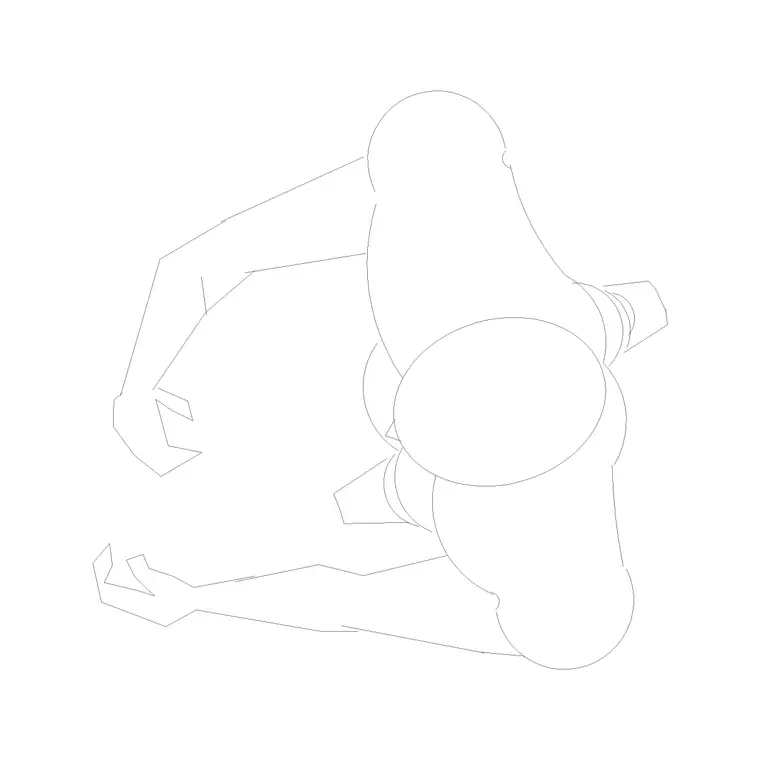
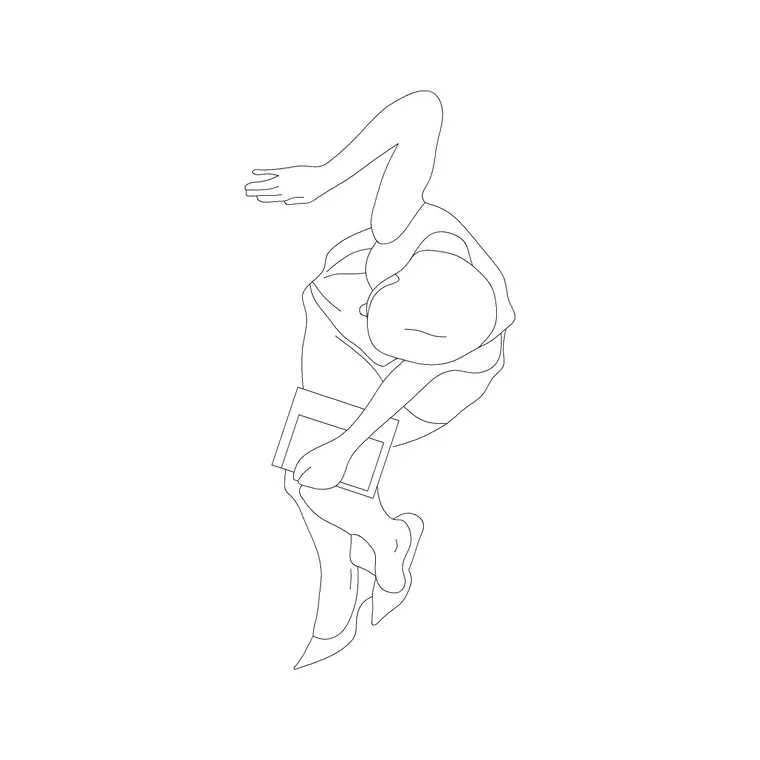
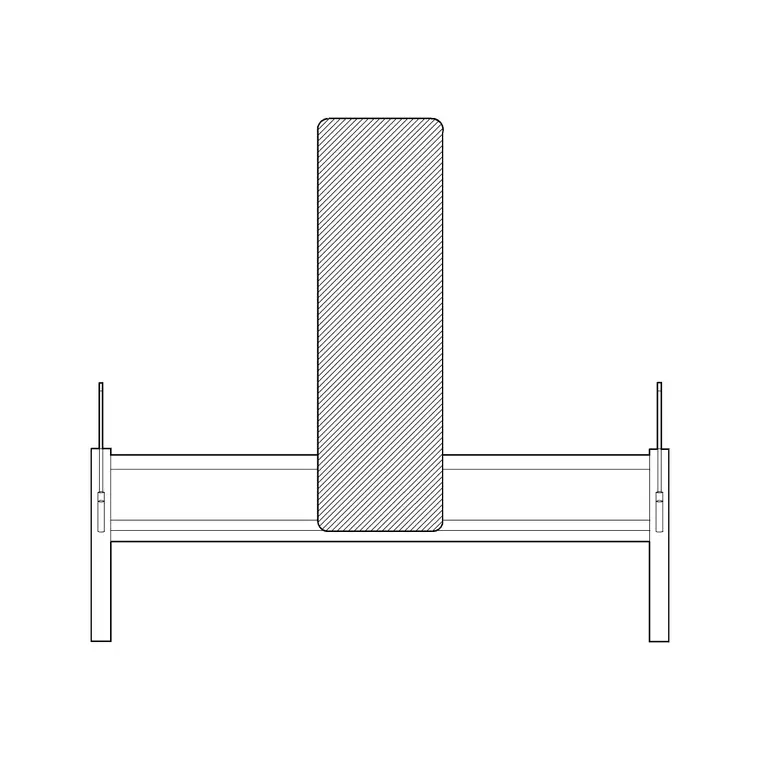
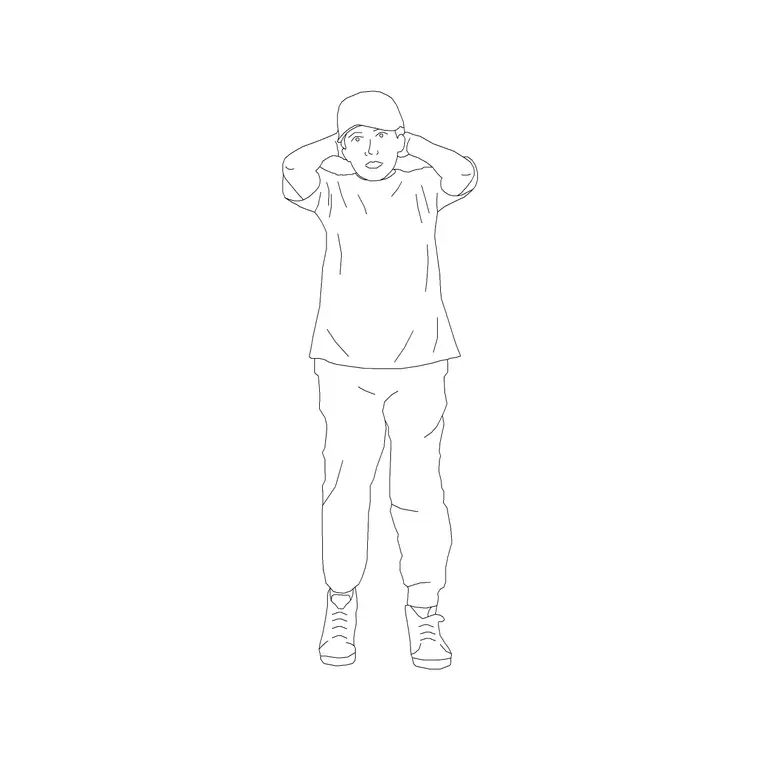
We do carry a football themed decorative block, simply named football, in our general accessories style products, useful as a small scene-setting object on a broader landscape or park plan rather than as pitch-line geometry itself, and it's worth knowing that distinction so it doesn't get mistaken for a marking block. For actual scale and occupancy on the pitch drawing, our people category's plan-view and standing human figures, along with the exercise-posed figures, are the more genuinely useful blocks, scattered across the pitch to show realistic player spacing rather than an empty marked rectangle.
For youth or junior facilities specifically, our kid figure blocks in the people category are a nice honest touch on a 5-a-side or futsal layout aimed at younger players, since those facilities are very often built with exactly that age group in mind, and showing child-scale figures rather than adult figures communicates the intended use of the space more accurately.
It's also worth building a simple site coordination version of both pitch types, showing just the outer boundary and goal positions without the full interior marking detail, since a lot of early-stage site planning only needs to know the footprint a pitch of either type will occupy, and a simplified block speeds up that stage considerably compared with working from the fully detailed marking drawing every time.
Accessibility considerations
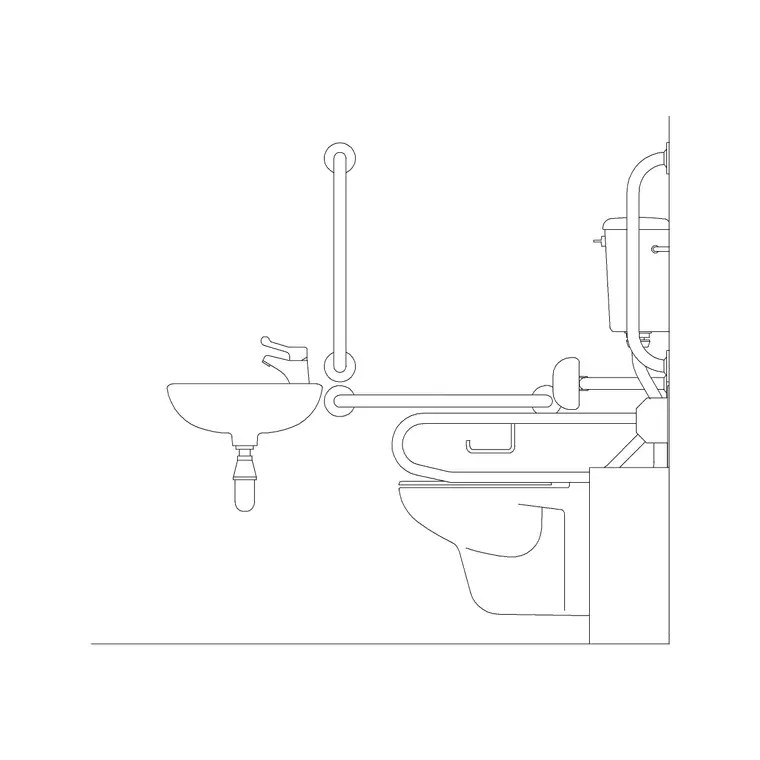
Spectator viewing at a football pitch, whether it's a full stadium or a community 5-a-side facility, should include at least one clearly accessible viewing position and a level path connecting it to parking or the entrance, and this is a detail worth showing explicitly on a site plan rather than assuming it'll be resolved during construction. Our human figure disable block is a simple way to flag that position honestly on the drawing, and it costs almost nothing to include from the earliest layout sketch.
On multi-pitch community sites in particular, where several 5-a-side courts or a full pitch and a training area share one entrance and one set of facilities, mapping the accessible route once at the site plan level, rather than per pitch, tends to produce a cleaner and more genuinely usable layout than treating each pitch's accessibility as a separate problem.
For a multi-pitch community facility specifically, our people category's kid figures alongside the standard adult figures are worth combining on the same site plan if the facility serves mixed age groups across different pitches, since showing that mix honestly communicates the intended use of each individual pitch far more clearly than uniform adult figures across the whole site.
Common mistakes worth avoiding
The most common one is scaling a full-size pitch down proportionally to make a 5-a-side layout, which produces a court with the wrong penalty area shape and an undersized goal that doesn't match futsal's actual 3 by 2 metre goal. The second is picking a pitch length and width independently within FIFA's wide legal range without checking they still produce a sensible aspect ratio, since the extremes of that range, very long and narrow or very short and wide, are legal on paper but rarely built in practice. And the third is forgetting that the goal size, 7.32 by 2.44 metres for the full game, is fixed regardless of overall pitch dimensions, and accidentally scaling it along with everything else on the sheet.
A fourth mistake worth naming separately is treating 5-a-side and futsal as identical when a specific brief actually distinguishes them, since outdoor 5-a-side leagues genuinely do vary their court sizes more than the formally codified futsal rulebook allows, so a brief that specifically says outdoor 5-a-side rather than futsal is worth a direct conversation with the client or league operator about their particular preferred dimensions rather than defaulting straight to the futsal figures.
Technical areas, dugouts and the space along the touchline
Full-size pitches built for anything beyond casual recreational use also need a technical area marked along the touchline, the zone where coaching staff and substitutes are permitted to stand and communicate with players during a match, and it's worth including this as a distinct marked rectangle on any competitive facility drawing rather than leaving the touchline as a bare line with an assumed but undrawn coaching zone somewhere near it. Dugouts, the sheltered bench structures for substitutes and coaching staff, sit just outside that technical area at most grounds with any spectator capacity, and while their exact size and construction is a building detail separate from the pitch geometry itself, their position relative to the touchline and the halfway line is worth locking early since moving a dugout after the surrounding hard standing and drainage is built is a genuinely expensive change to make later.
For a 5-a-side or futsal facility, the equivalent zone is usually much simpler, a substitution area at the halfway line on one side of the court rather than a full technical area, since the smaller format's rules around coaching and substitution are considerably less formal than the full game's, and it's worth not over-specifying that zone on a community facility drawing where the formality of a professional technical area genuinely isn't needed.
Advertising hoardings around a full pitch are another detail worth a mention here even though they sit outside the pure playing geometry, since hoarding position needs to clear both the technical area and the required run-off zone discussed earlier in this piece, and a facility drawing that shows hoardings crowding into what should be clear run-off space is a mistake worth catching at the design stage rather than left for a groundsman to discover once the hoardings are actually installed and a player collides with one during a match.
Further reading
Questions
Frequently asked
What is the standard size of a professional football pitch?+
Most professional and international pitches settle around 105 by 68 metres, comfortably inside FIFA's international match range of 100 to 110 metres long by 64 to 75 metres wide, though the full Laws of the Game technically permit a wider range for general play.
Is a 5-a-side pitch just a smaller version of a full pitch?+
No, the proportions are genuinely different, not a simple scale down. Futsal, the formally codified 5-a-side format, uses a 38 to 42 by 18 to 22 metre court with its own smaller goal and penalty area proportions rather than a shrunken copy of the full pitch's markings.
How big is a futsal goal compared to a full-size football goal?+
A full-size goal is 7.32 metres wide by 2.44 metres high. A futsal goal is considerably smaller at 3 metres wide by 2 metres high, reflecting the tighter court and closer-range play the format is built around.
Do you have a football pitch line-marking CAD block?+
No dedicated pitch marking block currently. We do carry a decorative football object block for general scene-setting use, and a strong range of human figures in the people category for showing scale and player positions on a pitch drawing.
Free downloads from this article


Free CAD block library
Download the blocks from this article — free, no signup