Free range hood & chimney DWG files (how to use)
Find free range hood and extractor chimney DWG blocks, the widths that match your hob, and how to place a hood centred above the cooktop.
Saumyajit MaityUpdated 18 June 20264 min read
Finding range hood blocks
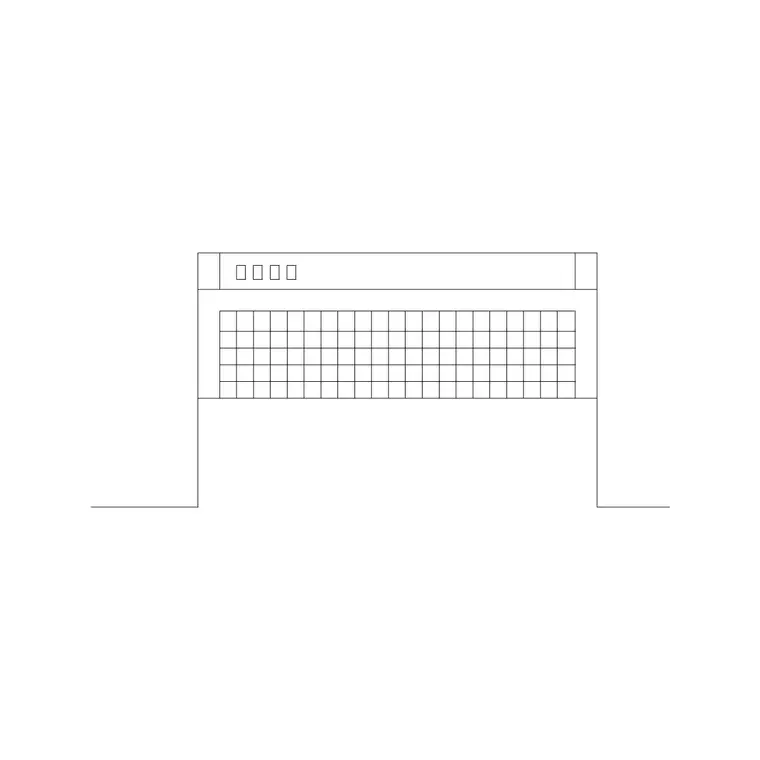
Range hood and extractor chimney blocks live in the Kitchen category. Search 'range hood', 'chimney', 'extractor' or 'cooker hood' to reach the ventilation blocks, free to download as DWG with no signup and free for commercial use. A hood is the one kitchen element people most often forget to draw, and leaving it out is exactly what gets a kitchen layout sent back at the services-coordination stage — so it is worth treating it as a required companion to every hob, not an optional extra.
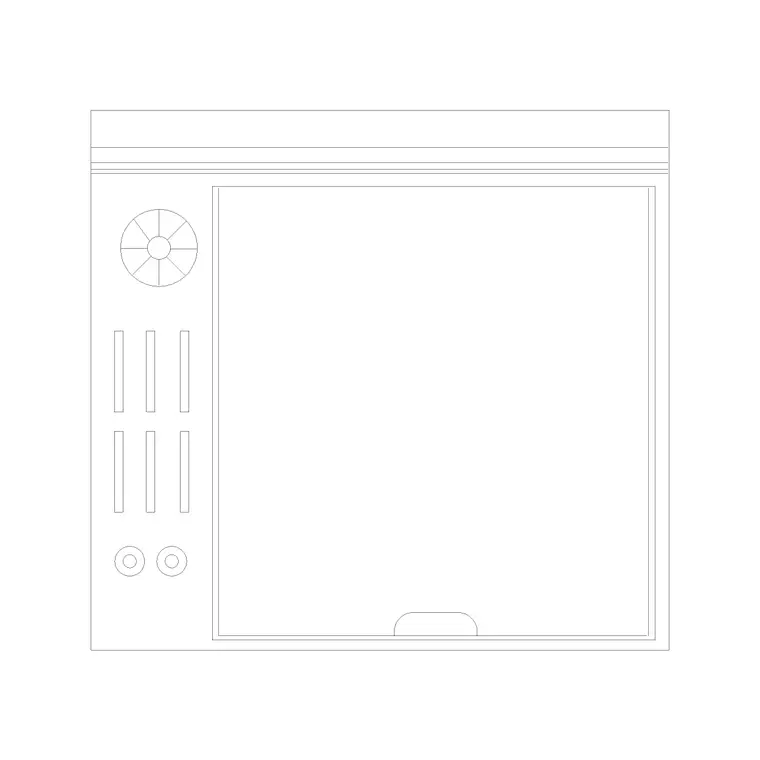
Hoods come in a few forms: a wall-mounted chimney hood that sits against the wall above the hob, an island hood suspended from the ceiling over an island cooktop, an integrated hood hidden in a wall cabinet, and a downdraft extractor that rises out of the worktop. The block gives you the canopy footprint you place over the cooking surface; pick the form that matches your hob's position, because an island hob and a wall hob need completely different extraction.
Hood widths and heights
The governing rule for a hood is width: it must be at least as wide as the hob below, and ideally wider, so the canopy captures everything that rises off the outer burners. A 600mm hob wants a 600mm hood as a minimum, a 900mm hob a 900mm hood. Many designers go one size up — a 900mm hood over a 600mm hob — for better capture, especially over a busy cooktop.
Height is about mounting clearance rather than the block footprint, but it matters on the elevation. A hood is typically mounted 650–750mm above the hob surface — high enough for headroom and pan clearance, low enough to extract effectively. On the plan the hood is an overhead element above head height, so it is usually drawn with a dashed (hidden) linetype; on the elevation it appears as the canopy at its real mounting height above the worktop.
Placing the hood over the hob
The whole job of placing a hood is alignment. Insert the hood block with I and Browse, then centre it precisely over the cooktop on the same centreline — use object snaps to align the midpoints so the hood is not offset to one side. An off-centre hood looks wrong and ventilates badly, and it is the kind of error a snap to the hob's midpoint eliminates instantly.
For a wall hood, snap its back to the same wall line as the hob. For an island hood, suspend it centred over the island cooktop and remember it has no wall behind it, so it must be a ceiling-mounted or downdraft type — a standard wall chimney makes no sense floating over an island. Draw the hood on a dashed linetype on the plan to signal it is overhead, and keep it on a services or appliances layer (which it inherits from layer 0 when you set that layer current first). A short leader note giving the hood width and the extract rate, where you know it, makes the drawing unambiguous for the services engineer.
Showing the ductwork
A ducted hood vents to outside, so the drawing should show where the duct goes — up through the ceiling, or along and out through an external wall. Indicate the duct run on the services layer from the hood to its termination, because the route has real consequences: a hob on an internal wall far from any external wall means a long duct run that has to be coordinated with the ceiling void and the structure above.
If the hood is a recirculating (ductless) type that filters and returns the air rather than venting out, note that on the drawing, since it changes the requirement entirely — no external termination needed, but the client should know the extraction is less effective. Spelling out duct versus recirculating, and drawing the duct route for a ducted hood, is what makes the ventilation design complete rather than a canopy floating with no escape path for the air.
Scale checks and the hob pairing
Open the hood DWG on its own and confirm the width matches a hob — 600mm or 900mm typically. If it imports at metre scale, set INSUNITS to millimetres in both files or SCALE by 1000, and run AUDIT and PURGE before placing it.
Above all, never draw a hood without its hob or a hob without its hood — they are a pair. The cleanest workflow is to place the cooktop first, then snap the hood to the hob's centreline so the two are locked in alignment from the start. Confirm the hood is at least as wide as the hob, drawn dashed on the plan and at the right mounting height on the elevation, with the duct route shown. If the hood is integrated into a wall cabinet, remember to size that cabinet to house it rather than treating the hood as a separate object. Get that pairing right and the kitchen passes services coordination instead of bouncing back for a missing extractor.
Questions
Frequently asked
How wide should a range hood block be?+
At least as wide as the hob below — 600mm hood over a 600mm hob, 900mm over a 900mm hob — and ideally one size up for better capture over a busy cooktop.
How is a range hood shown on a kitchen plan?+
As an overhead element above head height, usually with a dashed (hidden) linetype, centred precisely over the hob. On the elevation it appears as the canopy at its mounting height.
Does the drawing need to show the ductwork?+
For a ducted hood, yes — show the duct run on the services layer to its external or roof termination. Note if it is a recirculating type instead, which needs no external duct.
Free downloads from this article
Free CAD block library
Download the blocks from this article — free, no signup