Where to find free oval bathtub DWG files (and use)
Free oval and curved bathtub DWG blocks for AutoCAD — where they live, why an oval tub needs clearance all round, and how to place it off the wall.
Saumyajit MaityUpdated 24 May 20264 min read
The oval tub and where to find it
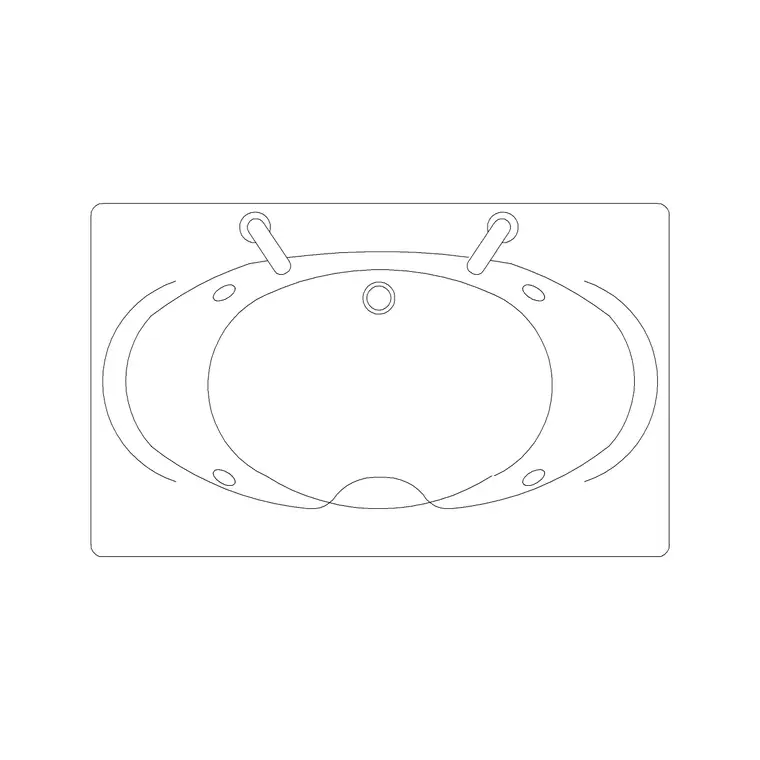
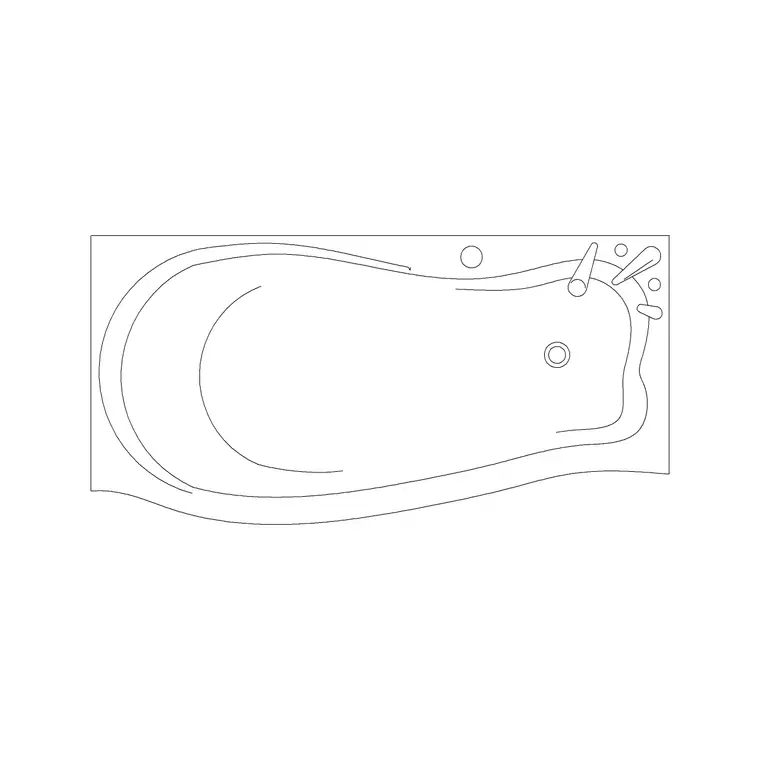
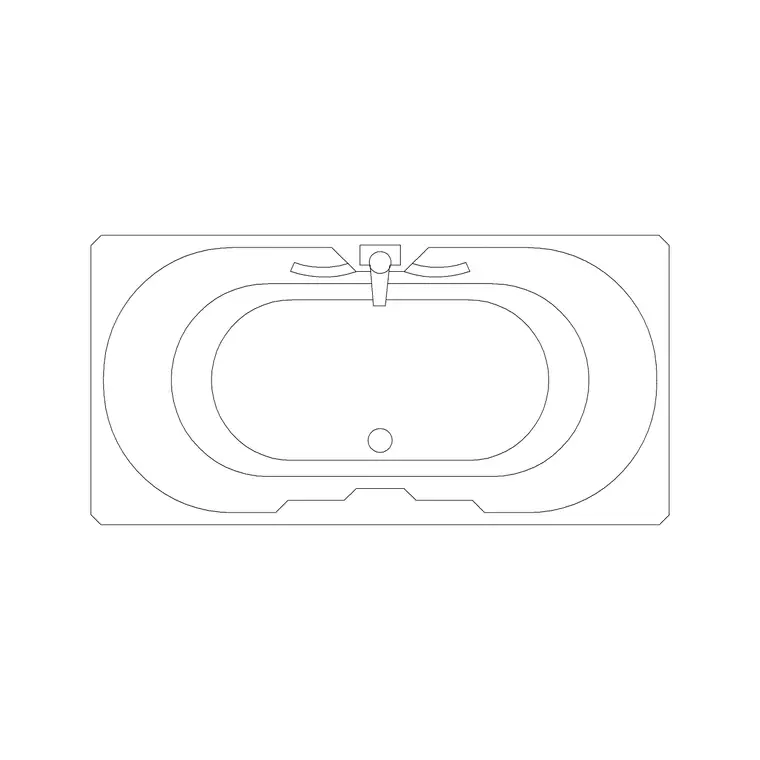
An oval bathtub reads as a softer, often freestanding feature — the kind of tub that sits as a centrepiece in a generous bathroom rather than boxed into an alcove. On this site the oval-shape bath sits in the Bathroom category, with the related curve-shape bath nearby if you want a tub that is rounded at one end rather than fully elliptical. Search 'bath' and scan for the oval and curved outlines.
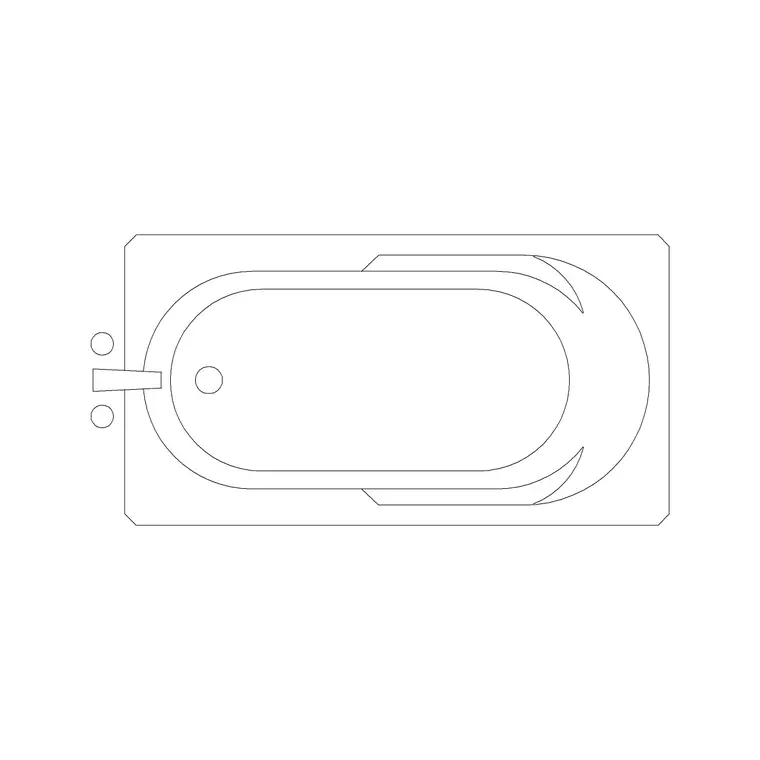
Both are free DWG downloads, no login, free for commercial use. The oval block is a plan-view drawing of the rim and inner well, which is what a floor plan needs to show the tub's footprint and the space around it. Unlike a rectangular tub that hides against a wall, an oval tub is usually meant to be seen from more than one side, so its placement is as much about the surrounding clear floor as about the tub itself. That makes getting the real footprint onto the plan especially worthwhile.
Why an oval bath needs room all round
A standard oval freestanding tub is roughly 1700x800mm, similar in length to a rectangular bath but with a curved plan that does not pack tightly against walls. The defining planning point is clearance: because a freestanding oval is approached and cleaned from multiple sides, you want clear floor around it — ideally a few hundred millimetres on the long sides and at the ends, not the single access strip a built-in tub needs.
That is precisely why the plan-view block matters. Drop the real oval footprint onto the layout and you can see honestly whether the room is big enough for the tub to breathe, or whether a built-in bath would serve the space better. A freestanding tub crammed against a wall loses the entire reason for choosing it, and only an accurately scaled plan reveals that before it becomes a built mistake. If the room is tight, the curve-shape bath, rounded at one end but flat along the back, is a sensible compromise that still tucks to a wall.
Placing a freestanding tub off the wall
Placing an oval tub is different from a built-in bath precisely because it does not simply snap to a wall. Run INSERT, browse to the downloaded DWG, and place with scale 1. Rather than locking it to a wall face, position it where the design intends — often offset from the walls with deliberate clearance, or centred on a window or a feature wall. Use object snaps or typed coordinates to set the offset precisely rather than eyeballing it.
Rotate with the insertion dialog or ROTATE if the tub's long axis should run a particular way. Then draw or check the clearances around it — a quick offset line at, say, 300mm around the tub shows whether the access zone is genuinely clear of the basin, the WC and the door swing. The freestanding tub's plumbing typically rises through the floor, so note where the taps and waste sit relative to your services, but the block gives you the footprint to plan around.
Scale, units and finishing the plan
Units are the usual gotcha. Set INSUNITS in your drawing to match the file (4 for millimetres, 6 for metres) before inserting so the oval auto-scales correctly. If it comes in the wrong size, run SCALE with 0.001 for millimetres into a metre drawing or 1000 the other way, and back-calculate the factor from the tub's known length if the units are unclear — a 1700mm oval reading as 1.7 needs a factor of 1000.
Verify with DIST across the long axis. Keep the tub on your sanitary or fixtures layer, which it inherits automatically if drawn on layer 0, so it plots cleanly with the rest of the bathroom. With the oval correctly scaled, offset from the walls with real clearance, and shown on the right layer, the plan communicates the freestanding tub the way it is meant to be experienced — as a feature with space around it, not a shape jammed into a corner.
Composing the rest of the room around it
A freestanding oval tub sets the tone for the whole bathroom, so the other fixtures should be composed around it rather than competing with it. Because the tub wants clear floor on several sides, push the WC, basin and any shower to the perimeter walls, leaving the centre or the window wall for the bath. A common and effective arrangement places the oval tub under or facing a window, with a vanity on one wall and the WC tucked discreetly to the side or behind a half-height divider.
This is where having the other sanitary blocks to hand pays off: drop in a plan basin and a toilet commode alongside the oval, and you can immediately see whether the perimeter takes them while the tub keeps its breathing room. The whole bathroom reads as a considered composition — the feature tub at the heart, the functional fixtures arranged calmly around it. An accurately scaled set of plan blocks is what lets you test that composition on the drawing, adjusting until the room feels generous rather than crowded, before any of it is built.
Questions
Frequently asked
What size is an oval bathtub block?+
A typical oval freestanding tub is around 1700x800mm. The block is plan view, showing the rim and inner well. Confirm with DIST after inserting to check both the scale and the source units.
How much clearance does a freestanding oval bath need?+
Because it is approached from several sides, aim for clear floor all round — ideally a few hundred millimetres on the long sides and ends, rather than the single access strip a built-in tub needs.
Should I snap a freestanding tub to the wall?+
Usually not. A freestanding oval is meant to sit off the wall with deliberate clearance. Place it by offset or coordinates, not by snapping to a wall face, and check the clearances around it.
Free downloads from this article
Free CAD block library
Download the blocks from this article — free, no signup