Where to find free double-bath DWG files (and use)
Free double bathtub DWG blocks for AutoCAD — the double round and circular tubs, the footprint they need, and how to place a two-person bath.
Saumyajit MaityUpdated 3 April 20264 min read
What a double bath is and where to find it
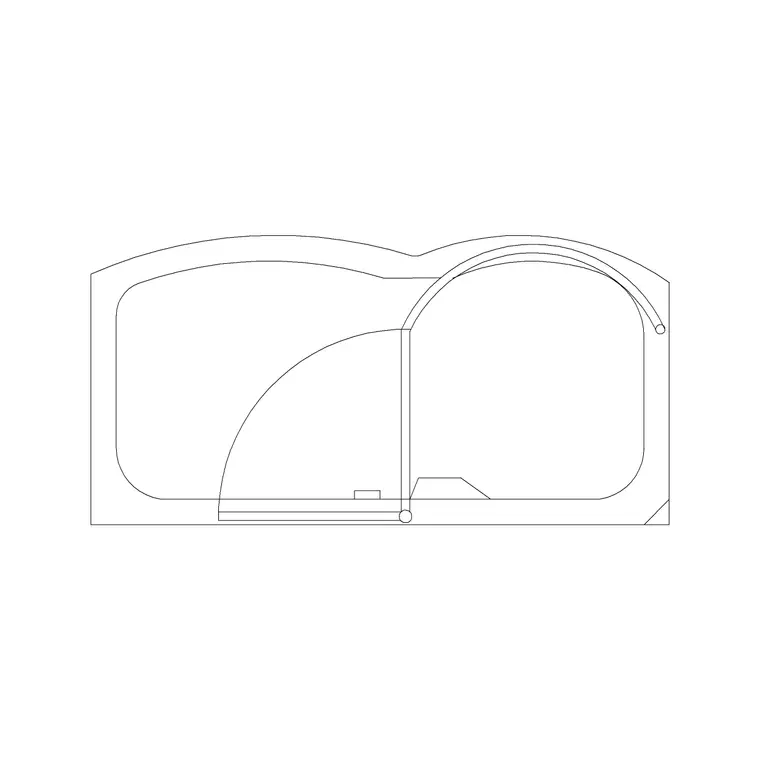
A double bath is a wider tub designed for two, or simply a larger luxury soak — the kind of fixture that anchors a master ensuite or a spa bathroom. On this site the double tubs sit in the Bathroom category, drawn as double-round and double-circular baths. Search 'bath' and look for the broader, often rounded outlines that read as bigger than a standard 1700mm tub.
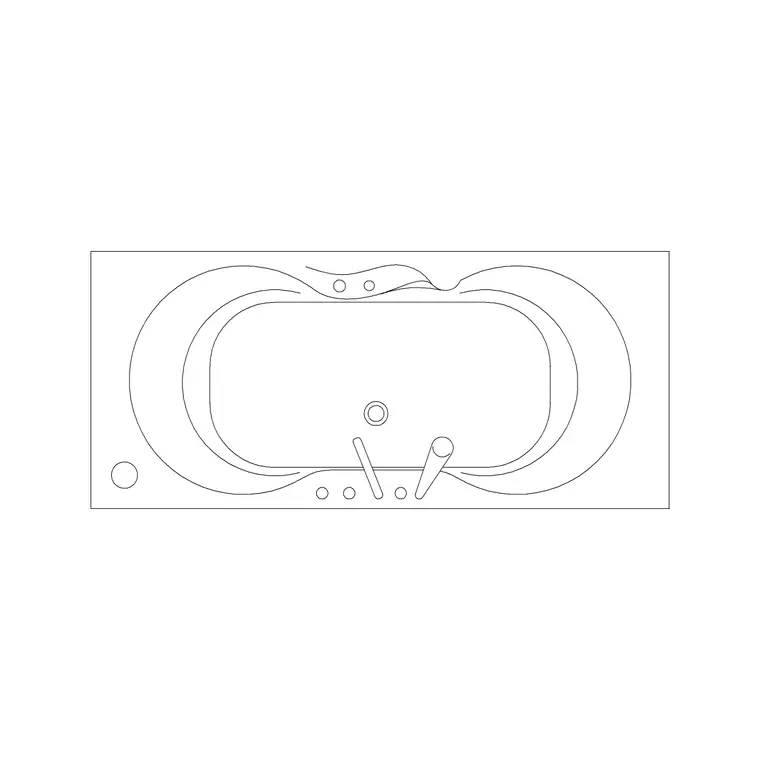
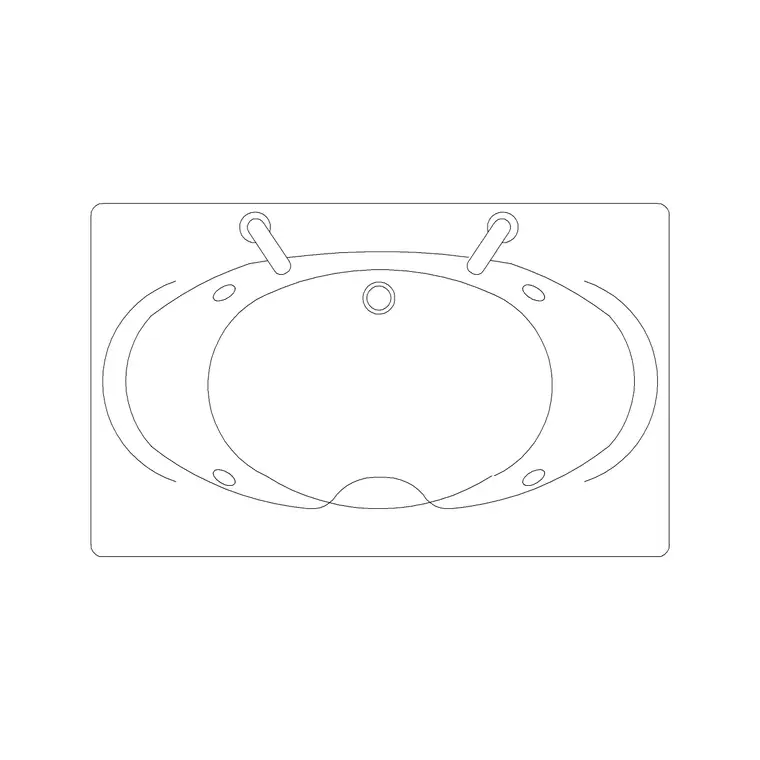
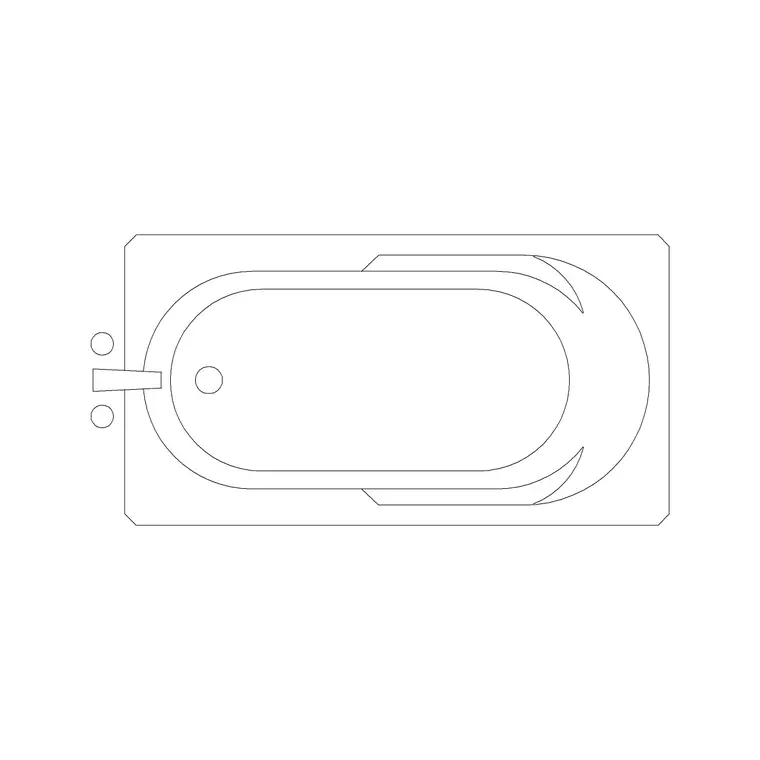
Both are free DWG downloads, no signup, free for commercial use. The double-round block is a wide tub with rounded ends; the double-circular is a fuller, more circular feature tub. Either way it is a plan-view drawing of the rim and inner well, which is what a floor plan needs to show the footprint and the space around it. A double bath is almost always a deliberate centrepiece, so getting its real footprint onto the plan early tells you whether the room can actually carry a fixture of that size with the clearances it demands.
The footprint a double bath demands
Where a standard tub is around 700 to 800mm wide, a double bath is broader — commonly 1100 to 1300mm wide and often 1800mm or more long, and a circular feature tub can be larger still across its diameter. That extra width is the whole point, but it is also the planning challenge: a double bath only belongs in a room with genuine space, and the accurately scaled block is what proves the room qualifies.
Because these tubs are usually freestanding or semi-freestanding features, they want clearance on more than one side, like an oval tub — you are not simply tucking them against a wall. Drop the real footprint onto the layout and you can see honestly whether the basin, the WC and the door swing all coexist with a fixture this size, or whether the ambition outruns the room. That is exactly the kind of early reality check a correctly scaled plan-view block is for, and it is far cheaper to discover on the drawing than on site.
Placing a double bath as a feature
A double bath is placed as a feature, not a fitting, so it rarely just snaps to a wall. Run INSERT, browse to the downloaded DWG, and place with scale 1. Position it where the design intends — centred on a window, against a feature wall, or freestanding in the room — using object snaps or typed coordinates for a precise offset rather than eyeballing. Rotate with the insertion dialog or ROTATE so the long axis runs the right way.
Then check the clearances deliberately: offset a line around the tub at a few hundred millimetres to confirm there is real circulation around it and that it clears the other fixtures and the door. A double bath that crowds the room loses its luxury entirely, so the plan has to show it breathing. The plumbing for a freestanding double tub usually rises through the floor, so note the tap and waste positions against your services, but the block gives you the footprint to design the whole room around it.
Scale, units and a clean plan
Units are the usual snag. Set INSUNITS in your drawing to match the file (4 for millimetres, 6 for metres) before inserting so the tub auto-scales, or correct it with SCALE afterwards — 0.001 for millimetres into a metre drawing, 1000 the other way. Back-calculate the exact factor from the tub's known length or width if the source units are unclear, and verify with DIST across the rim.
Keep the bath on your sanitary or fixtures layer, which it inherits automatically if drawn on layer 0, so it plots cleanly with the rest of the bathroom. With the double tub correctly scaled, placed as a feature with real clearance around it, and shown on the right layer, the plan communicates the bathroom the way it is meant to feel — generous, with the bath as the centrepiece — rather than as an oversized shape fighting for room with everything else on the wall.
The practical realities a double tub brings
A double bath is not just bigger on the plan — it carries practical consequences worth flagging on the drawing. Filled with water and two people, a large tub is heavy, so on an upper floor the structural design should account for the load; that is an engineering coordination note rather than something the block shows, but the footprint is what tells the engineer where the load lands. The tub also holds a lot of water, which means the hot supply and the cylinder need to cope with filling it, another services note the layout informs.
Access is the everyday reality: a tub this wide is reached and cleaned from more than one side, so the clear floor you drew around it is not a luxury but a requirement. And getting a tub of this size into the room during the build can be a genuine constraint — a freestanding double bath has to fit through the door and up the stairs, so on a renovation it is worth a sanity check. The block lets you plan the finished room; these notes are the reminders that a centrepiece tub touches structure, services and logistics as well as the layout.
Questions
Frequently asked
How big is a double bath block?+
Double baths are commonly 1100–1300mm wide and 1800mm or more long, with circular feature tubs larger still. The blocks are plan view; confirm the footprint with DIST after inserting.
Does a double bath need clearance all round?+
Usually yes — double tubs are typically freestanding or semi-freestanding features approached from more than one side, so they want clear floor on several sides, not a single access strip.
Where do I download free double-bath blocks?+
In the Bathroom category on CADBlockDWG, drawn as double-round and double-circular baths. Both are free DWG downloads with no signup, free for commercial use.
Free downloads from this article
Free CAD block library
Download the blocks from this article — free, no signup