Free DWG blocks for a garden / landscape plan — what to download
Build a garden or landscape plan from free DWG blocks: trees, shrubs and planters. What to download, how to match the view, and how to plant realistically.
Saumyajit MaityUpdated 25 June 20264 min read
Planting is most of a landscape plan
A garden or landscape drawing is carried by its planting. Trees, shrubs and groundcover give the plan scale, show shade and screening, and turn a flat site into a designed environment. So the bulk of what you download is plant blocks — in the right view and at honest canopy sizes — supported by hard-landscape items like planters, paving edges and outdoor furniture.
Everything here is free DWG and DXF, no account. The Trees & Plants category is enormous and is your main source — hundreds of tree and plant blocks in both plan and elevation. Furniture supplies outdoor seating. Start by deciding the view your sheet needs (plan for a layout, elevation for a street or section view), because choosing the wrong tree view is the most common landscape mistake and the easiest to avoid up front.
What to download for a garden
A landscape/garden plan generally needs:
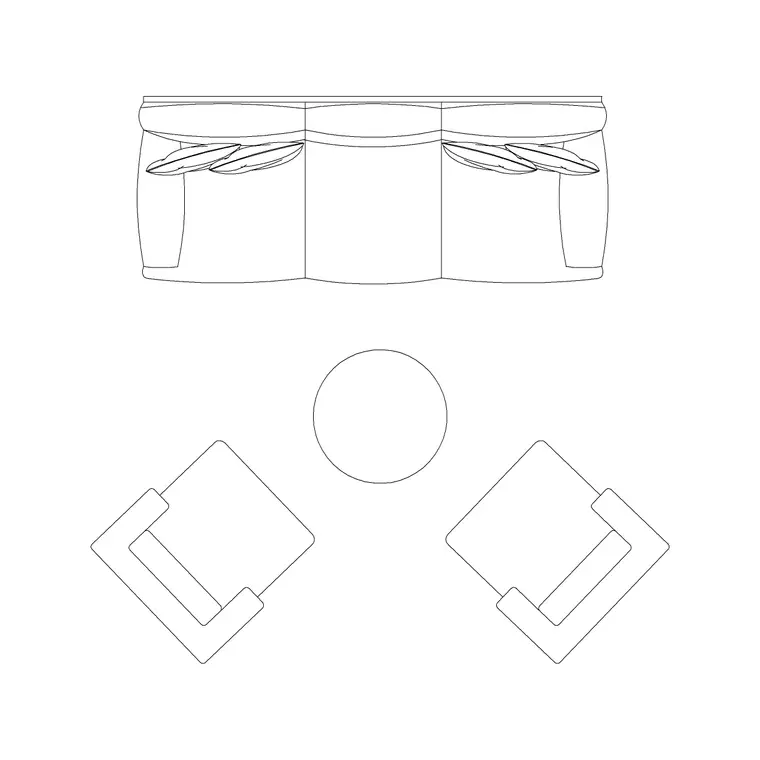
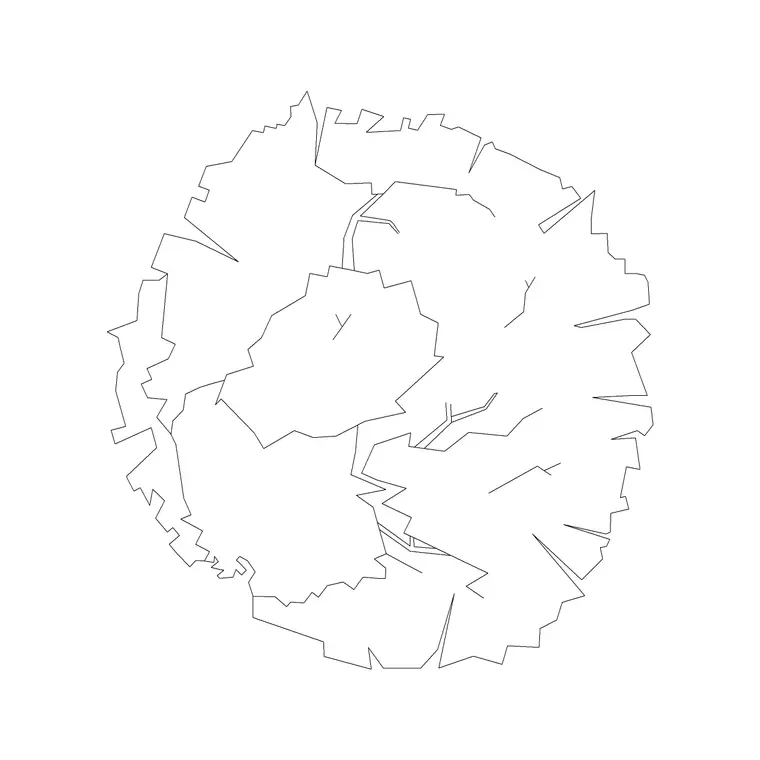
- Plan-view trees — the top-down canopy, for the site layout. Get two or three different ones for variety. - Elevation trees — the side silhouette, if the sheet includes a street elevation or section. - Shrub and groundcover blocks, or hatch patterns, for mass planting. - Planters, raised beds and pots for hard-landscape planting. - Outdoor furniture — a table and chairs, a bench — for terraces and seating areas. - Optional: a pergola, fencing, paving edges and a feature plant.
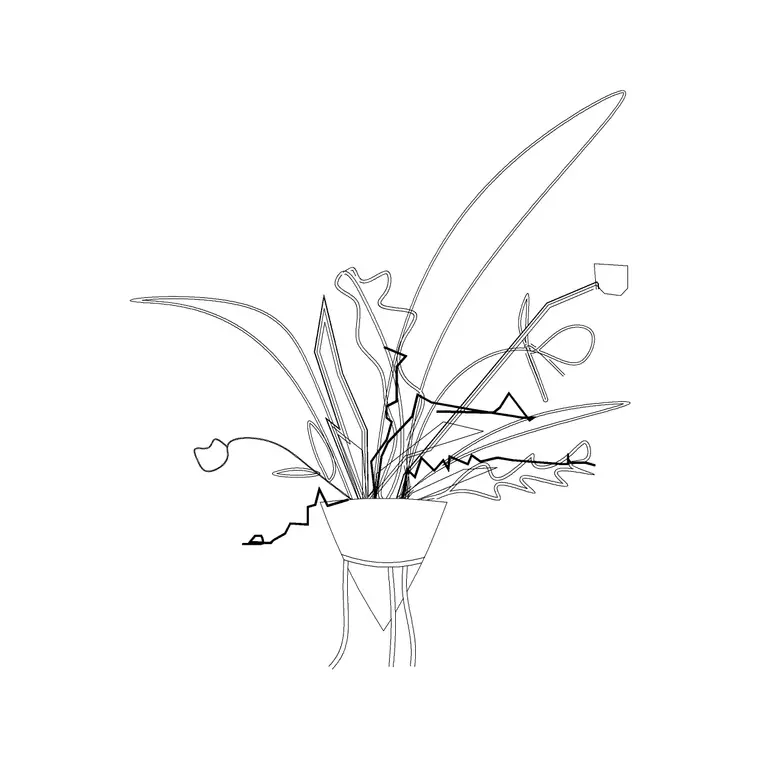
Grab a clean plan-view tree first, since trees anchor a site plan, and an indoor/outdoor planter or feature plant for terraces and entrances. Build the planting from a small palette of trees varied across the site, rather than one block stamped everywhere.
Match the view and size the canopy honestly
Two things make landscape blocks read as professional. First, match the view: plan-view trees on the layout, elevation trees on the elevation — mixing them is an instant tell to anyone trained. The Trees & Plants blocks are labelled by view so you can pick correctly. Second, draw each canopy at its real mature or design-year spread: roughly 3 to 4m for a small ornamental, 6 to 8m for a medium street tree, 10 to 15m or more for a large tree.
Correct canopy sizes are not cosmetic — they let everyone reason truthfully about shade, spacing and which gaps will close as the planting matures. A row of trees drawn too small implies a screen that will never actually form. Placing real, correctly-sized blocks makes the planting plan honest.
Think below ground too, because it constrains the layout above. A large tree needs room for its roots and a sensible offset from buildings, drains and boundaries — planting a future fifteen-metre canopy a metre from a wall is a problem you can see on the plan if the canopy is drawn at its true spread. Consider what is under the paving as well: trees over a basement or a service run need careful detailing or a different species. Drawing the planting honestly at real size is what flags these conflicts while they are still cheap pen-strokes to move.
Inserting planting and avoiding the stamped-grid look
Download your trees, shrubs and furniture, then INSERT them across the site. The blocks are real-world sized, so keep scale at 1; correct any wrong-sized insert through units (INSUNITS to millimetres, or scale 0.001 / 1000). The fastest way to make planting look fake is one identical block stamped in a grid, so do the opposite: use two or three different tree blocks, rotate and mirror individual instances, and vary sizes within a sensible range for the species.
For mass planting — hedges, shrub beds, groundcover — a hatch pattern or a dense cluster of small shrub blocks communicates the intent better than individual trees. Draw the trees on two layers if you can — one for the canopy outline and one for a small trunk dot at the true planting position — so the setting-out point stays clear even where canopies overlap. Put planting on its own layer (or split into trees, shrubs and groundcover) so you can produce a clean planting-only sheet and keep the busy canopy geometry off the engineering plans.
Finishing the landscape drawing
Add the hard landscape and outdoor living elements: paving and path edges, planters and raised beds, a terrace with table and chairs, fencing or screens, and a feature tree or specimen plant as a focal point. Dimension key planting positions and bed edges so the scheme sets out on site, and add a planting schedule keyed to the blocks if the package needs one.
Because the catalogue is free for commercial use with no attribution, a landscape kit — a few plan trees, a couple of elevation trees, shrub blocks, planters and outdoor furniture — is worth assembling once and reusing. Landscape work leans on the same plant families repeatedly, so a vetted, view-correct, correctly-scaled palette lets you draw the next garden quickly while keeping the planting honest. Keep both a plan and an elevation version of each go-to tree in that palette, so whichever sheet you are working on, the right view is already to hand.
Questions
Frequently asked
What blocks do I need for a garden or landscape plan?+
Plan and elevation trees, shrubs and groundcover, planters and raised beds, and outdoor furniture — the Trees & Plants and Furniture categories are free in DWG and DXF.
How big should I draw a tree canopy?+
At its real mature or design-year spread — about 3 to 4m for small ornamentals, 6 to 8m for medium street trees, and 10 to 15m+ for large trees — so shade and spacing read honestly.
How do I make planting look natural rather than stamped?+
Use two or three different tree blocks, rotate and mirror instances, vary sizes within a species range, and use hatch or clustered shrubs for mass planting.
Free downloads from this article
Free CAD block library
Download the blocks from this article — free, no signup