Free DWG blocks for a bathroom — what to download
The free DWG sanitaryware to lay out a bathroom: WC, basin, bath and shower. What to download, the clearances that matter, and how to insert each one.
Sumana KumarUpdated 28 June 20264 min read
Four fixtures carry a bathroom plan
A bathroom is one of the most clearance-sensitive rooms you will draw, and almost all of it comes down to four fixtures: the WC, the basin, the bath and the shower. Get those blocks placed accurately, with the right gaps around them, and the rest — towel rails, a cabinet, a mirror line — is detail. So the download list is short and specific.
Everything on this site is a free DWG, DXF on most blocks, with no signup. The Bathroom category holds the sanitaryware you need. Start with the WC, because it is the most clearance-hungry fixture and the one that most often dictates whether a compact bathroom actually works. Place it first and build the rest of the layout around it.
The bathroom block list
For a typical family or en-suite bathroom, download:
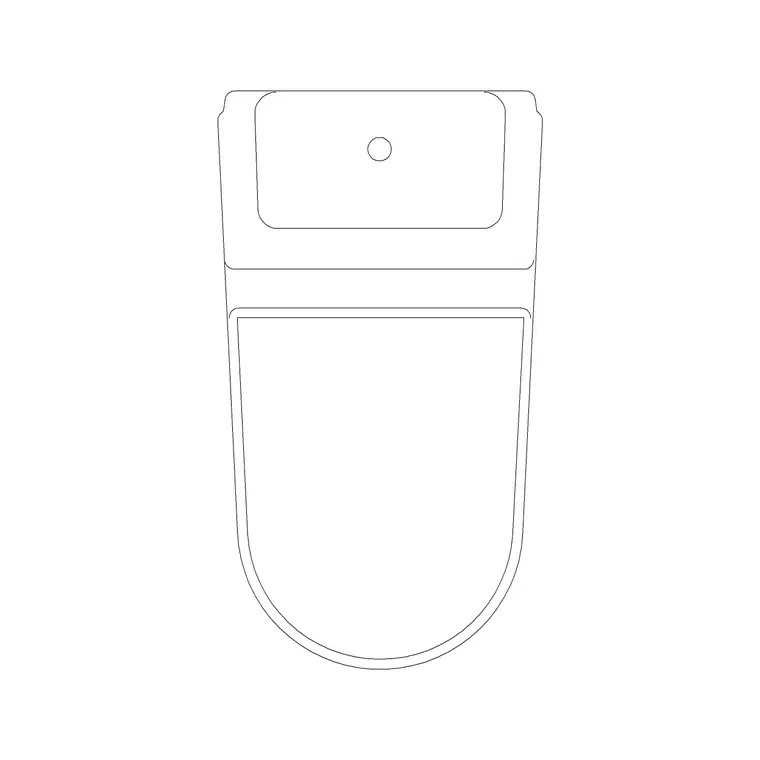
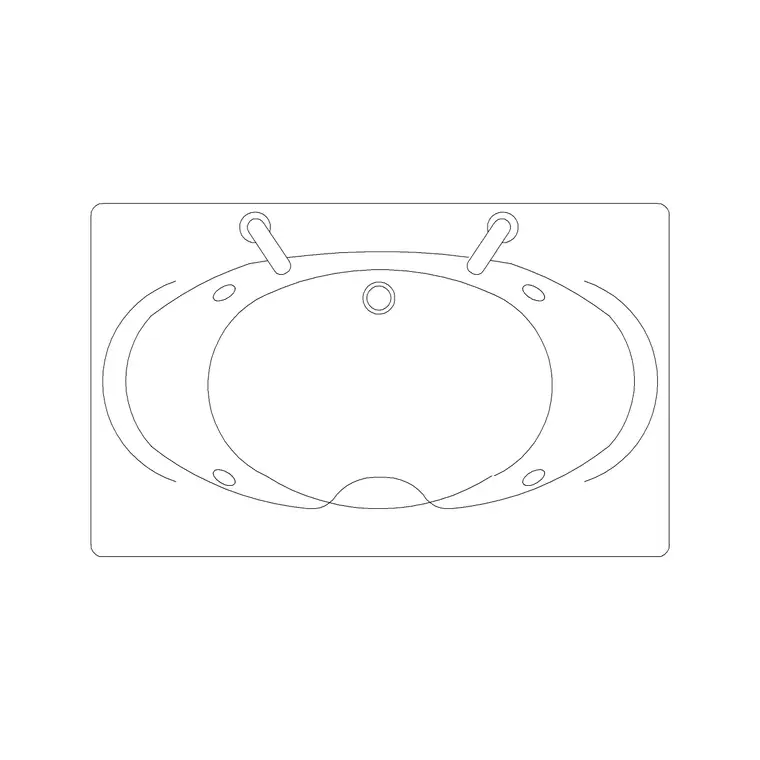
- A WC / toilet (commode) block in plan — roughly 700mm deep, needing about 200mm clear each side and 600mm in front. - A basin or vanity unit — a wall basin around 550 by 450mm, or a vanity at 600 to 1200mm wide. - A bath — a standard oval or rectangular tub is about 1700 by 700mm. - A shower tray if there is a separate enclosure, commonly 900 by 900mm or 1200 by 800mm. - Optionally a tap/mixer symbol, a towel rail and a mirror cabinet line.
The commode and bath blocks are the two that define the plan, so grab a clean plan-view WC and an oval or rectangular bath first, then fit the basin and shower into what remains.
The clearances that keep it usable
Bathrooms fail when fixtures are crammed, so the reason to lay them out as blocks is to protect the gaps. Keep about 600mm of clear floor in front of the WC and basin so someone can stand and use them, and at least 200mm of elbow room either side of the WC. A bath needs a clear access strip along one long side. A shower enclosure wants its door swing or sliding clearance kept free.
Furnishing the plan with real fixture blocks makes all of this visible — you can see at a glance whether the basin crowds the WC or the bath leaves room to dry off. In a tight cloakroom this is the difference between a layout that builds and one that looks fine on paper but is unusable in reality.
The entry door is the trap that catches people out. Bathroom doors usually swing inwards, and a door swing that clips the WC or the basin is one of the most common mistakes in a small bathroom. Draw the door swing arc explicitly and check that nothing sits inside it; if the room is too tight, that is the prompt to switch to an outward-opening or sliding door. The same goes for an accessible bathroom, where you need to fit a clear turning circle — typically a 1500mm diameter — alongside the fixtures, and only real, correctly-sized blocks let you prove that circle actually fits.
Inserting sanitaryware in AutoCAD
Download the fixtures, then INSERT each one against the relevant wall. The blocks are drawn at real-world size, so keep scale at 1 and use object snaps to butt the back of the WC and basin tight to the wall line rather than leaving a sliver of gap. If a fixture inserts at the wrong size, it is units — set INSUNITS to match (millimetres) or scale 0.001 / 1000.
WC and basin go against walls with their backs to the plumbing wall where possible, to keep pipe runs short and honest. Put all the sanitaryware on a dedicated layer so you can produce a clean plumbing or setting-out sheet. Add the tap and waste positions if the drawing is heading towards construction, since the plumber will thank you for showing where the services land.
From layout to a sheet you can hand over
Once the four fixtures are placed and the clearances check out, add the finishing layer: a mirror line over the basin, a towel rail, a heated rail or radiator, and tile setting-out lines if the project needs them. Dimension the fixture positions from a datum wall so the bathroom can actually be set out on site. It is worth showing the soil pipe and waste positions as well — the WC needs a soil connection, and grouping the WC, basin and bath wastes on a common wall keeps the plumbing short and the floor build simpler, which the installer will appreciate.
Because the blocks are free for commercial use with no attribution, a smart move is to assemble a standard bathroom kit — your preferred WC, basin, bath and shower — and reuse it across projects. Sanitaryware is some of the most-repeated geometry in residential work, so a vetted, correctly-scaled set saves real time on every job, and keeps your fixture sizes consistent from one drawing to the next. Browse the Bathroom category once, pick the WC, basin, bath and shower you trust, and that becomes your default set for every bathroom you draw thereafter.
Questions
Frequently asked
Which blocks do I need to lay out a bathroom?+
A WC, a basin or vanity, a bath and a shower tray, plus optional tap, towel rail and mirror lines — all free in the Bathroom category in DWG and DXF.
How much clearance does a WC need in a plan?+
About 600mm of clear floor in front and at least 200mm of elbow room each side, so it can be used comfortably.
What size is a standard bath block?+
A standard oval or rectangular tub is around 1700 by 700mm. Always measure the downloaded block to confirm it is at real scale before relying on it.
Free downloads from this article
Free CAD block library
Download the blocks from this article — free, no signup