Download free refrigerator CAD blocks for AutoCAD
Find free refrigerator and fridge-freezer DWG blocks, the 600–900mm widths to expect, door-swing clearances, and how to place a fridge in your plan.
Sumana KumarUpdated 11 May 20264 min read
Where to find fridge blocks
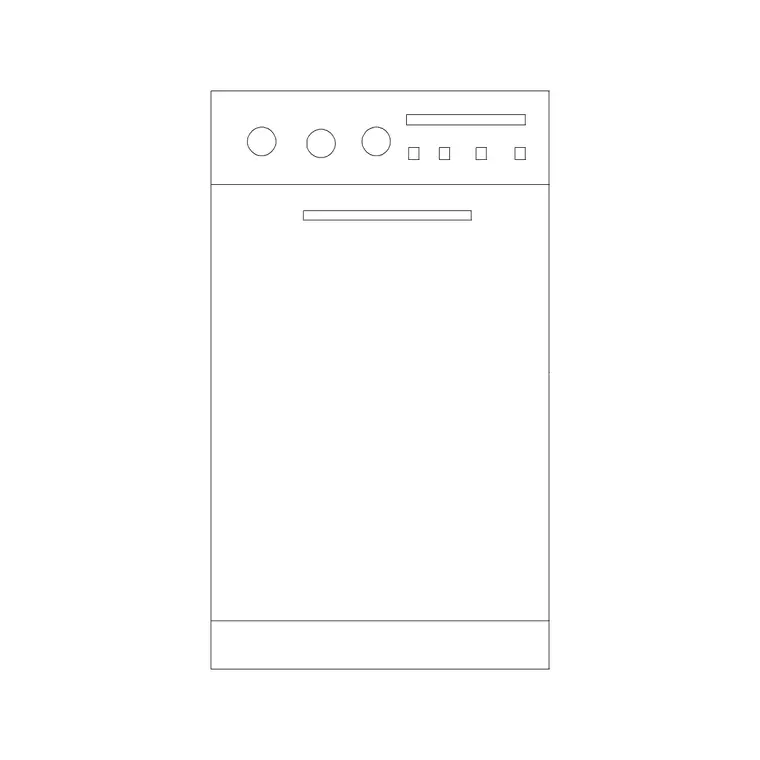
Refrigerator blocks sit in the Kitchen category. Search 'refrigerator' or 'fridge' to reach the appliance blocks directly, or browse the Kitchen hub. They download as DWG, no account and no email gate, free for personal and commercial projects. A fridge is one of the three big appliances (with the cooker and the sink) that anchor a kitchen layout, so getting its footprint and clearances right matters more than for the small props — a misplaced fridge can block a doorway or a walkway in a way a stray utensil never will.
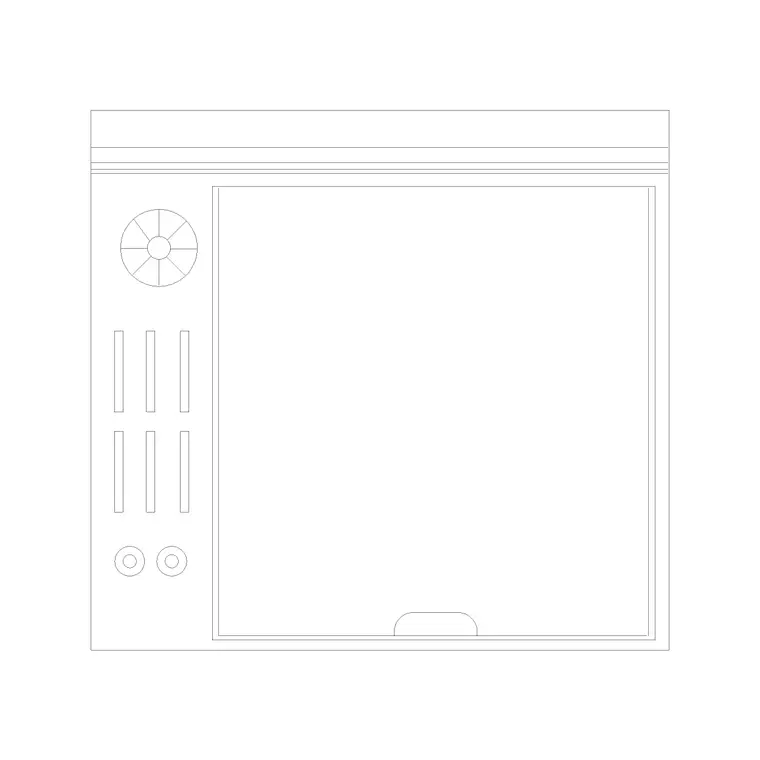
Fridges come in several real-world forms — a freestanding fridge-freezer, an integrated unit hidden behind a cabinet door, an American-style side-by-side, or an under-counter fridge. The block gives you a clean plan footprint you scale and label to match the type you are specifying. Knowing which form you are drawing changes how much floor and cabinet run it consumes, so settle the type before you place it rather than scaling a generic box and hoping.
Fridge widths and depths to expect
A standard freestanding fridge-freezer is 600mm wide, matching the base-cabinet module, and around 600–650mm deep — note it often sits slightly proud of the 600mm cabinet depth, which is worth showing on the plan. Larger freestanding models run 700mm wide. American-style side-by-side fridges are the big ones at 900mm or more wide and up to 700mm deep, and they dominate a run, so draw them at their true size or the plan will lie about how much space is left.
An integrated fridge hides inside a 600mm tall housing and reads on the plan like a tall cabinet with a fridge label. Under-counter fridges are 600mm wide and tuck under the worktop within the base run. Height matters mainly for elevations: a tall fridge-freezer is around 1800–2000mm, which you show as a full-height element against the cabinets.
Placing the fridge and showing the door swing
Insert the fridge with I and Browse, scale 1, rotation 0, snapping its back to the wall line and its side to the adjacent cabinet or tall unit. The detail people forget is the door swing: a fridge door is wide and swings out a long way, so draw the swing arc on the plan and confirm it clears the worktop opposite, a walkway, or an island. A side-by-side fridge needs particular care because both wide doors open into the room.
Position the fridge near the end of a run or beside a tall unit rather than between two base cabinets, and keep it out of a corner where the door cannot fully open. Hinge side matters — MIRROR the block if needed so the door opens toward the worktop and the standing space, not into a wall or a tight corner. It helps to place the fridge near where the shopping is unpacked and within easy reach of the main prep counter, since that is the journey it serves most often. Put it on the appliances layer, which it inherits from layer 0 when you set that layer current first.
Clearances and the work triangle
A fridge needs floor space in front for a person to stand with the door open and reach in — allow roughly 1000–1100mm of clear floor, and check it does not collide with an opposite cabinet run or an island. On the plan, that standing zone is as important to show as the appliance itself, because it is where layouts quietly fail.
The fridge is also one corner of the classic kitchen work triangle (sink, cooker, fridge). Placing it so the three form a comfortable triangle, with no leg too long and the triangle not cut by the main circulation route, is what makes a kitchen pleasant to use. Drawing the fridge accurately, with its swing and standing space, lets you test that triangle on paper and adjust before anything is built.
Scale checks and labelling
Open the fridge DWG on its own and measure the width — a standard unit should read 600mm, a side-by-side 900mm or more. If it imports at 0.6 it is in metres; set INSUNITS to millimetres in both files or SCALE by 1000. When the source units are unclear, measure the width and divide the size you want by what you measured to get the exact scale factor. Run AUDIT and PURGE before it joins your drawing.
Add a text label stating the fridge type — fridge-freezer, integrated, side-by-side, under-counter — and the width, because the footprints overlap and the contractor builds to the note. A 900mm side-by-side needs a 900mm gap in the run and a wider door clearance than a 600mm model; spelling that out on the plan removes any doubt. It is also worth leaving a small ventilation gap behind and above a freestanding fridge so it can shed heat — note it if your detail calls for it. With the right width, a drawn door swing and a clear label, the fridge block does its job as a key anchor of the kitchen.
Questions
Frequently asked
How wide is a refrigerator block in CAD?+
A standard freestanding fridge-freezer is 600mm wide and 600–650mm deep. American-style side-by-side models are 900mm or more wide and up to 700mm deep.
Should I draw the fridge door swing?+
Yes. Draw the swing arc on the plan and confirm it clears the opposite worktop, walkway or island. Side-by-side fridges need extra care as both wide doors open out.
How much floor clearance does a fridge need?+
Allow roughly 1000–1100mm of clear floor in front so a person can stand with the door open and reach in, and check it against any opposite run or island.
Free downloads from this article
Free CAD block library
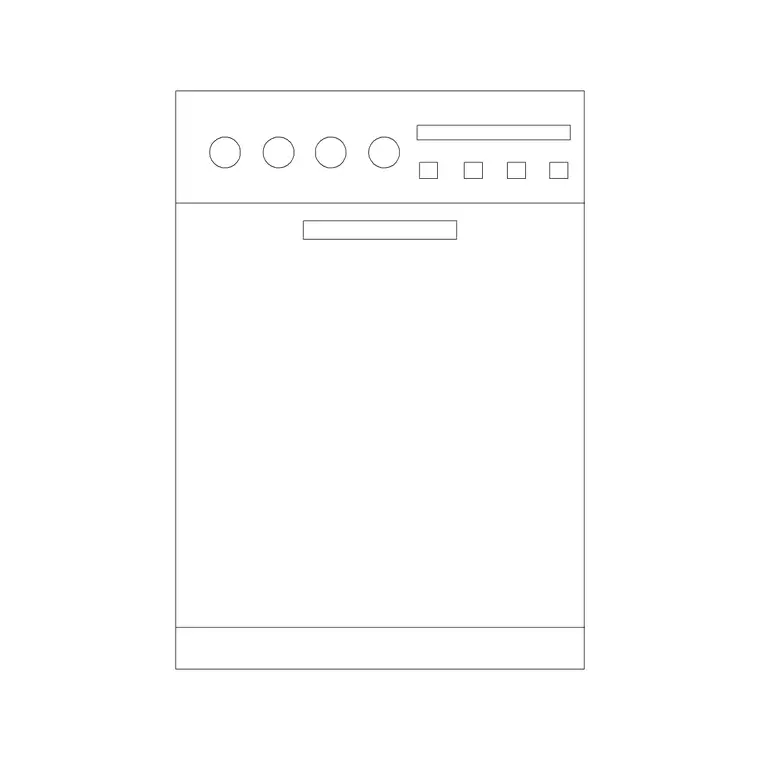
Download the blocks from this article — free, no signup