How to download free hedge / groundcover CAD blocks for AutoCAD
Free hedge and groundcover CAD blocks in DWG — where to find them on CADBlockDWG and how to draw continuous hedges and groundcover beds in AutoCAD.
Sumana KumarUpdated 28 June 20264 min read
What hedges and groundcover do on a plan
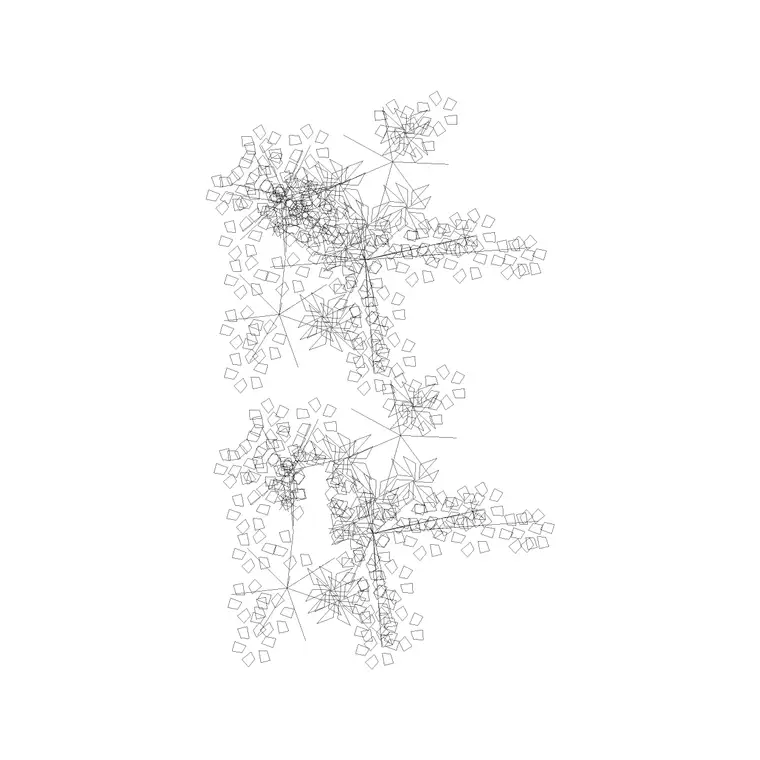
Hedges and groundcover are the continuous, low-level planting that gives a landscape its edges and its floor. A hedge defines a boundary, screens a view or lines a path as a continuous run; groundcover carpets the spaces between taller planting and keeps a bed from reading as bare earth. Neither is drawn as a single specimen — both are continuous textures or repeated clumps that follow a line or fill an area, which makes them a different kind of block from a standalone tree.
On a planting plan, a well-drawn hedge instantly communicates enclosure and structure, and a groundcover fill tells the reader the ground is planted rather than paved or left open. Together they are the connective tissue of a scheme, tying the trees and shrubs into a coherent designed landscape rather than a scatter of isolated plants.
Finding hedge and groundcover DWGs
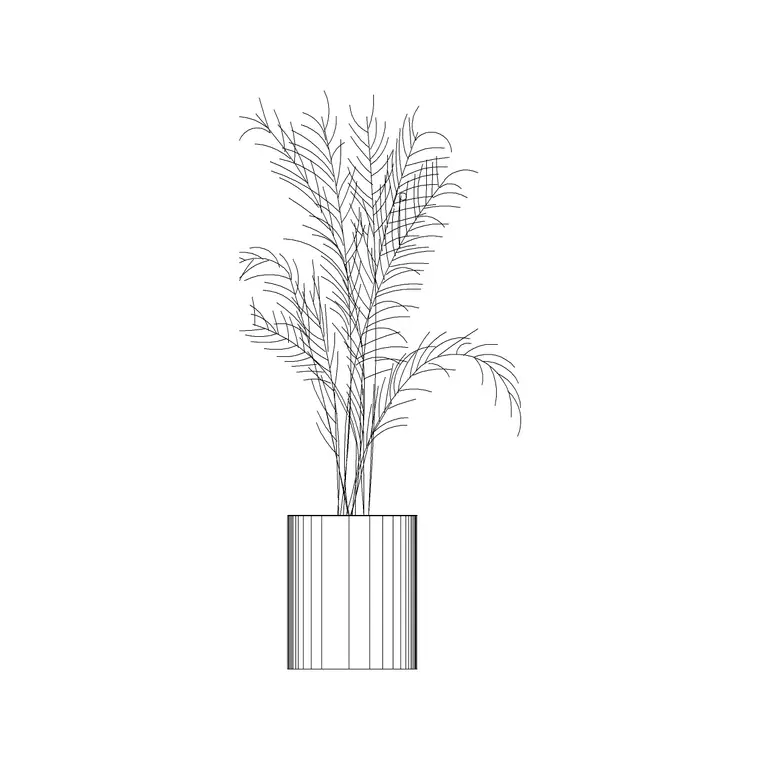
The blocks you use for hedges and groundcover live in the Trees & Plants category. Shrub and bush blocks double as the building units for both — a clump-style shrub repeated along a line makes a hedge, and the same clump scattered densely makes groundcover. Search for 'shrub', 'bush' or 'groundcover' to surface the clumps and textured outlines, and check the preview on each product page.
They download as DWGs with no signup and no attribution, free for commercial use. Because the geometry is real vector linework, you can repeat, overlap, recolour and trim the clumps freely to follow a curved boundary or fill an irregular bed once they are in your drawing. The same blocks that fill a shrub bed are the ones you will reach for here — hedges and groundcover are mostly a matter of how you arrange and repeat shrub-type blocks rather than a separate product family.
Drawing a continuous hedge
There are two clean ways to draw a hedge in AutoCAD. The first is to take a shrub clump block and ARRAY it along the hedge line — use a path array along a polyline so the clumps follow a curve, overlap them slightly, and the run reads as continuous planting. Vary or rotate alternate clumps so the hedge is not visibly tiled.
The second, faster for a long straight or gently curved hedge, is to draw the hedge as a pair of polylines and fill the strip between them with a hatch pattern that suggests clipped foliage, then drop a few shrub clumps along it for texture at the ends or corners. Either way, keep the hedge on a dedicated planting layer, and if a block imports at the wrong size, fix the units mismatch by setting INSUNITS consistently or applying a SCALE factor of 0.001 or 1000. The aim is a hedge that reads as one continuous element, not a row of separate bushes with gaps.
Filling a groundcover bed
Groundcover is about covering an area, so the technique is to fill rather than to line. Outline the bed with a closed polyline, then either hatch it with a fine stippled or dotted pattern to represent low planting, or scatter many small shrub or groundcover clumps densely across it, overlapping them so no bare ground shows through. A combination — a light hatch base with a scatter of clumps on top — often reads best, giving both coverage and texture.
Vary the clump sizes and rotate them freely so the fill looks natural rather than gridded. Because groundcover sits at the bottom of the planting hierarchy, keep it on its own layer (or a shared low-planting layer) so it can be dimmed or recoloured separately from the taller shrubs and trees above it. That layering also lets you produce a clean plan where the groundcover is shown faintly so it does not overwhelm the trees and structure on the same sheet.
Layering and keeping it natural
Split your planting into layers — trees, shrubs, hedges, groundcover — so each band can be frozen, dimmed or recoloured independently for different sheets and presentations. Blocks built on layer 0 inherit whichever layer you insert them onto, so a clump dropped on your hedge layer takes its colour and line weight automatically, which is exactly why library blocks are drawn that way.
The constant risk with continuous planting is mechanical repetition. A hedge of identical clumps at equal spacing, or a groundcover bed of one stamp on a perfect grid, reads as a pattern rather than as plants. Overlap, vary sizes, rotate and mirror, and mix two or three clump blocks where you can.
One more efficiency: when a hatch is doing the heavy lifting for a large groundcover area, associate the hatch with its boundary polyline so that if you later reshape the bed, the fill updates automatically rather than leaving a gap or overspill. And keep the hatch scale sensible — a pattern that is too fine turns into a solid black smear when plotted, while one too coarse looks sparse. Hedges and groundcover are meant to read as soft, continuous, slightly irregular masses — get that texture right, keep the layering disciplined, and the low planting will quietly hold your whole landscape drawing together.
Questions
Frequently asked
Where do I find free hedge and groundcover CAD blocks?+
In the Trees & Plants category on CADBlockDWG. Shrub and bush clumps double as hedge and groundcover units — search 'shrub', 'bush' or 'groundcover' and download the DWGs free, no signup.
How do I draw a continuous hedge in AutoCAD?+
Either ARRAY a shrub clump along a polyline path, overlapping the clumps, or draw the hedge as two polylines and hatch the strip between them, then add a few clumps for texture. Keep it on a planting layer.
How do I fill a groundcover bed?+
Outline the bed with a closed polyline, then hatch it with a fine stippled pattern and/or scatter many small clumps densely across it, overlapping them so no bare ground shows. Vary sizes for a natural look.
Free downloads from this article

Free CAD block library
Download the blocks from this article — free, no signup