20 best free tree & plant CAD blocks to download in 2026
Twenty free tree and plant DWG blocks for 2026 — plan canopies, elevation silhouettes, shrubs and potted plants — with the real canopy spreads that matter.
Sumana KumarUpdated 13 June 20264 min read
Planting that reads as designed, not stamped
Planting is the cheapest, highest-impact thing you can add to a site plan: trees give scale, soften edges, show shade and screening, and signal the character of a scheme. But the failure mode is just as quick — identical clip-art trees stamped in a grid read as fake and undermine the whole drawing. A good tree library gives you variety and correct scale so the planting reads as considered. Everything in this roundup is free, downloads as DWG, needs no account, and is cleared for commercial use.
The 20 blocks are grouped by what they do: plan canopies for site plans, elevation silhouettes for street views and sections, shrubs and hedges for massing, and potted and indoor plants for interiors and terraces. Browse them in the trees-and-plants category. The one rule that protects every landscape drawing is to draw canopies at their real mature spread — a roundup of pretty circles is useless if they are all the wrong size for the species.
Plan-view trees for site plans (1–8)
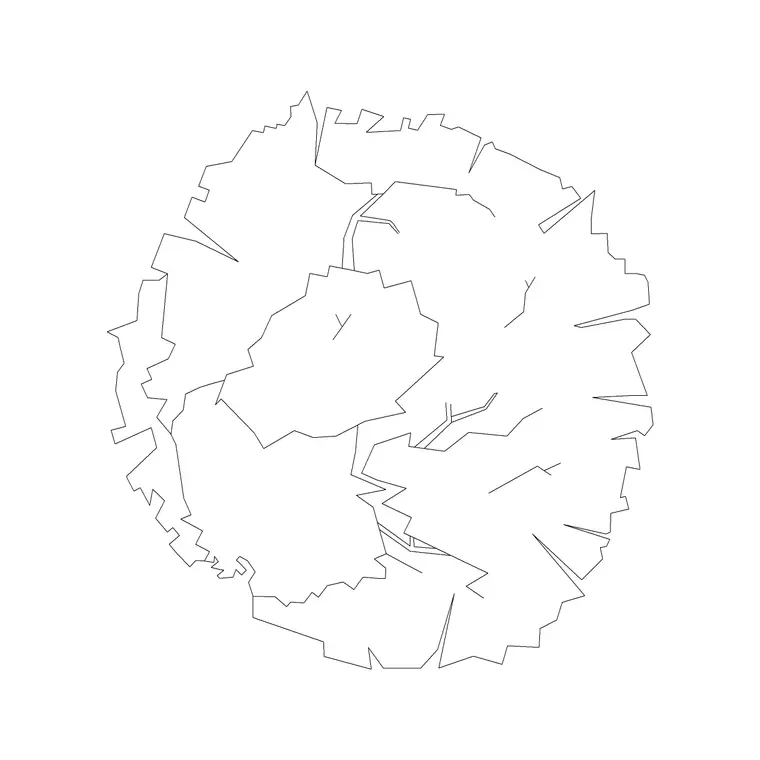
Plan trees are the top-down canopy — a circle with radial or organic texture inside — and they are the backbone of any site plan, landscape layout or masterplan. The size carries real meaning: a small ornamental tree spreads three to four metres, a medium street tree six to eight metres, and a large mature tree ten to fifteen metres or more. Draw each at its real spread so the plan honestly shows shade, spacing and overshadowing.
Eight plan-view blocks give you a working palette: two small ornamentals, two medium street trees, two large canopy trees, and two textured deciduous variants for variety. The pine plan block here is a clean, ready-to-place conifer canopy. Use two or three different blocks within any planting area and rotate or mirror individual instances so no two are identical — that small amount of variation is the entire difference between a plan that looks alive and one that looks like a single block stamped across a polygon.
Elevation trees for street views and sections (9–13)
Elevation trees are the side silhouette — trunk and canopy in profile — and they belong on street elevations and sections where you are showing height and form rather than footprint. Mixing them with plan trees is an instant tell: an elevation tree lying flat on a plan, or a plan circle floating in an elevation, reads as wrong to anyone trained. So match the view to the drawing every time.
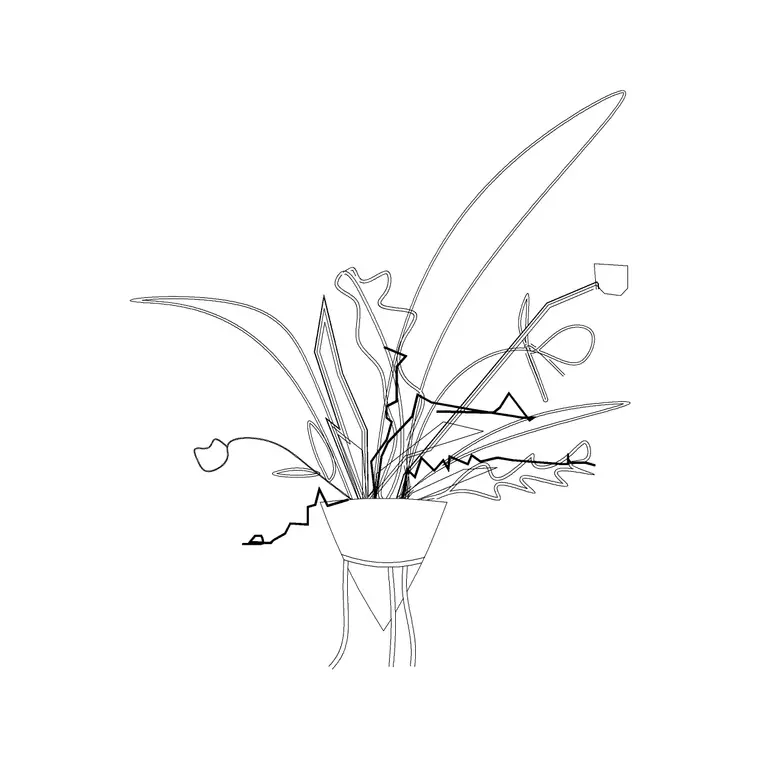
Five elevation blocks cover the common cases: a slim ornamental, two medium street-tree silhouettes at different heights, a broad mature canopy, and a columnar/conifer form. Populate a street elevation with two or three of these at varying heights and add a scale figure, and the drawing immediately reads as a real place. As with plan trees, vary the height within a sensible range for the species rather than repeating one silhouette down the street.
Shrubs, hedges and massing (14–17)
Not everything is a specimen tree. Shrub beds, hedges and groundcover do the connective work of a planting plan, and they are best handled by massing rather than individual specimens. For a hedge or shrub bed, a hatch pattern or a dense cluster of small shrub blocks communicates the intent far better than scattered single plants. Four blocks here cover it: a single shrub, a clustered shrub group, a hedge run you can stretch to length, and a groundcover/bed hatch outline.
Draw hedges as a continuous band at their real width (a clipped hedge might be 600 to 900mm wide) and let the shrub clusters fill beds at realistic density. Keeping all of this on a planting layer — ideally split into trees, shrubs and groundcover — means you can produce a clean planting-only sheet for the landscape package and keep the busy canopy geometry off a structural or services plan that does not need it.
Potted and indoor plants, plus how to download (18–20)
Interiors and terraces need planting too. A potted plant in plan reads as a circle within a square or round planter; common planter footprints run 300 to 600mm across. Three blocks finish the set: a small potted plant, a large floor planter for a lobby or terrace, and an indoor foliage plant for a living-room or office corner. These soften an interior plan the same way trees soften a site plan, and they help a client picture the finished space.
To download any block here, open the trees-and-plants category, click the plant, and grab the DWG or DXF free with no signup. Insert with INSERT, and because a tree's scale is so meaningful, double-check it after placing — measure the canopy and confirm it matches the real spread for the species. If it comes in wrong, it is a units issue: match INSUNITS or scale by 0.001 or 1000. One last habit pays off on busy planting plans: keep the tree blocks built on layer 0 so they inherit your planting layer, and use DesignCenter to drag a one-off species straight out of an old project drawing without opening it. Twenty blocks, used with variety and honest scale, will carry any landscape or interior drawing — and a planting plan that reads as designed does real work in front of a planning authority as well as a client.
Questions
Frequently asked
How big should I draw a tree canopy in a site plan?+
At its real mature or design-year spread — roughly 3 to 4m for small ornamentals, 6 to 8m for medium street trees, and 10 to 15m or more for large trees — so the plan honestly shows shade and spacing.
What is the difference between a plan and elevation tree block?+
A plan tree is the top-down canopy used on site plans; an elevation tree is the side silhouette used on street elevations and sections. Match the block view to the drawing you are working in.
Where can I download free tree and plant CAD blocks?+
The trees-and-plants category on CADBlockDWG has plan canopies, elevation silhouettes, shrubs and potted plants free in DWG and DXF, no signup, with commercial use allowed.
Free downloads from this article

Free CAD block library
Download the blocks from this article — free, no signup