10 best free classical column CAD blocks (2026)
Ten free DWG classical column blocks for elevations and details in 2026 — Doric, Ionic, Corinthian and arched columns, in elevation, plan and section.
Saumyajit MaityUpdated 22 June 20264 min read
Why a clean column block is hard to draw and worth downloading
A classical column is one of the fiddliest things to draw by hand: the fluting, the entasis (that subtle swelling of the shaft), and the capital with its volutes or acanthus leaves are all detailed, repetitive geometry. Redraw one for every bay of a colonnade and you lose an afternoon; insert a ready-made block and the elevation comes together in minutes. That is precisely the kind of work a CAD block exists to save.
The ten blocks below are free DWG downloads here — the classical and architectural detail blocks live in the Other category. They are mostly elevation blocks (the column seen from the front, the view a façade needs), with some plan and section details too. Classical orders have set proportions based on the column diameter, so keep the proportions intact when you scale — stretching a column unevenly breaks the very thing that makes it read as classical.
1–3: Arched columns and colonnades
Start with the arched column, the workhorse of classical and neo-classical façades. Our Classical Arch Column and Classical Arch Column 1 blocks pair the column with its arch, so you can array a whole arcade along an elevation in one move. An arcade is repetitive by nature, which is exactly why a single well-drawn block, copied along the bay spacing, is so much faster than redrawing each arch.
Keep a couple of arch-and-column variants at different proportions. When you array them, set the spacing to the real bay width and check the arches spring from the same height across the run — an arcade only reads correctly when the rhythm is even, and a block arrayed at a fixed pitch gives you that for free.
4–6: The classical orders — Doric, Ionic, Corinthian
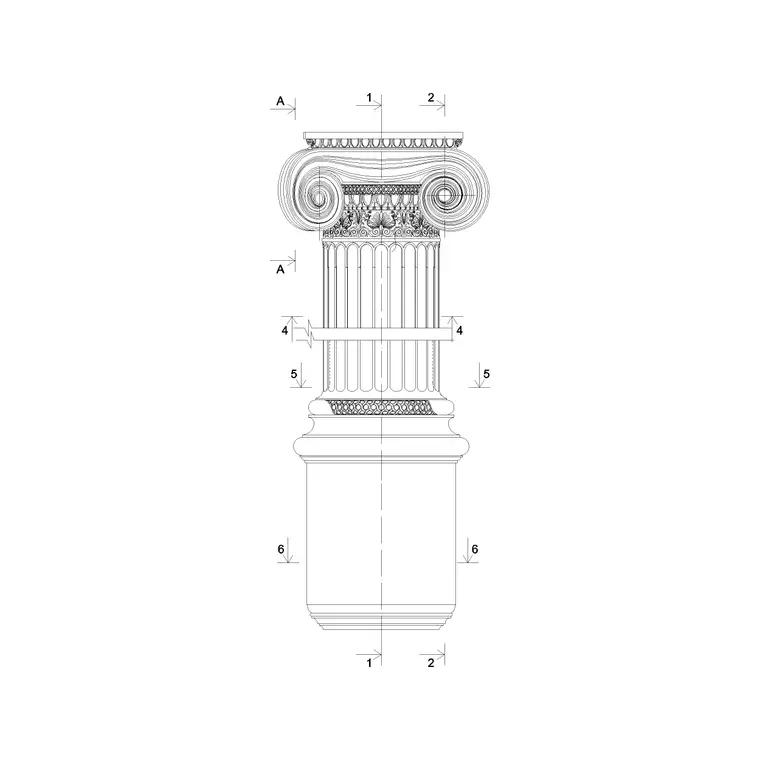
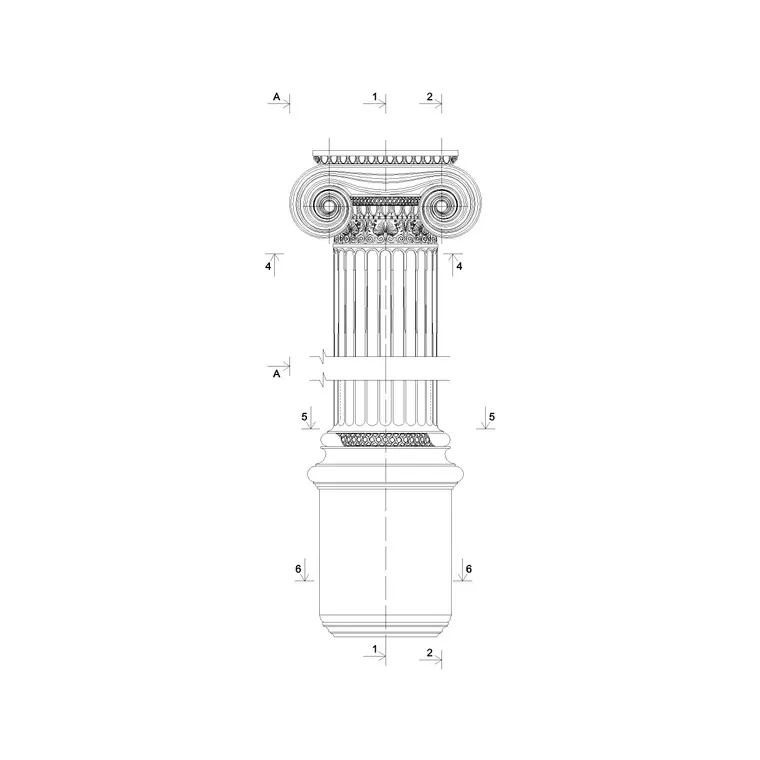
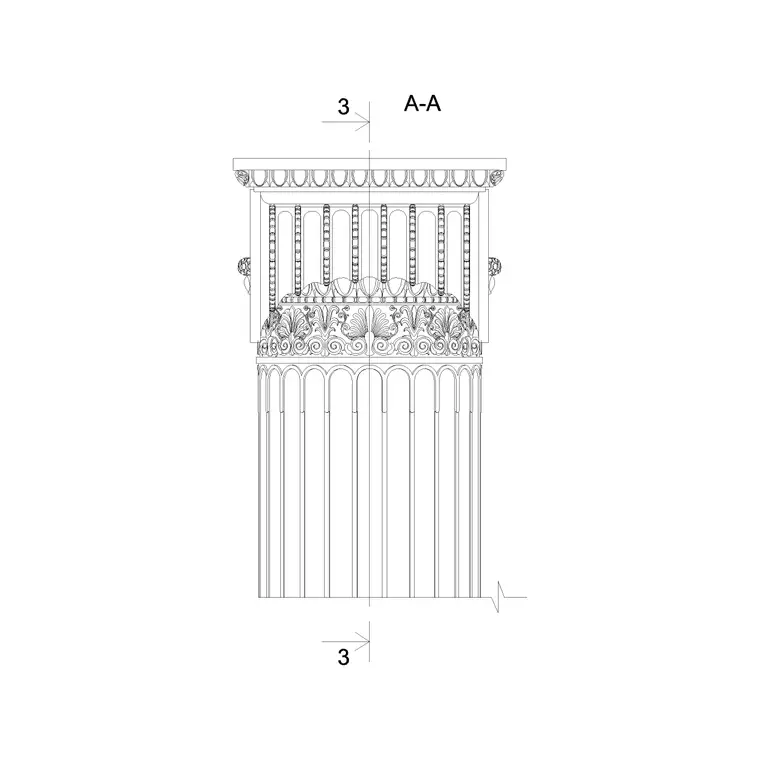
The three Greek orders give a façade its character, and it helps to keep a representative block for each. Doric is the simplest and sturdiest, with a plain capital; Ionic is recognised by the scrolled volutes of its capital; Corinthian is the most ornate, with carved acanthus leaves. Each has its own slenderness ratio, so a Doric column is stockier than a Corinthian of the same height.
Keep one column elevation per order. Drawing the correct order matters because each carries its own architectural meaning and proportion — using a slender Corinthian where a sturdy Doric belongs reads as wrong to anyone who knows the language. Our column-elevation detail blocks give you the clean front views to work from.
7–8: Capitals and base details
Sometimes you need the detail, not the whole column. A capital detail block (the decorated top) and a base detail block (the moulded foot) let you call out the ornament at a larger scale on a detail sheet, which is where the craft of a classical façade is actually communicated to the builder. Our classical arch column detail blocks cover these.
Keep a capital and a base detail. These are the blocks you place on an enlarged detail rather than the main elevation, dimensioned and annotated so the joinery or stonework can be set out. Having them ready means a detail sheet that would otherwise be slow, exacting line-work becomes a quick insertion and label.
9–10: Pilasters and column plans/sections
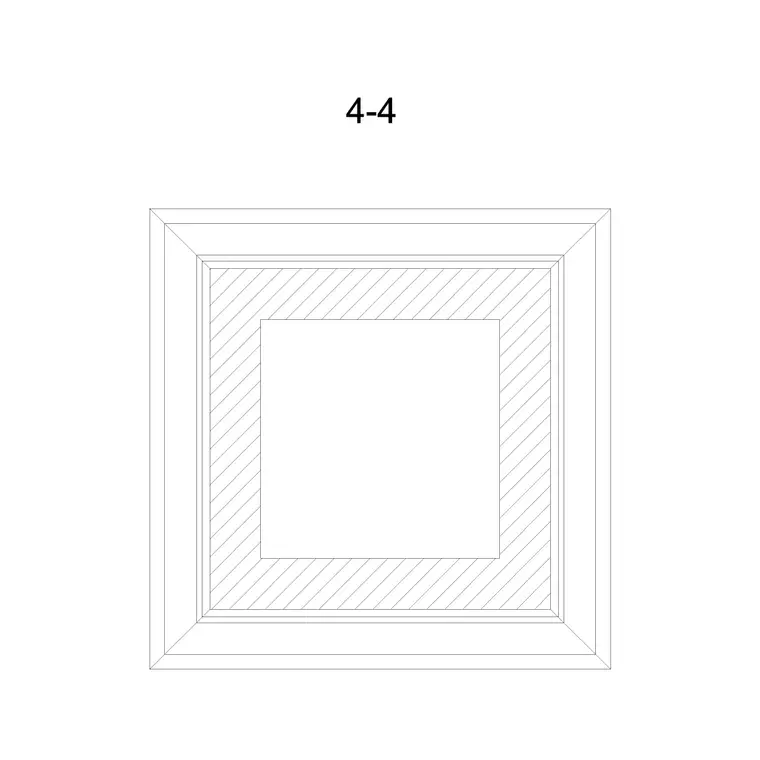
Finish with two that complete the set. A pilaster — a flattened column engaged with a wall — is drawn much like a column in elevation but shallow in plan, and it suits doorcases, bay divisions and any place a column is suggested rather than freestanding. A column plan/section block (the round shaft seen from above, or cut through) is what you need on the floor plan and in sections to show the column's footprint and structure.
With these ten in your library you can compose any classical elevation in 2026: arched colonnades for arcades, a column per order for the right architectural voice, capital and base details for the detail sheets, and pilasters and plan/section views to tie the elevation back to the plan. Download what the façade needs, keep the classical proportions intact when scaling, and array repeated columns at a fixed bay spacing for an even, convincing rhythm.
Downloading and composing a colonnade
Each column block downloads as a single DWG from the Other category — click download, no signup, free for commercial work. Insert with the INSERT command (type I, Enter, browse to the file) and snap the base to your floor or plinth line. For an arcade, place one column-and-arch block, then ARRAY it at the real bay spacing so every column and arch springs from the same level — that even rhythm is the whole point of a colonnade and is far faster than copying each bay.
If a column inserts at the wrong size it is a units mismatch — these are millimetre blocks, so set INSUNITS or scale by 0.001 for a metre drawing. Crucially, when you do resize, scale uniformly: a column stretched only in height loses its proportion and the fluting and capital distort, which instantly breaks the classical look.
A detailing tip: work at two scales. Use the full column blocks to set out the elevation, then drop the separate capital and base detail blocks onto an enlarged detail sheet, dimensioned and annotated, so the stonemason or joiner has the ornament at a workable size. The elevation tells the story; the details make it buildable. Keeping both the whole-column and the detail blocks means you can move between the two without redrawing the most intricate geometry on the façade.
Questions
Frequently asked
What are the three classical column orders?+
Doric (plain, sturdy capital), Ionic (scrolled volutes) and Corinthian (carved acanthus leaves). Each has its own proportion, so keep a representative block for each.
How do I keep a column looking right when I scale it?+
Scale it uniformly so the classical proportions (based on the column diameter) stay intact. Stretching it unevenly distorts the fluting and capital and breaks the classical look.
Where do I download these classical column blocks?+
The classical and architectural detail blocks are in the Other category here, free in DWG with no signup and free for commercial use.
Free downloads from this article
Free CAD block library
Download the blocks from this article — free, no signup