Wardrobe CAD block sizes & dimensions explained (free)
Wardrobe depths, door widths and hanging-rail clearances in plan — 2 to 7 door and sliding units — plus free DWG wardrobe blocks to download at real scale.
Sumana KumarUpdated 18 March 20264 min read

Why wardrobe depth is the number that matters
Wardrobes are the storage family that quietly wrecks bedroom layouts, and the reason is almost always depth. A wardrobe needs to be deep enough for a coat hanger to sit square across it, and that fixes the depth at around 600mm regardless of how wide the unit is. Drop a wardrobe drawn at 400mm deep into a plan and the hanging rail will not work in reality; draw it at the true 600mm and you will see honestly how much floor it consumes opposite the bed.
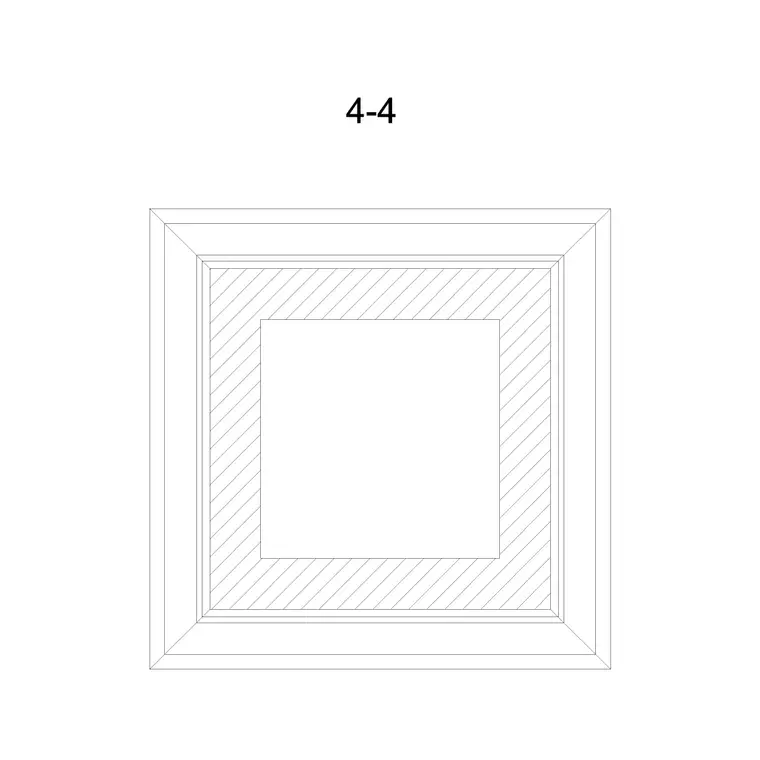
Wardrobe blocks live in the Furniture category and cover the full range — 2-door through 7-door hinged units, sliding-door wardrobes, and long-depth and walk-in variants — drawn in plan as the cabinet outline with door swings or slide lines. The Furniture category also includes a wardrobe section block for joinery drawings. Pick the configuration that fits the wall, but always check the depth first, because that is what governs whether the wardrobe and the bed can coexist.
Standard wardrobe depths and door widths
Use these as your scale check for a wardrobe block:
- Depth: 600mm is standard for a hinged wardrobe (allows a hanger to sit square). Sliding-door wardrobes are a little deeper, around 650-700mm, because the doors run on tracks in front of the storage. Shallow "long-depth" or reach-in units can be 350-400mm but only suit shelving or front-facing hanging, not a normal rail. - Door width: hinged doors are typically 400-600mm each, so a 2-door wardrobe is about 900-1200mm wide, a 3-door 1350-1800mm, a 4-door 1800-2400mm, and so on up to 6- and 7-door runs for a full wall. - Height: 2000-2400mm, shown only in elevation or section, not in the plan footprint.
The number of doors in the catalogue labels (2-door, 3-door, 4-door and up) maps directly to width, so you can size a wardrobe to a wall just by choosing the door count that fits.
It helps to know what the 600mm depth is buying internally, because that explains why you cannot cheat it. A clothes rail runs front-to-back across the wardrobe, and a shirt or jacket on a hanger is about 550-600mm shoulder to shoulder front to back; drop below 600mm and the doors will not close on hung clothes. Shelf-only or shoe sections can be shallower, which is why "long-depth" reach-in units exist at 350-400mm for folded storage. Corner wardrobes are a special case: an L-shaped corner unit is typically 600mm deep on each leg but loses usable space in the corner itself, so its capacity is less than its footprint suggests — worth remembering when you size storage for a room with an awkward corner to fill.
Hinged vs sliding — the clearance difference
The single biggest layout decision with a wardrobe is hinged versus sliding doors, because they need completely different clearance in front. A hinged door swings out 400-600mm into the room, so you must keep that arc clear — and in a tight bedroom, an open wardrobe door can collide with the foot of the bed. Sliding doors need no swing space at all; they run within the width of the unit, which is exactly why they suit narrow rooms and wardrobes placed close to a bed.
The catalogue includes both: hinged 2- to 7-door blocks with the door swings drawn, and sliding-door wardrobe blocks with the slide indicated instead. Because the hinged blocks show the swing arc, you can drop one in and immediately see whether the doors clear the bed and the circulation; if they do not, switch to the sliding-door block and the problem disappears. That swap is one of the most useful things an accurate wardrobe block lets you test.
Downloading and inserting a wardrobe block
Open the Furniture category and search or browse for wardrobes — you will find 2-door through 7-door, sliding, and long-depth variants. Download the free DWG of the configuration that fits your wall (no signup; DXF where supported). Insert the plan block and snap it flush against the wall, usually opposite or perpendicular to the bed.
These blocks are drawn at real-world size, so insert at scale 1 in a millimetre drawing, or set INSUNITS / scale by 0.001 in a metre drawing. Verify by dimensioning the depth — a hinged wardrobe should read about 600mm. Put it on a "Furniture" or "Joinery" layer; the blocks are built on layer 0, so set that layer current before inserting and the wardrobe inherits it, keeping the plan tidy and the storage easy to dim back for a structural sheet.
Fitting wardrobes into the bedroom
Once the wardrobe is in, the layout test is how it sits with the bed and the door. Keep at least 600-700mm of clear space in front of a wardrobe so you can stand and access it; for hinged doors, that clearance must also accommodate the open door swing. Check that the wardrobe does not block a window or foul the bedroom door swing, and that the route from the door to the bed stays clear past it.
For built-in or walk-in wardrobes, the same depth logic applies inside: 600mm for hanging, plus a clear aisle of at least 700mm in a walk-in so you can stand and reach both sides. Because the wardrobe block carries its true 600mm depth and its door swing, you can lay all of this out and trust it — the wardrobe you draw is the wardrobe that will actually fit, hanging rail, door swing, clearances and all.
Questions
Frequently asked
How deep should a wardrobe be?+
About 600mm for a hinged wardrobe, so a coat hanger sits square across it. Sliding-door wardrobes are 650-700mm deep because the doors run on tracks in front of the storage.
How wide is a 4-door wardrobe?+
Roughly 1800-2400mm, since hinged doors are typically 400-600mm each. The door count in the block name maps directly to width, so pick the count that fits your wall.
Are the wardrobe blocks free to download?+
Yes — the wardrobe blocks in the Furniture category are free DWG downloads (often DXF too), no signup, free for commercial use.
Free downloads from this article
Free CAD block library
Download the blocks from this article — free, no signup