Standard human-figure block heights explained (free)
Scale-figure heights for elevations and plans, why human figures sell a drawing, and where to download free DWG people blocks — standing, sitting and in plan.
Saumyajit MaityUpdated 15 April 20264 min read
Why a human figure belongs on a drawing
A scale figure is the fastest way to make a drawing legible to a non-architect. Put a person on an elevation and anyone — a client, a planner, a builder — instantly reads the height of the door, the depth of the balcony, the scale of the whole façade, because we all know roughly how tall a person is. Without a figure, an elevation is just lines; with one, it becomes a place at human scale.
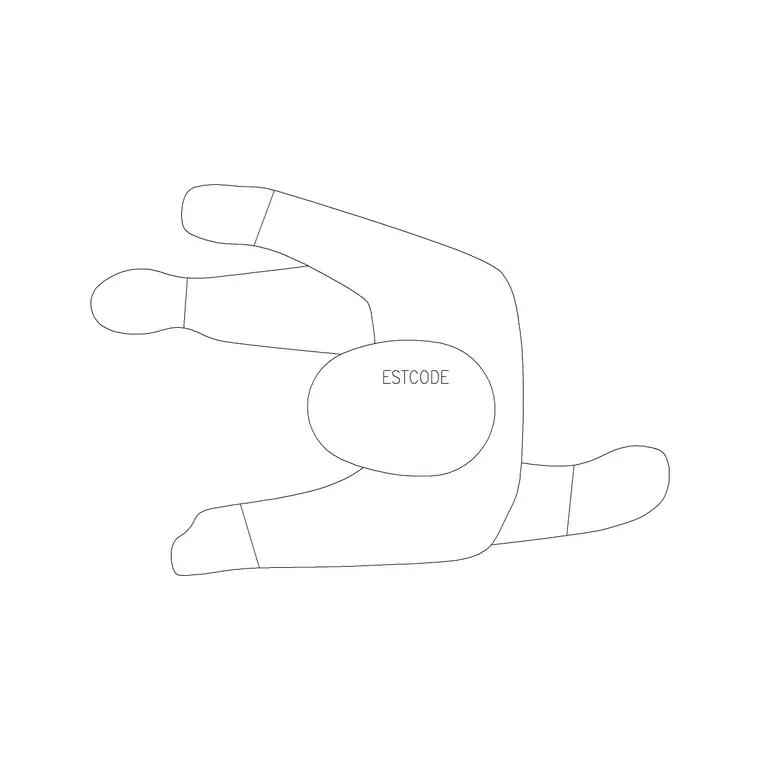
Human-figure blocks live in the People category and come in several types: elevation figures (standing, the most common), sitting figures (for showing seating and furniture in use), plan figures (the top-down outline for circulation and density), and specialist figures such as wheelchair users and children. The Human Figure Plan 1 block is a plan-view figure; the category also has standing, sitting and disabled-access figures. The figure you choose depends on the view and what you are trying to communicate — height, occupancy or circulation.
Standard figure heights to draw to
Scale figures should reflect real human dimensions, and these are the heights to check a block against:
- Adult standing height: about 1700-1800mm. 1750mm is a sensible average to draw to; some figures use 1800mm. - Eye level: about 1600mm above floor, which is also why elevations and views are often set out from roughly this height. - Seated height (floor to top of head): about 1200-1300mm. - Child: ranges widely with age — roughly 950mm at age 3-4, 1200mm at 7-8, 1500mm by early teens. - Wheelchair user (seated, floor to top of head): about 1300mm, with eye level around 1100-1200mm.
When you place an elevation figure, the critical thing is that its height matches the drawing's scale: a 1750mm figure next to a 2100mm door should read correctly — the door head sits comfortably above the person's head. If the figure looks giant or tiny against the building, the scale is wrong, which is the same units check as for any block.
Plan figures and circulation
Plan-view human figures are a different tool from elevation figures. Seen from above, a person occupies roughly a 450-600mm circle or oval (shoulder width is about 450mm, but allow more for movement and personal space). Plan figures are used to show occupancy and circulation — how many people a space holds, whether a corridor is wide enough for two people to pass, whether a queue or a crowd fits.
For circulation checks, useful figures to keep in mind are: about 600mm for one person to pass comfortably, 1200mm for two people to pass, and 550mm of width per person in a seated row. Dropping plan figures into a space tests it for human use in a way furniture alone cannot — a waiting area, a foyer or an escape route reads very differently once you populate it with correctly sized people. The Human Figure Plan blocks (1-9) give you a set to vary across a crowd so it does not look like one figure stamped repeatedly.
Using figures convincingly
The quickest way to make scale figures look amateurish is to repeat one identical figure in a rigid line. Real groups of people vary in height, pose and spacing, so the fixes mirror those used for trees: use several different figures, mirror and slightly reposition them, vary heights within the adult range, and mix in a seated figure or a child where it suits the scene. The People category's range of standing, sitting and plan figures makes that variety easy.
Place figures where they do real work: at entrances to show the door height, on balconies and stairs to confirm headroom and guarding, in seating areas to show furniture in use, and along a street elevation to set the scale of the whole scheme. A figure at the base of a tall façade tells the eye how big the building is in a single glance — which is precisely the job a scale figure exists to do. Used with a little variety and placed thoughtfully, people blocks lift a drawing from technical to convincing.
Downloading and inserting a people block
Open the People category, choose the figure type and view you need (standing or sitting elevation figures for façades and interiors, plan figures for layouts and circulation), and download the free DWG (no signup; DXF where supported). For an elevation, insert the standing figure on your floor datum so its feet sit on the floor line; for a plan, insert the top-down figure into the space you are testing.
These blocks are drawn at real-world size, so insert at scale 1 in a millimetre drawing, or set INSUNITS / scale by 0.001 in a metre drawing. Verify by dimensioning a standing figure's height — it should read about 1750mm. Put figures on an "Entourage" or "People" layer so you can dim or hide them for technical sheets and show them on presentation drawings; the blocks are built on layer 0, so set that layer current before inserting and they inherit it cleanly.
Questions
Frequently asked
What height should a scale figure be?+
About 1700-1800mm for an adult standing figure (1750mm is a sensible average), with eye level around 1600mm. A seated figure is roughly 1200-1300mm floor to head.
How much space does a person take up in plan?+
Roughly a 450-600mm circle or oval. Allow about 600mm for one person to pass in a corridor and 1200mm for two people to pass comfortably.
Are the human-figure blocks free to download?+
Yes — standing, sitting and plan-view people blocks in the People category are free DWG downloads (often DXF too), no signup, free for commercial use.
Free downloads from this article
Free CAD block library
Download the blocks from this article — free, no signup