Where to find free Roman / arched window DWG files
Free Roman and arched window DWG blocks: where to download them, how the curved head is drawn, and how to place decorative arched windows in plan and elevation.
Saumyajit MaityUpdated 8 May 20264 min read
What makes a Roman or arched window
A Roman window is defined by its head — a semicircular or segmental arch crowning the opening, sometimes with radiating glazing bars that fan out from the springing points like a sunburst. It is a classical, decorative motif, at home on traditional facades, heritage-style housing, churches, and any elevation reaching for a more formal, period character. The arch is the whole point: where a plain rectangular window is purely functional, the Roman arch adds proportion and ornament.
In elevation, the curved head and any radiating bars are the star of the drawing, so the block's elevation view carries most of its visual value. In plan, a Roman window reads much like any other — a frame in the wall thickness — because the arch lives in the vertical plane. There is also a squared variant (square Roman windows) that keeps the classical proportions and detailing in a rectangular head, for facades where a true arch is not wanted.
Downloading Roman and arched window blocks
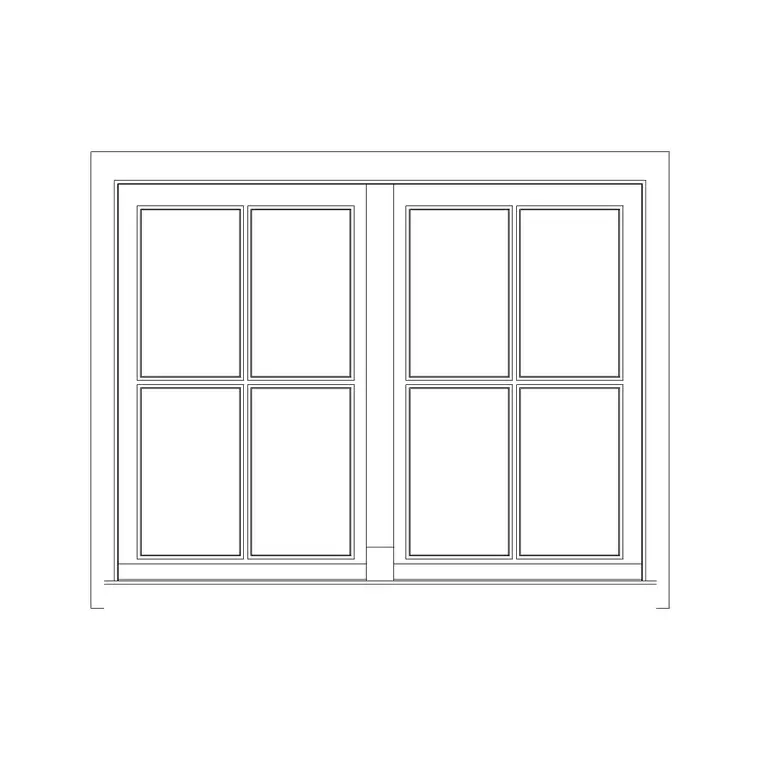
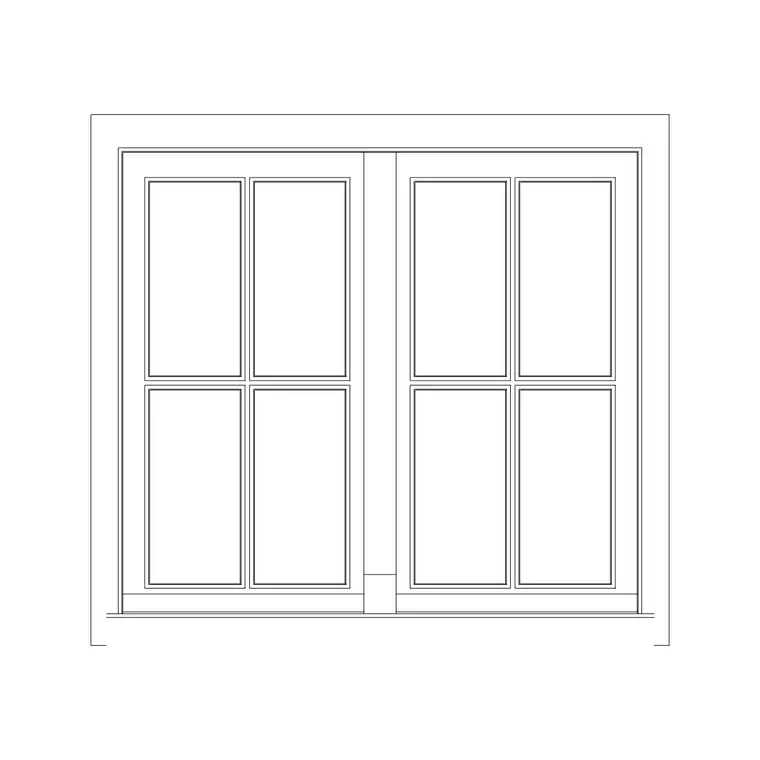
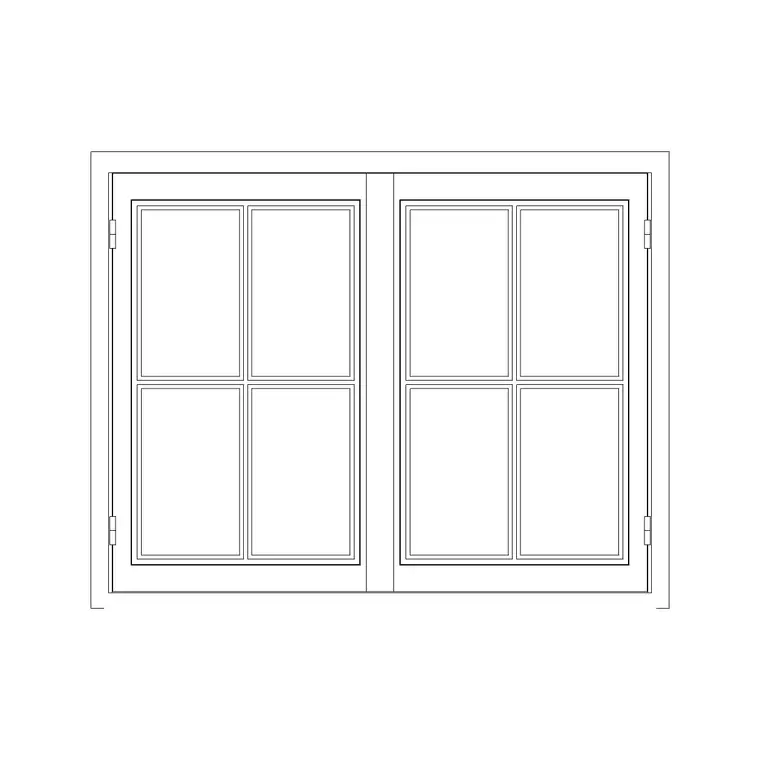
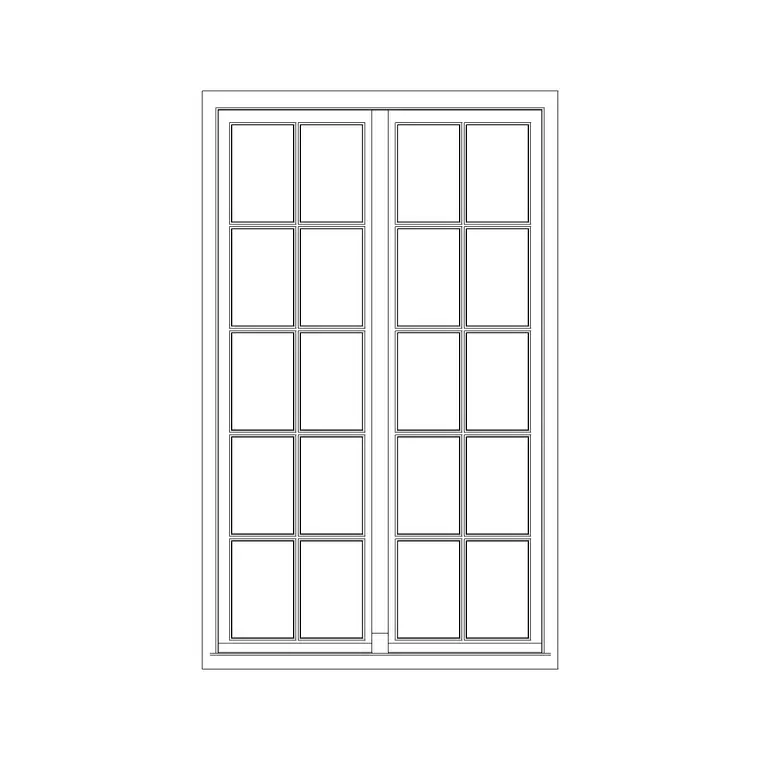
The Windows category holds the Roman family, all free, all DWG, no signup — click to download to your Downloads folder. There is a useful range: a base Roman window in two-shutter form, a two-shutter openable version with operable casements, a two-shutter sliding version, and square Roman windows for the rectangular-head look.
That spread lets you keep the classical styling while choosing how the window actually works — fixed, openable or sliding — to suit the room behind it. Many of these blocks include both plan and elevation geometry, so a single download gives you the decorative elevation face and the plan symbol together. Pick the operation first (openable for a habitable room needing ventilation, sliding where nothing can project), then the head shape (arched or square), so the window both looks and behaves as intended.
Placing the elevation and the plan
Insert the DWG with INSERT (I, Enter) or by dragging it onto the canvas, scale 1, rotation 0. Because the arch matters most in elevation, give that view care: place the elevation portion on your elevation sheet and align the springing line and the arch crown to the correct heights, so the curve sits where the masonry or render actually turns. A Roman window drawn at the wrong head height instantly looks off, because the eye reads the arch's position against floor and eaves lines.
For the plan, snap the frame into the wall opening with object snaps (F3) as you would any window. If the block combines both views, separate them onto their respective sheets. Keep the radiating glazing bars intact — they are the detail that sells the classical look, and exploding or simplifying them robs the window of its character.
Scale, units and the arch geometry
Set INSUNITS to millimetres in both files so the window auto-scales, or SCALE by 0.001 to bring a millimetre block into a metre drawing if it comes in oversized. Dimension the opening width to confirm the frame matches your wall.
Arched heads add one extra consideration: the rise of the arch. A semicircular head rises by half the opening width, so a wide Roman window needs significant height above the springing line for the full semicircle — check your floor-to-ceiling or floor-to-eaves height accommodates it before committing. A segmental (shallower) arch needs less. If the available height is tight, the square Roman variant keeps the styling without demanding the headroom an arch requires, which is exactly why that variant exists.
Using arched windows tastefully
Keep Roman windows on the Windows layer. Decorative windows reward restraint: a Roman arch over a front door or as a feature on a gable reads beautifully, but a whole facade of competing arches can look fussy, so place them where they earn the emphasis.
If a scheme repeats the same arched window, save it to a Tool Palette and note the head type and operation in your window schedule, since arched units are usually bespoke and the supplier needs the geometry precisely. Drawn with its arch at the right height and its glazing bars intact, a Roman window does on the page what it will do on the building — draw the eye and lift the elevation from ordinary to considered.
Editing the arch without breaking it
Because a Roman window is geometry-rich, it is worth handling its curves and bars with a little care once it is in your drawing. The arched head is usually drawn as a true arc, so if you ever need to widen or narrow the window, scale it uniformly rather than stretching it on one axis — an arc stretched horizontally turns into a squashed ellipse and the classical proportion is lost. If you genuinely need a different width, it is better to re-insert at the correct size or rebuild the arch than to distort the existing one.
The radiating glazing bars deserve the same respect: keep them as they came rather than exploding and nudging individual lines, which quickly destroys the even fan that gives the window its character. If a bar needs adjusting, edit the block definition so every instance stays consistent. Treat the Roman window as a designed object to be placed and scaled, not a loose set of lines to be reshaped, and it will keep looking like a proper classical window on every elevation it appears on.
Questions
Frequently asked
What is a Roman window?+
A window with a semicircular or segmental arched head, often with radiating glazing bars. It's a classical, decorative motif used on traditional and heritage-style facades, available here in fixed, openable and sliding forms.
How much height does an arched window need?+
A semicircular head rises by half the opening width above the springing line, so wide Roman windows need significant headroom. The square Roman variant keeps the styling where height is tight.
Are Roman / arched window DWG files free to download?+
Yes — the Windows category has several Roman variants, free in DWG with no signup, for personal and commercial use.
Free downloads from this article
Free CAD block library
Download the blocks from this article — free, no signup