Car CAD block dimensions explained for site plans (free)
Real car sizes, parking-bay dimensions and turning circles for site plans — plus where to download free DWG car blocks in plan and elevation at the right scale.
Sumana KumarUpdated 25 February 20264 min read
Why car size matters on a site plan
On a site plan, a car block is rarely there for decoration — it is a setting-out tool for parking, access and turning. Draw a car too small and you will lay out parking bays that no real vehicle fits into; draw it at honest dimensions and you can check that bays, aisles and turning space actually work. So the dimension that matters is the overall length and width of a typical car, and the swept path it needs to manoeuvre.
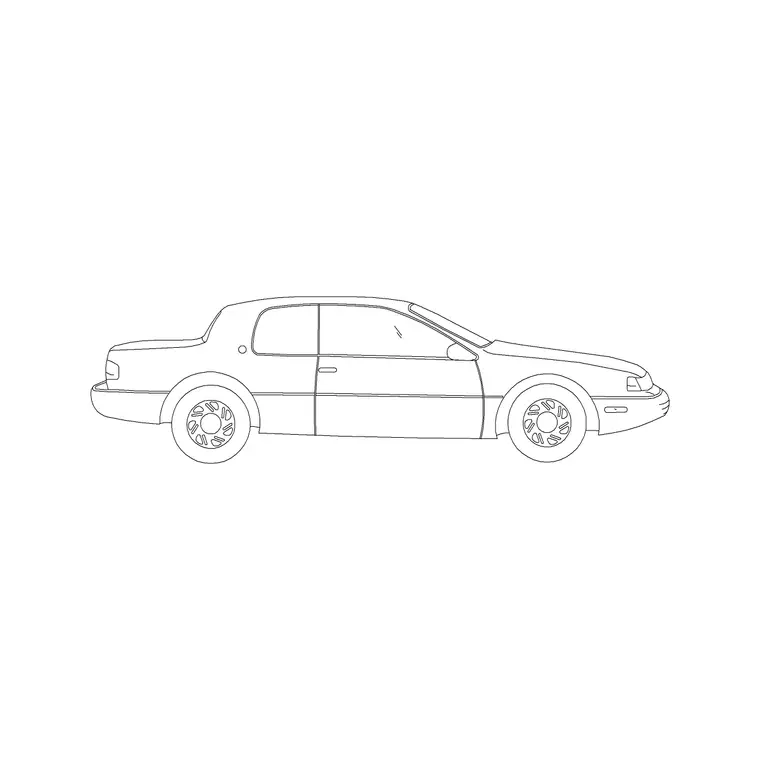
The Vehicles category carries cars in two views: plan (top-down, for site and parking layouts) and elevation (side-on, for street scenes and to give a façade human scale). The 2 Door Sedan Car is an elevation block; the category also has plan-view cars, jeeps, hatchbacks, MPVs and luxury sedans. Pick the view for the drawing — a parking layout needs the plan, a street elevation needs the side view — and the size for the kind of vehicle you are designing for.
Standard car dimensions to design around
Cars vary, but these are the sizes to plan around so your layout suits real vehicles:
- Small / city car: about 3700-4000mm long x 1700mm wide. - Compact / hatchback: about 4200mm long x 1800mm wide. - Standard sedan / saloon: about 4500-4800mm long x 1800mm wide — a sensible default for car blocks. - Large sedan / SUV / MPV: 4800-5200mm long x 1900-2000mm wide. - Design vehicle for parking: many standards use a design car of about 4800 x 1800mm so bays suit the majority of vehicles.
When you measure a downloaded car block to check scale, a standard car should read about 4.5-4.8m long. If it comes in at a few hundred millimetres, that is a units mismatch (the block is likely in metres dropped into a millimetre drawing, or vice versa) — fix the scale before you set out any parking around it.
Parking bay and aisle dimensions
The real reason to place a car block is to size parking correctly, and bays follow well-established figures:
- Standard parking bay: about 2400-2500mm wide x 4800-5000mm long. 2500 x 5000mm is comfortable; 2400mm wide is a workable minimum. - Accessible (disabled) bay: about 3600mm wide (a standard bay plus a 1200mm transfer zone) x 4800mm long. - Parallel parking bay: about 2000mm wide x 6000mm long to allow manoeuvring in and out. - Aisle width: about 6000mm for two-way traffic and 90-degree bays; less for one-way or angled parking.
Drop correctly scaled car blocks into your bays and you can see at a glance whether doors can open, whether a car overhangs the aisle, and whether the layout meets the standard. That visual check is exactly what a car block is for on a site plan — a label saying "parking" proves nothing; a real-sized car in a real-sized bay proves the layout works.
Turning circles and access
Beyond static bays, vehicles need room to turn, and this is where car blocks save real mistakes. A typical car has a kerb-to-kerb turning circle of about 11-12m diameter, and a larger vehicle more. At the head of a parking run or in a courtyard, you need enough space for a car to turn around rather than reverse out onto a road. Sketching the swept path with a correctly sized car block reveals whether a turning head, a driveway or a tight access actually works for the design vehicle.
For service and delivery access the vehicle gets much bigger — a refuse truck or a fire appliance needs far more length, width and turning space than a car — so check which design vehicle your site must accommodate. The car block handles the everyday case; for larger vehicles, scale up to the relevant design vehicle. Either way, an accurately sized block lets you test access honestly instead of hoping it fits.
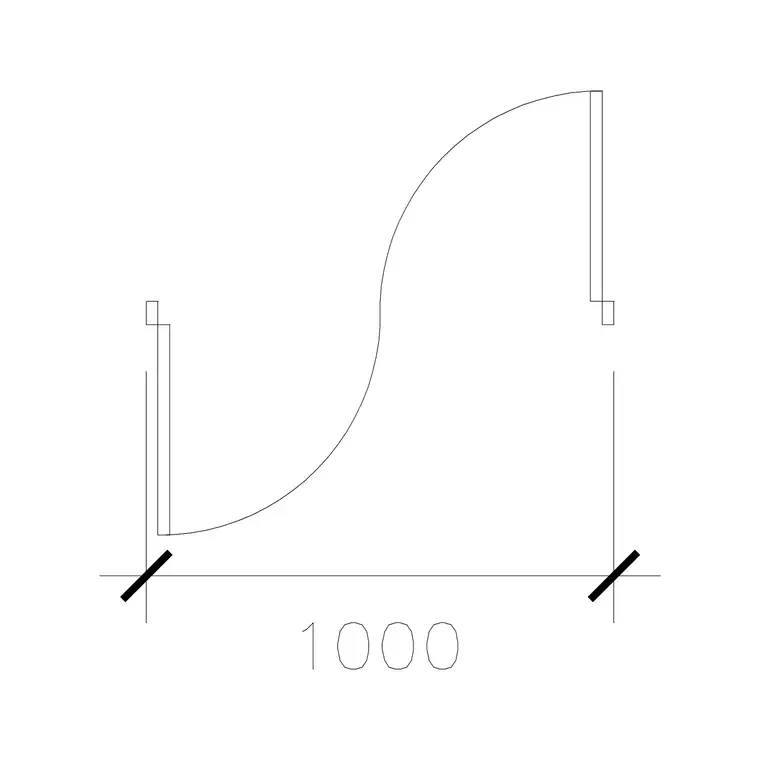
While you are setting out the site, it is worth dropping in the building entrances too — a correctly sized entrance door block at the head of a parking bay or drop-off shows how vehicles, the front door and any accessible route relate, so the parking does not strand a car door's-width away from the way in.
Downloading and inserting a car block
Open the Vehicles category, pick a car in the view you need (plan for parking and site layouts, elevation for street scenes), and download the free DWG (no signup; DXF where supported). For a site plan, insert the plan car and snap it into a bay or along an access route; for an elevation, place the side-on car against a street façade to give it scale.
These blocks are drawn at real-world size, so insert at scale 1 in a millimetre drawing, or set INSUNITS / scale by 0.001 in a metre drawing. Verify by dimensioning the length — a standard car should read about 4.6m. Put vehicles on a "Site" or "Vehicles" layer; the blocks are built on layer 0, so set that layer current before inserting so the cars inherit it and can be dimmed or frozen when they are not needed on a given sheet.
Questions
Frequently asked
What size is a standard car for a site plan?+
About 4500-4800mm long x 1800mm wide for a sedan. Many parking standards use a design car of around 4800 x 1800mm so bays suit the majority of vehicles.
What are standard parking bay dimensions?+
About 2400-2500mm wide x 4800-5000mm long for a standard bay, with a 6000mm aisle for two-way 90-degree parking. Accessible bays are around 3600mm wide.
Are the car blocks free to download?+
Yes — the car blocks in the Vehicles category are free DWG downloads (often DXF too) in plan and elevation, no signup, free for commercial use.
Free downloads from this article
Free CAD block library
Download the blocks from this article — free, no signup