10 best free wardrobe CAD blocks for bedroom plans
Ten free DWG wardrobe and closet blocks for bedroom floor plans — hinged, sliding and walk-in, with the depths and door-clearance tips that make layouts work.
Sumana KumarUpdated 11 March 20264 min read
Storage is where bedroom layouts quietly fail
Wardrobes are the furniture people forget to draw, and that is exactly where a bedroom plan goes wrong. A 600mm-deep wardrobe placed without thought can swallow the clearance a doorway or a bed needs, and you only catch it if the wardrobe is actually on the plan. Drawing storage honestly is what separates a layout that works on site from one that looks fine until the joiner arrives.
The ten blocks below are free DWG downloads from the Furniture category here — no signup, free for commercial use. They are plan symbols seen from above. The single most important number for a wardrobe is its depth: a hanging wardrobe is about 600mm deep, because that is what a coat hanger on a rail needs. Confirm any block reads near 600mm deep before you trust its footprint.
1–3: Hinged-door wardrobes
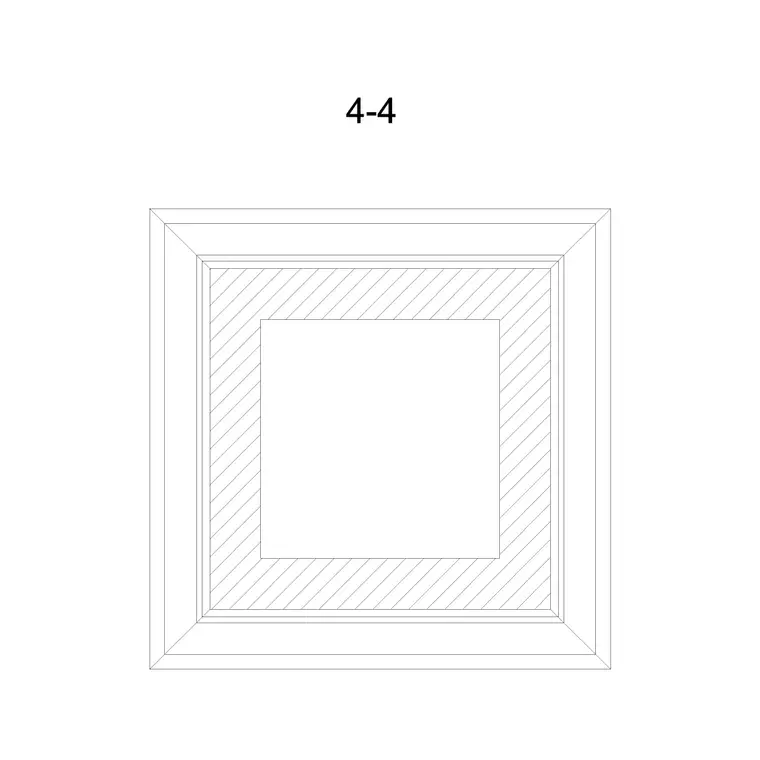
Start with the standard hinged-door wardrobe. Our 4 Door Wardrobe Plan is a clean example — a 600mm-deep cabinet with the door leaves and their swing arcs drawn, which is the whole reason to use a proper block. Those swing arcs matter: a hinged wardrobe door needs roughly 600mm of clear space in front to open, and if the bed sits inside that arc the wardrobe cannot be used.
Keep a two-door, a three-door and a four-door version at common widths (wardrobes come in roughly 600mm modules). Place them against a wall and check the door swings clear the bed and any circulation — this is the check that saves a layout from an awkward on-site surprise.
4–6: Sliding-door wardrobes
Where floor space is tight, sliding-door wardrobes are the answer because they need no swing clearance at all — the doors run along the face of the cabinet. A sliding wardrobe block shows the cabinet depth and the door panels but no swing arc, which means you can place it much closer to a bed than a hinged unit.
Keep a two-panel and a three-panel slider. The advantage they make visible on a plan is the recovered floor area: swap a hinged wardrobe whose arcs were eating the room for a slider and the bedroom immediately works better. Sliders are usually a touch deeper (around 650mm) to house the track, so use the block rather than assuming the hinged depth.
7–8: Built-in and corner wardrobes
Built-in wardrobes run wall to wall and are drawn as a simple 600mm-deep rectangle spanning the recess, often with internal rail and shelf lines indicated. A corner wardrobe block turns the storage around a corner of the room, which is useful for awkward bedrooms where a straight run will not fit.
Keep one full-width built-in and one L-shaped corner unit. Built-ins are the most space-efficient option and the most common in modern bedrooms, so having a clean block to stretch to the recess width is genuinely time-saving — just keep the depth honest at 600mm so the room beyond it is correct.
9–10: Walk-in wardrobes and dressing rooms
Finish with two for higher-spec bedrooms. A walk-in wardrobe block shows runs of hanging and shelving around the walls of a small room with a central circulation space — allow at least 600mm of clear walking width down the middle, more if there is hanging on both sides. A dressing-room layout adds an island or a dressing stool.
With these ten in your Furniture folder you can give every bedroom proper storage: hinged wardrobes where there is swing room, sliders where there is not, built-ins for recesses, corner units for awkward rooms, and walk-ins for the primary suite. Download what each room needs, keep the depth at 600mm, and always check the door swing or walking width before you call the layout done.
How to download and place a wardrobe block
Each wardrobe downloads as a single DWG from the Furniture category — one click, no signup, free for commercial work. Insert with the INSERT command (type I, Enter, browse to the file) and snap the back of the cabinet flush to the wall so the 600mm depth reads honestly into the room. For built-ins, stretch the block to the recess width; for hinged units, make sure the door arcs land in clear floor, not over the bed.
If a wardrobe inserts at the wrong scale it is a units mismatch — these are millimetre blocks, so set INSUNITS or scale by 0.001 for a metre drawing. Put it on your furniture layer before inserting so it edits with the rest of the room.
A bedroom-planning tip: lay the wardrobe and the bed down together and test them against each other before anything else. The classic failure is a hinged wardrobe door whose 600mm swing arc clips the corner of the bed — annoying in reality, invisible on a plan that omits the arc. If the room is tight, that single check is what tells you to switch to a sliding-door block, recovering the floor a swing would have eaten and keeping the bedroom usable.
Questions
Frequently asked
How deep is a wardrobe in a floor plan?+
A hanging wardrobe is about 600mm deep, because that is what a coat hanger on a rail needs. Sliding wardrobes are often a little deeper (around 650mm) to house the track.
How much clearance does a hinged wardrobe door need?+
Roughly 600mm of clear space in front so the door can swing open. If a bed or other furniture sits inside that arc, use a sliding-door wardrobe instead.
Are these wardrobe blocks free to download?+
Yes, every wardrobe DWG in the Furniture category here is free for personal and commercial use with no signup.
Free downloads from this article
Free CAD block library
Download the blocks from this article — free, no signup