How to download free cornice & moulding CAD blocks for AutoCAD
Free cornice and moulding profile DWG blocks — how to download them, what the profile sections show, and how to place mouldings in detail drawings.
Sumana KumarUpdated 27 February 20264 min read

Where the cornice and moulding blocks live
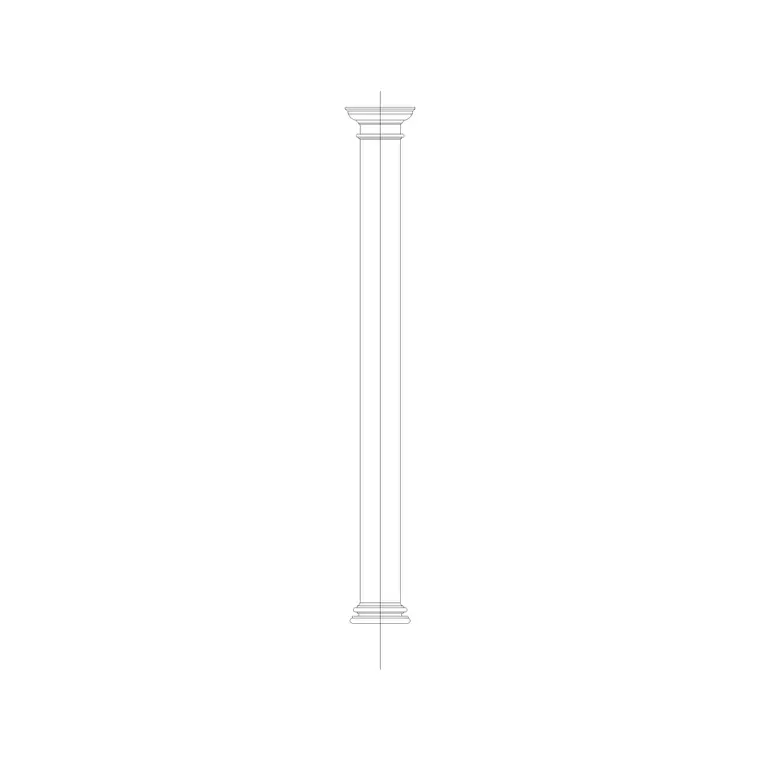
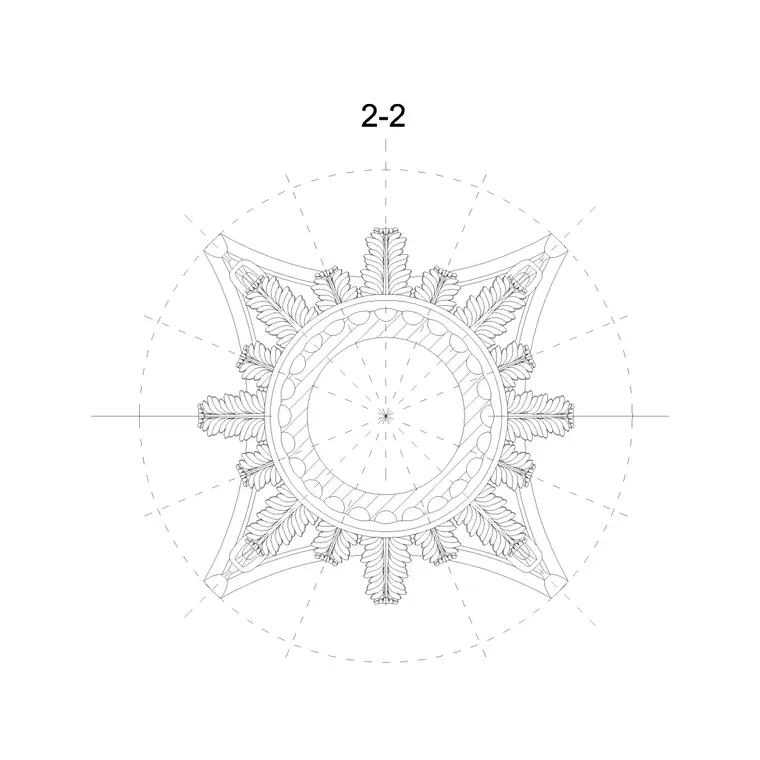
Cornice and moulding profiles sit in the Other CAD Blocks category on CADBlockDWG, alongside the classical columns and other architectural detail elements. Search 'cornice' or 'moulding' and the profile blocks come up; you can also browse the category and pick from the thumbnails. The download is free and instant — no account, no email gate, no countdown timer. Open the block and click download to get the DWG.
These are generic decorative profiles rather than a specific manufacturer's moulding catalogue, which suits most detail and section work. You are conveying the shape and character of a cornice, a coving or a trim — the profile that meets the wall and ceiling — rather than specifying a particular product reference. For traditional detailing, eaves details, internal cornices and classical entablatures, the generic profile blocks give you a ready-made section to drop in and adapt to your dimensions.
What a moulding profile block contains
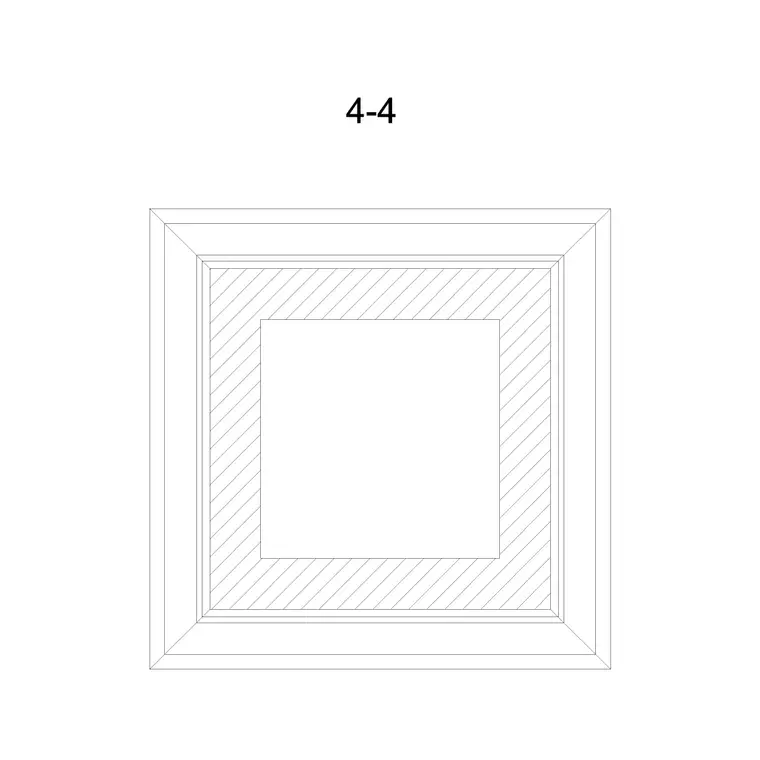
Each download is a small DWG with the moulding drawn as a clean 2D profile section — the cut shape you would see if you sliced through the cornice, showing the curves, fillets and steps that give it its character. That section is exactly what a detail or a section drawing needs, because a cornice is defined by its profile, not by a plan or an elevation outline.
The file opens in any modern CAD program thanks to a widely compatible AutoCAD format, with DXF offered where available. The profile is clean linework with no 3D and no clutter, so it inserts as a single tidy block you can place and edit from one definition. Because it is a reusable block, you can run the same profile along a whole section, and refine the definition once to update every instance — useful when you adjust a profile to suit the project.
Placing a cornice profile in a detail
Cornice and moulding blocks belong in section and detail drawings, where you show how the profile meets the wall, the ceiling or the eaves. Insert the profile with INSERT and place it with object snaps so it locks precisely to the wall line and ceiling line of your detail — accuracy matters here because a detail is read closely and dimensioned. Keep scale at 1 to begin, then scale the profile if your cornice is a different size to the stock block, using SCALE or scaling by reference against a known dimension.
If the profile comes in at the wrong size, fix the units first — match INSUNITS or scale by 0.001 or 1000 — before adjusting the profile size. Once placed, the profile becomes the basis of your detail: add the substrate, the fixings and the dimensions around it. For a run of identical cornice, the block lets you keep every section consistent rather than redrawing the profile each time.
Mirror and adapt the profile to fit
A profile often needs handing or tweaking to suit the condition. Use MIRROR to flip a cornice for the opposite side of a room or a window head, so the left and right details stay consistent without redrawing. Where a stock profile is close but not exact, explode a copy of the block and adjust the curves — deepen a cove, simplify a step — then redefine it as your own project profile, keeping the original block untouched for reuse elsewhere.
This adapt-and-redefine habit lets a small set of downloaded profiles cover a wide range of real details. You keep the generic block as a starting point, derive the project-specific variants you need, and store each as a named block so the section, the eaves detail and the large-scale callout all draw from a consistent, intentional set of profiles rather than ad-hoc linework that drifts between drawings.
Details, sections and where mouldings appear
Mouldings turn up across a set of drawings. In a wall section the cornice profile sits at the junction of wall and ceiling or at the eaves, showing how the trim resolves the corner. In a large-scale detail it is dimensioned and annotated as a buildable element. In a classical elevation the cornice reads as the horizontal band of the entablature crowning the columns, pairing naturally with the column blocks from the companion guide.
Keeping the moulding as a consistent block means the same profile appears identically wherever it is used, which is what a coordinated detail package needs. Because it is a reusable block on its own detail layer, you can isolate the profiles, restyle their lineweight for a construction sheet, and trust that the cornice shown in the section matches the one called up in the detail — a single source of truth for the profile across the drawings.
Layer it for clean details
Put cornice and moulding profiles on a sensible detail or architectural layer so they plot with the right lineweight and you can control them from the Layer Manager. The blocks inherit the layer you insert them onto, so set the right layer current before placing and they adopt its colour and weight automatically, keeping the profile consistent with the rest of the detail.
Once you have the profiles you use most, save them to a tool palette so adding a cornice to a section is a quick, repeatable step. Combine accurate snapping to the wall and ceiling lines, careful scaling to your real profile size and a tidy detail layer, and your section and detail drawings will read cleanly and dimension correctly — then restyle the layer for a construction issue or a presentation whenever the drawing calls for it.
Questions
Frequently asked
Where can I download free cornice and moulding CAD blocks?+
From the Other CAD Blocks category on CADBlockDWG. Search 'cornice' or 'moulding' for profile sections, then download the DWG free with no signup or attribution required.
What view is a cornice block drawn in?+
A profile section — the cut shape through the moulding showing its curves and steps — because that is what a detail or section drawing needs. A cornice is defined by its profile, not a plan or elevation outline.
How do I resize a moulding profile to my dimensions?+
Fix the units first, then scale the profile with SCALE or by scaling against a known reference dimension so the stock profile matches your actual cornice size before you dimension the detail.
Free downloads from this article
Free CAD block library
Download the blocks from this article — free, no signup