Explainer · what makes a good cad block
What makes a good CAD block?
By Saumyajit Maity · Published 13 Jan 2023 · Updated 27 Feb 2026
Two blocks can both be a chair, both look fine on screen, and behave completely differently the moment you insert them. One lands at the right size, on the right layer, with a base point you can snap to. The other comes in microscopic, dumps forty stray layers into your drawing, and has its insertion point floating somewhere off in space. The difference is craft, and it's learnable.
This guide is a practical checklist for what makes a CAD block genuinely good — the qualities that make it insert predictably, read correctly at the drawing's scale, and stay out of your way. Whether you're judging a block to download, cleaning up an inherited one, or building your own to a standard, these are the things to look for.
None of it is exotic. A good block is mostly a clean block: correct units, a deliberate base point, sensible layers, the right amount of detail for the job, and no hidden baggage. Get those right and the block earns a permanent place in your library.
It's drawn to true size in consistent units
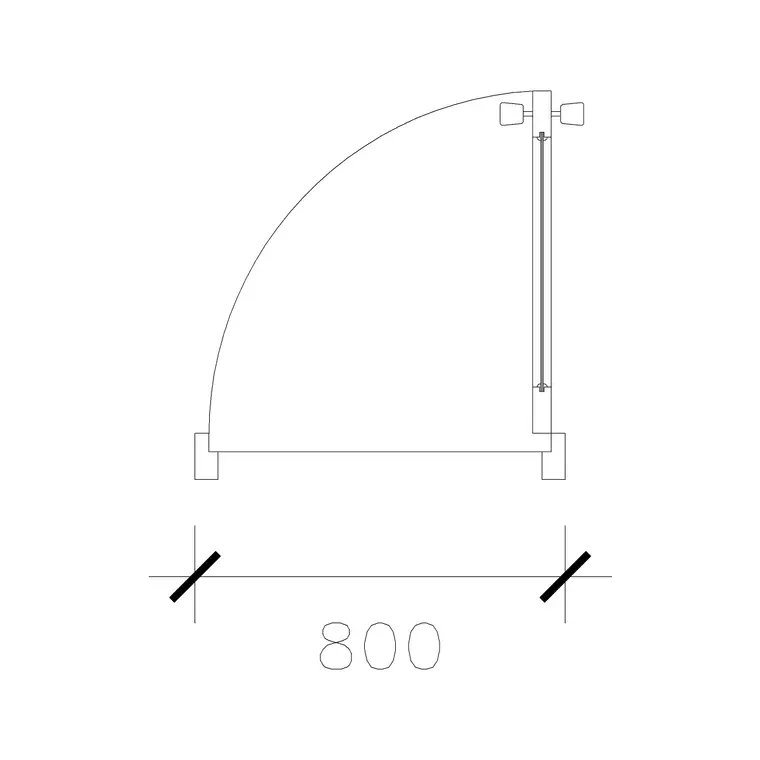
A good block is drawn full-size in real-world units, not scaled to fit a sheet. A 700 mm-wide door is 700 units wide in the drawing. This is what lets you check clearances the moment it lands, and it's why a scaled-to-fit block — drawn at, say, 1:50 so it 'looks right' on a specific sheet — is almost useless in any other drawing.
Just as important, the block carries its units flag (INSUNITS) so AutoCAD knows whether those units are millimetres, metres or inches and can rescale on insertion. A block drawn at true size with its units declared inserts correctly into any sensibly set-up drawing. A block with unitless or wrong units is a coin toss every time.
The base point is deliberate and snappable
The base point is the handle AutoCAD grabs when you insert the block, and a good block puts it somewhere useful. For a door, the hinge point; for a chair, the centre of the seat; for a title-block, the bottom-left corner; for a north arrow, its centre. A thoughtful base point means you place the block accurately with a single snap instead of inserting it and nudging it into position.
A bad block has its base point at the origin of whatever drawing it was cut from — often miles away from the geometry itself. Insert one of those and the block appears nowhere near your cursor. If you're evaluating a block, run INSERT and watch where it grabs: a base point on a meaningful, snappable point of the geometry is a strong sign of a well-made block.
Layers are clean and intentional
Open a good block and you'll find a handful of purposeful layers, not a junkyard. The cleanest approach for flexible blocks is to draw the geometry on layer 0, so the block inherits the colour and lineweight of whatever layer you insert it onto — one block that works in any context. Blocks that must keep fixed colours, like a coloured warning symbol or a logo, use named layers deliberately.
The red flag is a block that drags a swarm of unrelated layers into your drawing on insertion — layers from the original file it was harvested from, with names like 'A-WALL-2 (3)' that have nothing to do with the chair. Every one of those pollutes your layer list and your by-layer controls. A good block has been cleaned so it brings only the layers it actually uses.
The detail level suits the drawing scale
More detail is not better — appropriate detail is. A tree symbol crammed with individual leaves looks impressive at 1:50 and turns to an unreadable blob at 1:500. A good block-maker matches detail to the scale the block will be used at, or provides simple and detailed variants so you can pick. A door block for a general arrangement plan needs a leaf, a swing arc and a frame, not the ironmongery screw heads.
Over-detailed blocks also drag on performance: a plan with two hundred over-modelled trees can crawl. The skill is drawing the symbol that communicates the object at the working scale with the fewest entities that still read clearly. When you judge a block, ask whether it would still make sense printed at the scale you'll actually plot it.
The file is purged and lightweight
A good block DWG has been through PURGE and AUDIT: no unused layers, linetypes, text styles, dimension styles or orphaned nested blocks riding along. This keeps the file small and, crucially, stops the block from injecting clutter into every drawing it touches. A 30 KB chair that pulls in a dozen unused text styles is doing damage you won't notice until your layer and style lists are a mess.
Watch out for nested-block bloat too — blocks inside blocks inside blocks, sometimes wrapping geometry that could be flat. A little nesting is fine and sometimes deliberate, but a good block doesn't bury its geometry under needless layers of definition. Clean, purged and shallow is the goal.
Bonus marks: attributes and dynamic behaviour
The blocks above are 'good' as plain static blocks, and for most symbols that's exactly right. Two extras lift a block from good to excellent in the right context. Attributes — editable text fields like a door reference or a furniture product code — let the block carry data you can extract into a schedule, turning a drawing into a lightweight database. A title-block without attributes for the drawing number, scale and revision is missing the point of being a block at all.
Dynamic behaviour is the other bonus: a single door block that stretches to different widths and flips its swing, or a desk that offers three preset sizes, replaces a dozen near-identical static blocks. It's not always worth the effort — for a symbol you rarely resize, a plain static block is simpler and more compatible across every program that reads DWG. But for the handful of blocks you place constantly in varying sizes, dynamic behaviour is what separates a tidy library from a slow one.
Free download
Browse the full library — DWG & DXF, no signup.
Questions
Frequently asked
How can I tell if a CAD block is good before I use it?+
Insert it on a test drawing and check four things: it lands at true size (units are right), its base point grabs a sensible, snappable point, it doesn't dump a swarm of stray layers, and the detail reads cleanly at your working scale. Run PURGE on it too — if a lot disappears, the original file was cluttered.
Should a good block be drawn on layer 0?+
For flexible, recolourable blocks, yes — geometry on layer 0 inherits the colour and lineweight of the layer you insert it onto, so one block works everywhere. Use named layers only when the block must keep fixed colours, like a coloured symbol or a logo. Consistency across the library matters more than the specific choice.
Is a more detailed CAD block always better?+
No. Detail should match the drawing scale. A heavily detailed tree or door reads well close-up but turns to mud at small scales and drags on performance when repeated. A good block carries just enough detail to read clearly at the scale it'll be plotted, or ships simple and detailed variants.
Why does block units matter so much for quality?+
Because units are what make insertion predictable. A good block is drawn at true real-world size with its INSUNITS flag set, so AutoCAD rescales it correctly into any properly set-up drawing. A block with wrong or unitless settings inserts at random sizes — the single most common sign of a poorly made block.
Do good CAD blocks need attributes or dynamic features?+
Not usually. Most good blocks are plain static blocks, which keeps them simple and compatible everywhere. Attributes are valuable when the block should carry schedulable data (a door reference, a title-block's drawing number), and dynamic behaviour pays off for the few blocks you resize constantly. For everything else, a clean static block is ideal.
Related downloads
Blocks for this guide

Related categories
Related guides
Explainer
How to Organize a CAD Block Library (DWG)
How to organize a CAD block library that stays usable as it grows — folder structure, naming, units, tool palettes and a shared standard library for teams.
Explainer
CAD Block Naming Conventions Explained
CAD block naming conventions explained — why names matter, a field-order pattern that sorts and searches well, common standards, and pitfalls to avoid.
Explainer
Are Free CAD Blocks Safe for Commercial Use?
Are free CAD blocks safe to use commercially? The two real questions — licensing and file safety — answered plainly, plus how to vet a block before you ship it.