Explainer · what does drawn to scale mean
What does 'drawn to scale' mean in CAD?
By Sumana Kumar · Published 25 May 2026 · Updated 19 Jun 2026
'Drawn to scale' is one of those phrases that means something slightly surprising once you move from hand drawing into CAD. On a hand-drawn sheet, drawing to scale meant physically drawing a 5 m wall as, say, 50 mm of ink. In CAD it usually means the opposite: you draw the wall at its real 5 m size, full scale, and the scaling happens later, when you print. Understanding that flip is the key to working confidently in AutoCAD and to seeing why scaled CAD blocks save so much trouble.
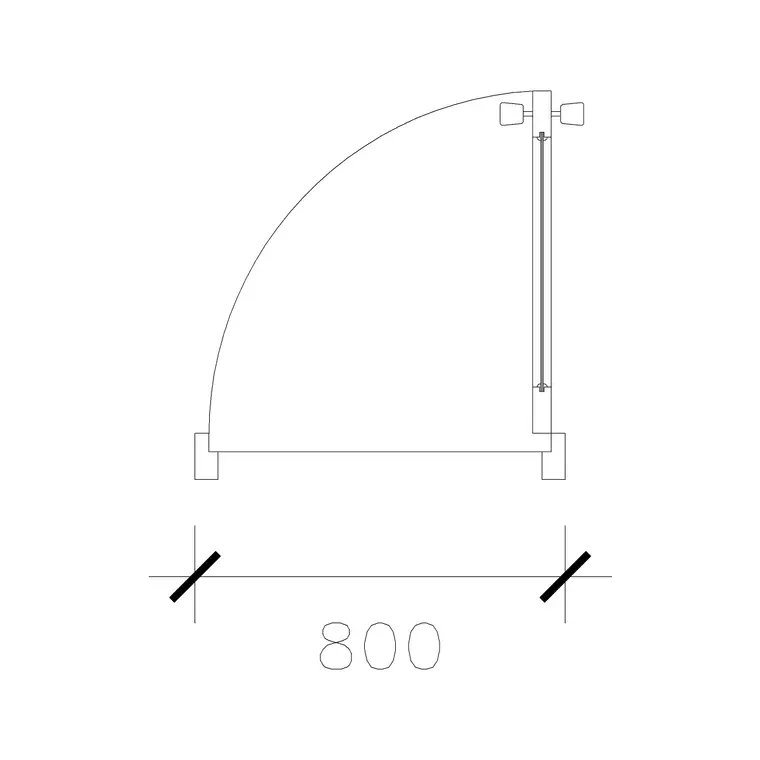
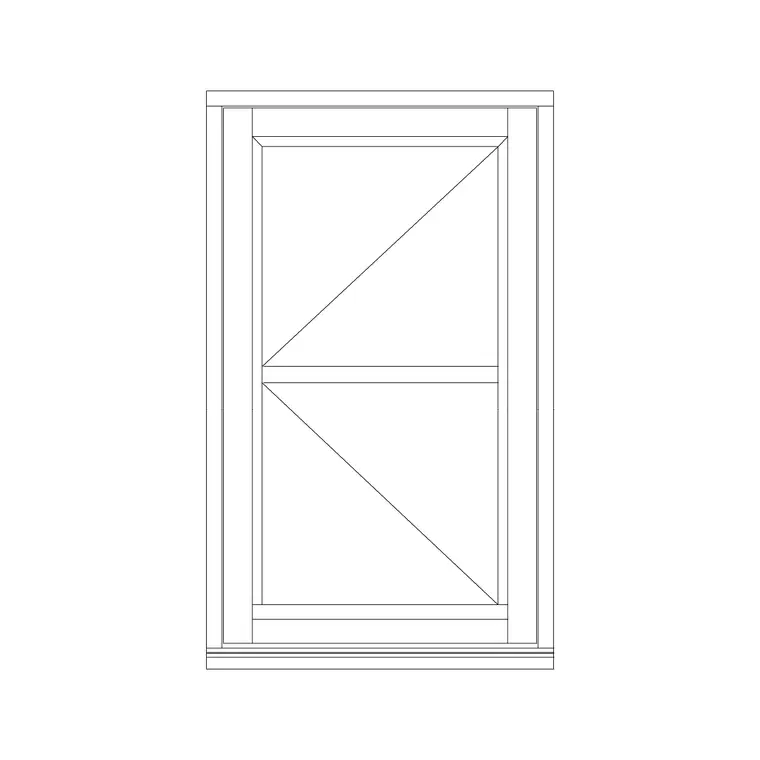
This guide explains what 'drawn to scale' really means in a CAD workflow: drawing full size in model space, applying a scale only at plot time, the role of model space versus paper space, and what it means for the blocks you download. Every block here is drawn full size in millimetres, so it lands at true dimensions and you never have to second-guess whether a chair or a door is the right size.
In CAD, you draw full size
The foundational habit in CAD is to draw everything at its real-world size — one to one. A 5 m wall is drawn 5000 mm long; a 900 mm door is drawn 900 mm wide. You do not shrink anything as you draw. The CAD space is effectively infinite, so there is no reason to scale geometry down the way you would to fit a hand drawing on a sheet.
This is what 'drawn to scale' really means in a CAD context: not that the geometry is reduced, but that it is dimensionally accurate — true to life. When you place a block that was 'drawn to scale', it arrives at its genuine size, ready to be measured against everything else in the drawing. The accuracy is built in, not approximated by eye.
Where the scale actually happens
If everything is drawn full size, where does a scale like 1:50 come in? At output. The drawing scale describes the relationship between the printed sheet and reality, and it is applied when you arrange and plot the drawing — not while you draw. A 1:50 plan means every real metre is printed as 20 mm of paper; the model itself stays full size.
So the modern workflow separates two things: the model, drawn at true size, and the presentation of that model on a sheet at a chosen scale. You decide the scale based on how much detail the sheet needs and what paper size you are printing to. Change your mind and you re-plot at a different scale without redrawing a single line — the full-size model is untouched.
Model space and paper space
AutoCAD gives these two ideas two homes. Model space is where you draw the building full size — the true-to-life model of everything. Paper space (the layout tabs) is where you build the printed sheet: you place a viewport that looks into model space and set its scale, add the title block, notes and dimensions, and arrange the page.
The viewport is the scaling device. You might show the whole plan in one viewport at 1:100 and a detail in another at 1:10, both looking into the same full-size model. This is why CAD lets one model produce many scaled sheets. Understanding the split — full-size model, scaled viewport — is what makes 'drawn to scale' click: the drawing is always real size, and the scale is a property of how you view and plot it.
Why scaled CAD blocks matter
Because CAD relies on everything being true size, a block that is 'drawn to scale' is one drawn at its real-world dimensions. Insert it at scale 1 into a full-size, millimetre drawing and it lands at exactly the size it represents — a 600 mm dishwasher is 600 mm, a 1700 mm bath is 1700 mm. You can immediately measure clearances and check fits.
The alternative — a block drawn at some arbitrary size — forces you to guess a scale factor on every insertion, and any error quietly corrupts your dimensions. That is why a reliable block library is drawn to true scale. The blocks here are drawn full size in millimetres, so 'drawn to scale' means you can trust their dimensions the moment they appear in your drawing.
Getting the units right on insertion
There is one catch that turns a correctly-scaled block into a giant or a speck: a units mismatch. A block drawn in millimetres dropped into a drawing AutoCAD thinks is in metres will arrive a thousand times too big. The fix is the INSUNITS setting: tell AutoCAD your drawing's insertion units (millimetres, for the blocks here) and it automatically rescales any block whose units differ.
So 'drawn to scale' has a small companion rule: drawn to scale and in known units. When both the block and the drawing declare millimetres, insertion at scale 1 is exact. If you work in metres, insert at 0.001; if in an imperial template, set the units so AutoCAD converts. Get the units right once and every scaled block lands perfectly, every time.
What 'not to scale' means
You will sometimes see a drawing or a detail marked 'NTS' — not to scale. This is a deliberate flag that the geometry is indicative only and you must not measure off it. It is used for diagrams, schematics and sketch details where the relationships matter but the exact dimensions are given by written figures rather than by scaling the drawing.
The contrast sharpens what 'to scale' means. A to-scale drawing is a measured document: you can scale a dimension off it (within the limits of print accuracy) and trust it. An NTS drawing is a picture of relationships, dimensioned in text. Good practice is to always rely on written dimensions where they exist and to use scaling as a check — and to keep your model truly full size so that scaling off it stays honest. Scaled blocks support exactly that discipline by keeping every inserted object dimensionally correct.
Free download
Browse the full library — DWG & DXF, no signup.
Questions
Frequently asked
Does 'drawn to scale' mean the drawing is shrunk down?+
Not in CAD. There you draw everything at its real-world size — full scale — and apply a scale like 1:50 only when you plot to a sheet. 'Drawn to scale' in CAD means dimensionally accurate and true to life, not physically reduced as it was in hand drawing.
What is the difference between model space and paper space?+
Model space is where you draw the building full size. Paper space (layout tabs) is where you build the printed sheet: a viewport looks into the full-size model and is set to a scale like 1:100, alongside the title block and notes. The viewport does the scaling.
Why does a scaled block sometimes insert too big or too small?+
Almost always a units mismatch. If a millimetre block lands in a drawing AutoCAD treats as metres, it arrives 1000 times too large. Set INSUNITS to your drawing's units (millimetres here) and AutoCAD rescales any block whose units differ on insertion.
What does 'NTS' or 'not to scale' mean on a drawing?+
It flags that the geometry is indicative only and must not be measured — the real dimensions are given in written figures instead. It is used for schematics and sketch details. By contrast, a to-scale drawing is a measured document you can scale dimensions off.
Related downloads
Blocks for this guide
Related categories
Related guides
Explainer
Plan vs Elevation vs Section Explained
Plan vs elevation vs section explained simply — what each architectural view shows, how they differ, when to use each, and how they read together in a drawing set.
Explainer
2D vs 3D CAD Blocks Explained in 2026
2D vs 3D CAD blocks explained — what each is, file size and performance differences, when to use flat blocks vs solid models, and which to download for your drawing.
Explainer
What Is a Floor Plan? A Clear Explanation
What is a floor plan? A clear explanation of what it shows, the cut height, the symbols it uses, how to read one, and how it differs from other drawings.