Room guide · wet bar cad blocks
Wet bar CAD blocks for home bar and drinks layouts
By Saumyajit Maity · Published 30 May 2026 · Updated 24 Jun 2026
A wet bar is a compact drinks station with running water — a small counter, a prep sink, a cold store for bottles and mixers, and usually a perch of stools — built for entertaining rather than cooking. The 'wet' part is what separates it from a dry bar: a sink means plumbing, which means it serves and cleans up drinks without a trip to the kitchen. You find them in living rooms, basements, games rooms, garden rooms and hospitality lounges. Designing one is about fitting a working drinks counter into a small, sociable footprint.
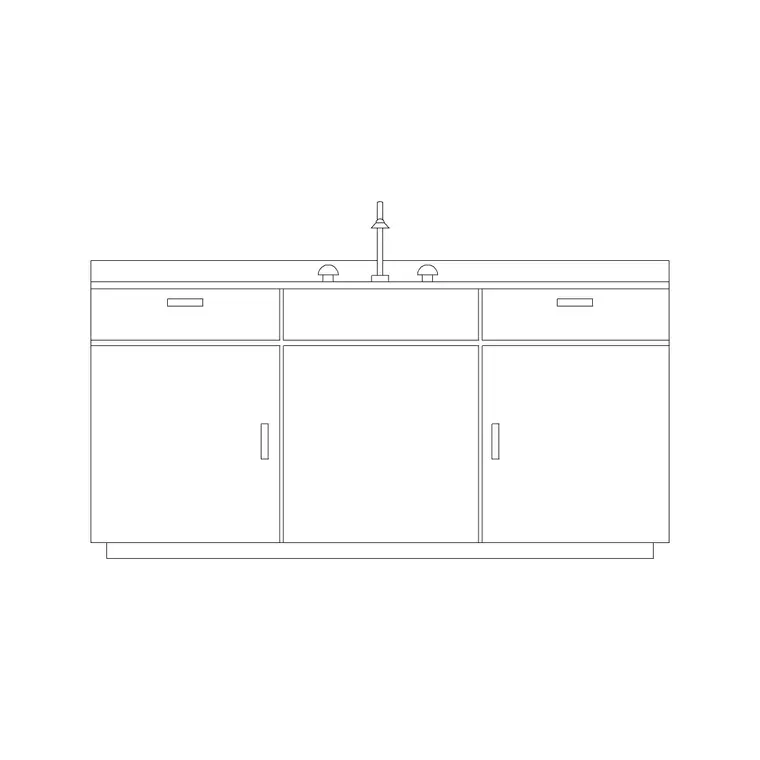
The blocks here are the bar kit — a counter run, a small prep or bar sink, an under-counter fridge, a faucet, and bar stools — drawn to true dimensions in DWG and DXF and free for personal and commercial use. Because they are scaled, you can prove the bar counter, the working side behind it and the stool side in front all fit the alcove or wall you have, before you commit.
The geometry that defines a wet bar is two-sided: a working side behind the counter where the host mixes and washes, and a social side in front where guests perch on stools. Get both clearances right and the bar works as a station and a gathering point at once; lose either and it becomes a shelf with a tap.
What a wet bar is and where it lives
A wet bar is a small, plumbed drinks station for serving and entertaining — distinct from a kitchen by intent. It does not cook; it pours, mixes, chills and rinses. The sink is for rinsing glasses and shakers and filling jugs; the under-counter fridge holds bottles, mixers and ice; the counter is the working and serving surface. That narrow brief is why a wet bar fits where a kitchen never could.
It lives wherever entertaining happens away from the kitchen: a corner of a living room, a finished basement or games room, a garden room, a home cinema, or a lounge in a hospitality setting. The host works behind it while guests gather in front. Because its kit is compact and its plumbing is light, the same scaled blocks suit a tucked-in alcove bar and a generous basement entertaining counter alike.
The two-sided counter geometry
A wet bar has a working side and a social side, and both need their own clearance. Behind the counter, the host needs a working aisle — at least 900–1000 mm of clear floor so they can turn between the sink, the fridge and the counter without backing into a wall. If there is back-bar shelving behind, the aisle is measured between the counter and that shelving.
In front, on the social side, bar stools tuck under a counter overhang. A bar counter is taller than a worktop — bar height runs roughly 1050–1100 mm — so it takes tall bar stools, and the overhang gives knee room. Behind seated guests, leave about 900–1000 mm so people can pass behind the stools. Draw the counter, the working aisle behind it and the stools in front, and the bar's true footprint — both sides — appears on the plan.
Blocks for a wet bar
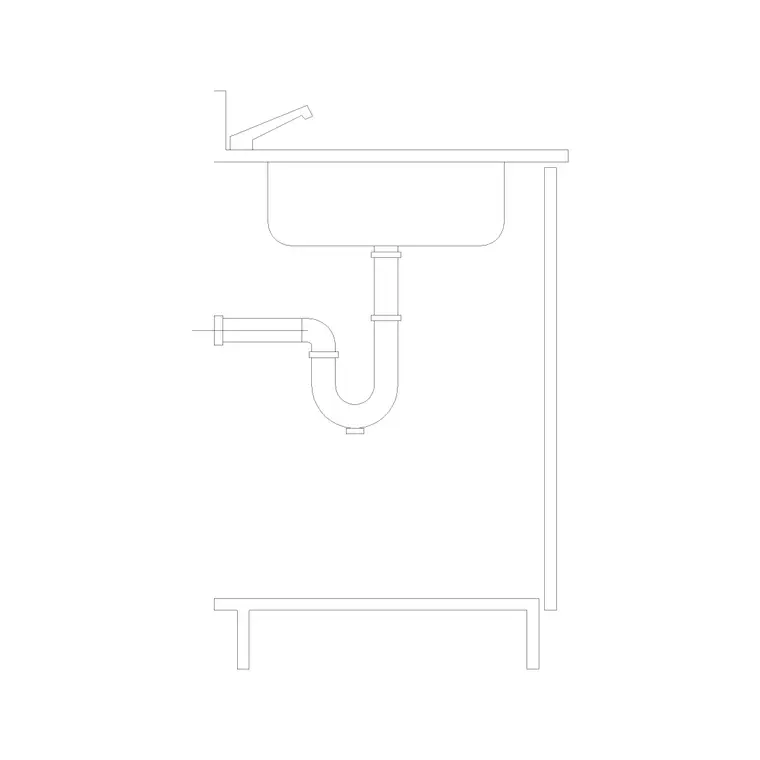
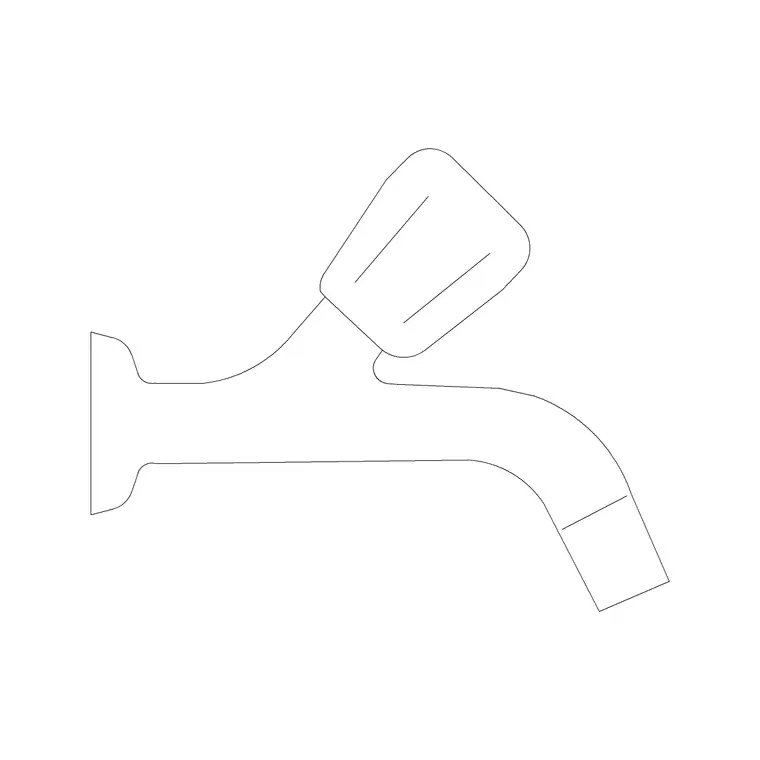
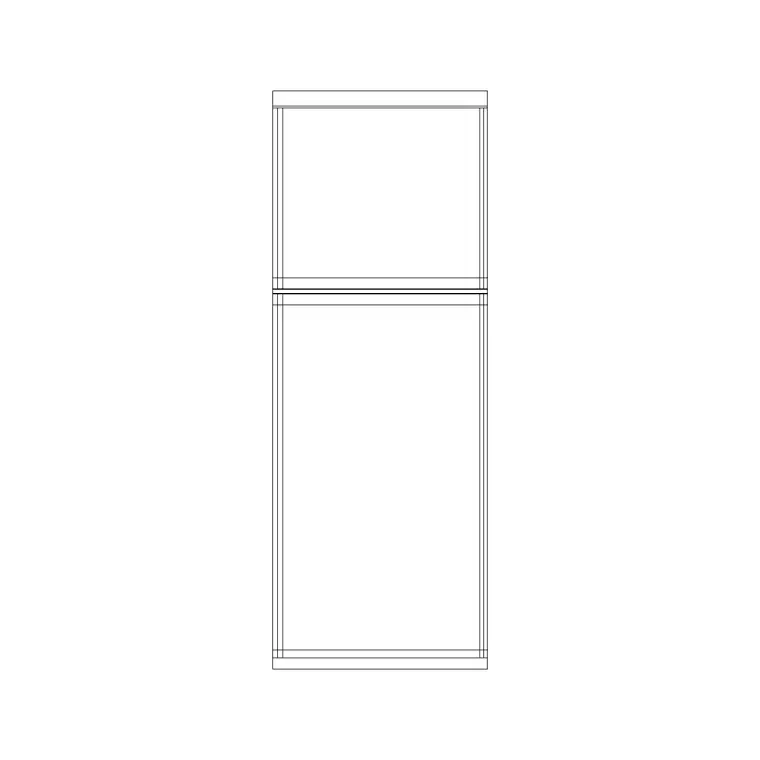
The counter run is the spine — base cabinet blocks carrying the worktop, drawn to bar depth. The prep or bar sink is smaller than a kitchen sink, set into the counter with a compact faucet behind it for rinsing glasses and filling. An under-counter fridge slides into the base run on the 600 mm module to chill bottles and mixers within reach of the host.
In front, bar stools — wooden or round-back — set the social side, tucked under the overhang and drawn in plan and elevation. Behind the host, a back-bar run of wall cabinets or open shelving displays bottles and glassware, drawn in elevation as the bar's face. Pendant lighting over the counter sets the mood and marks the bar as a destination within the room. Keep the kit to drinks service — a wet bar that grows a hob is just a small kitchen.
- Counter: base run carrying a bar-height worktop - Wet zone: compact prep/bar sink with a small faucet - Cold: under-counter fridge for bottles and mixers - Social side: bar stools under the counter overhang - Back bar: shelving or wall cabinets, pendant lighting
Bar-height dimensions and clearances
A wet bar trades on the bar-height counter. Where a kitchen worktop sits around 900 mm, a bar counter runs roughly 1050–1100 mm to suit standing service and tall stools. The stools match — bar stools are taller than dining chairs, with the seat set so the overhang gives knee clearance. The counter overhang on the social side is typically around 250–300 mm to seat a stool comfortably.
The sink and fridge sit on the standard module — a 600 mm base for the fridge, a compact base for the sink — so the working side reads like a short kitchen run. Behind the counter keep the 900–1000 mm working aisle; in front keep the pass-behind space behind the stools. Because the blocks carry these real heights in elevation, the bar counter, the back-bar shelving and the stools all line up at the right levels when you draw the face.
Drawing the wet bar in AutoCAD
Draw the counter run against the wall or as a peninsula, with the base cabinets and the bar-height worktop over them. Set the sink into the counter where the waste can reach a stack, and slide the under-counter fridge into the base run beside it. Draw the working aisle behind the counter at 900–1000 mm, against the back-bar shelving if there is any.
On the social side, tuck the bar-stool blocks under the counter overhang and draw the pass-behind space behind them. Keep the counter, base units, back-bar shelving, stools and lighting on separate layers so you can plot a plan and a face-on elevation of the bar — the elevation is where the bar earns its character, with the back-bar bottles and the pendant lights. Hang the pendant blocks on the lighting layer over the counter.
Common wet bar mistakes
The first mistake is mixing the heights: drawing a kitchen-height counter but specifying tall bar stools, so the stools tower over the counter, or a bar-height counter with standard dining chairs, so guests sit too low. Match the counter height to the stool height, both drawn at bar level. The second is forgetting the working aisle behind the counter — a host crammed into a 600 mm gap cannot turn between sink and fridge.
The third is no pass-behind space on the social side, so a row of perched guests blocks the route past the bar. The fourth is letting the wet bar creep toward being a kitchen — adding a hob, a big sink, a full fridge — until it needs kitchen clearances it does not have. Keep it to a drinks station: small sink, under-counter cold, bar counter, stools, and the clearances stay modest.
Free download
Browse the full library — DWG & DXF, no signup.
Questions
Frequently asked
What height is a wet bar counter?+
A bar counter runs roughly 1050–1100 mm, taller than a 900 mm kitchen worktop, to suit standing service and tall bar stools. Match the stool height to the counter so guests sit at the right level — the blocks carry these heights in elevation.
How much space do I leave behind the bar counter?+
Keep a working aisle of at least 900–1000 mm behind the counter so the host can turn between the sink, the fridge and the worktop. Measure it to the back-bar shelving if there is any behind the host.
What makes a bar 'wet' rather than dry?+
A wet bar has running water — a prep or bar sink with a faucet — so it can rinse glasses, fill jugs and clean up drinks without a trip to the kitchen. A dry bar has no plumbing, just storage and a serving surface.
How much overhang do bar stools need?+
A counter overhang of around 250–300 mm on the social side gives knee room for stools to tuck under. Behind seated guests, leave about 900–1000 mm so people can pass behind the stools.
Are the wet bar blocks free and what formats?+
They are free for personal and commercial use with no signup, and download in DWG and DXF that open in AutoCAD 2004 and later and any CAD tool that reads DXF.
Related downloads
Blocks for this guide
Related categories
Related guides
Room guide
Free Bathroom CAD Blocks — Design a Bathroom
Design a full bathroom in AutoCAD with free CAD blocks — WC, basin, bath and shower drawn to scale in plan and elevation. DWG & DXF, no signup.
Room guide
Master Bathroom CAD Blocks — DWG Layouts
Design a master bathroom in AutoCAD with free CAD blocks — double vanity, freestanding bath, walk-in shower and WC drawn to scale. DWG & DXF, no signup.
Room guide
Powder Room CAD Blocks — Half-Bath DWG
Design a powder room or half-bath in AutoCAD with free CAD blocks — compact WC, small basin and vanity drawn to scale. DWG & DXF, no signup, commercial-use OK.