Room guide · powder room cad blocks
Free powder room CAD blocks for AutoCAD
By Sumana Kumar · Published 21 Mar 2022 · Updated 28 Mar 2026
A powder room is the smallest plumbed room in a house: just a WC and a hand basin, no bath and no shower. Also called a half-bath, a cloakroom or a guest WC, it sits off a hallway or near the entrance so visitors can use it without going upstairs or into a private bathroom. Its whole job is to do two fixtures, beautifully, in the least space a person can reasonably use.
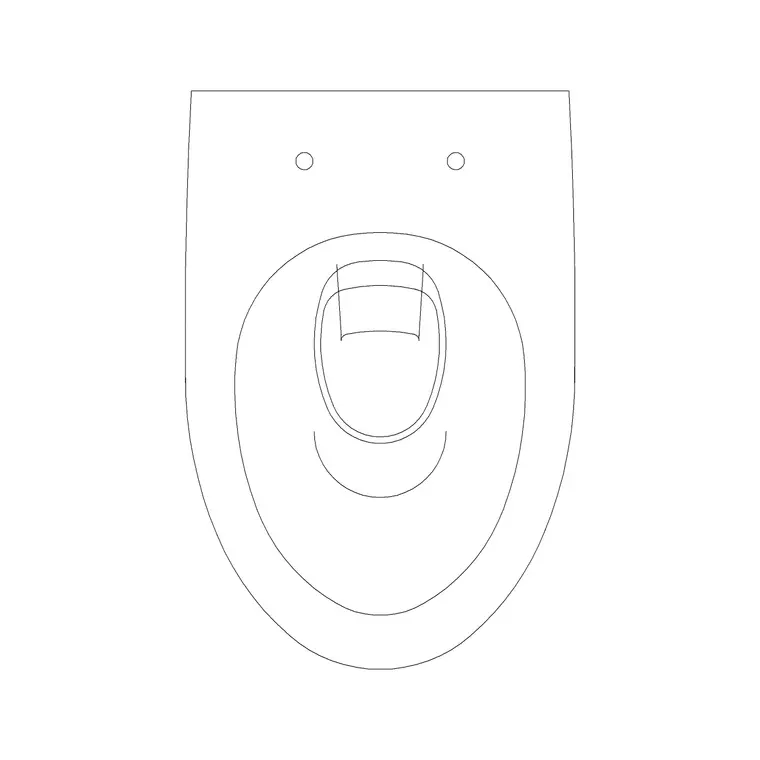
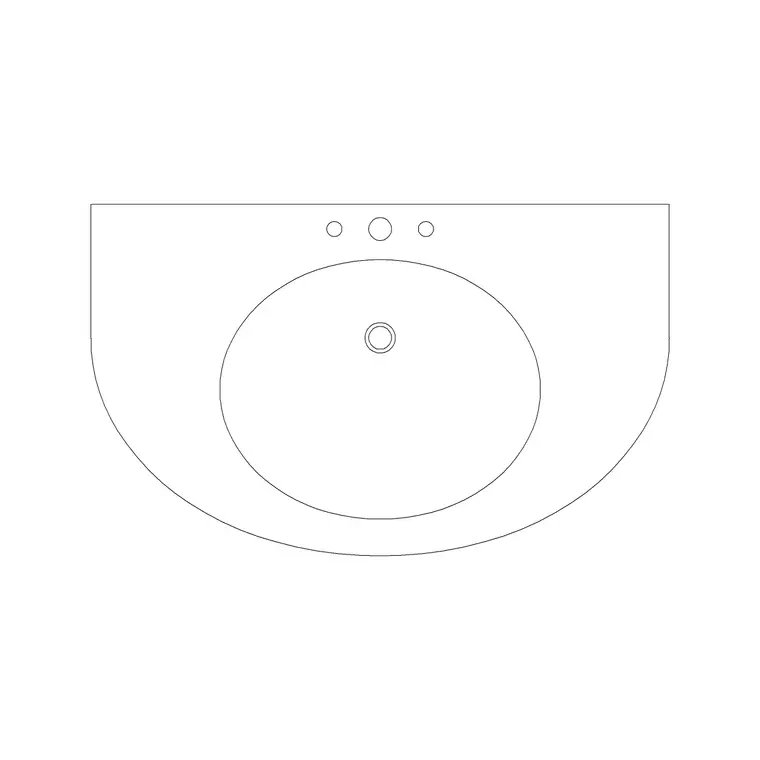
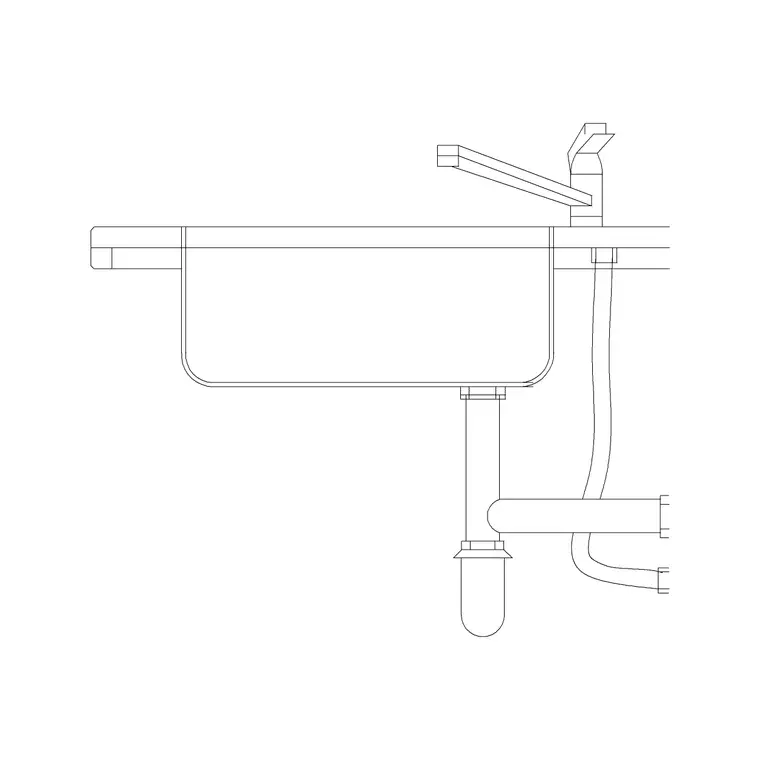
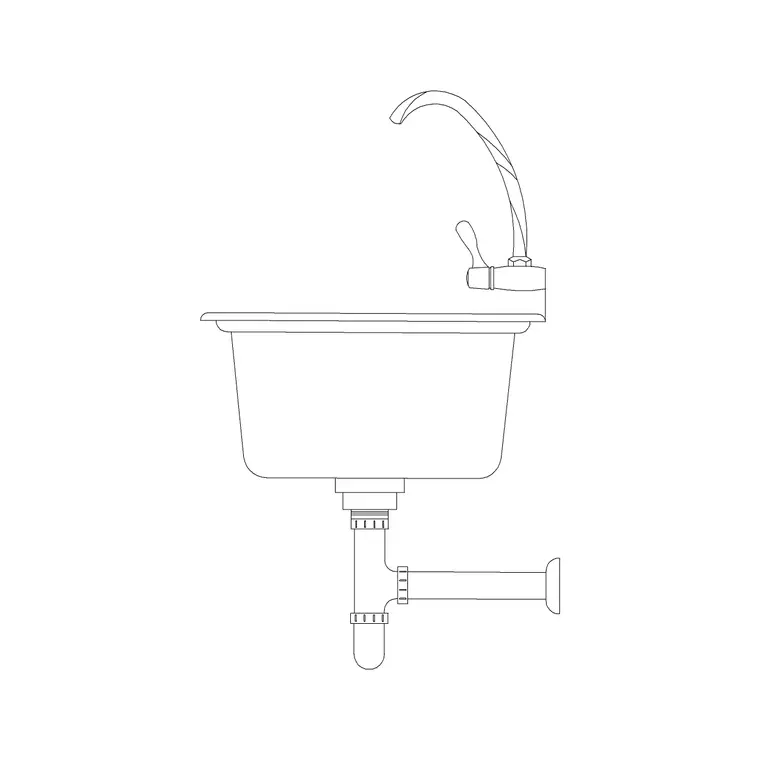
This page gathers the free CAD blocks that make a tight powder-room layout work in AutoCAD — compact toilet commodes, small basins and slim vanity units, plus the basin elevations and a wall lamp to finish the scheme. Each block is drawn to true millimetre dimensions in DWG and DXF, free for personal and commercial work, no signup or watermark.
Because the room is so small, every millimetre and every door swing counts. Scaled blocks let you prove a two-piece layout fits — and that the door actually opens — before you commit the space.
Two fixtures, one tiny room
A powder room contains exactly two fixtures: a WC and a basin. There is no wet zone, no bath, no shower, which is what lets it shrink to a footprint a full bathroom never could. The design challenge is the opposite of a master bathroom — not arranging many things, but fitting two things plus a door and a standing person into a space that might be only 0.9 by 1.5 m.
The blocks you need are deliberately compact. A small toilet commode with a tight projection, and a slim basin — wall-hung, corner or a narrow vanity — are the whole kit. Because guests see this room, it is also where a little detail pays off: a decent basin, a framed mirror and a wall lamp turn a utilitarian WC into a considered powder room without adding floor area.
Layout patterns for a half-bath
Powder rooms almost always follow one of two patterns. In the narrow rectangle, the WC sits at the far end against the back wall and the basin goes on a side wall near the door, so you walk in, the basin is to hand, and the WC is ahead — the door never has to clear the toilet. In the square pocket, the basin tucks into the corner beside the WC, often as a corner basin to claw back floor.
The single most important move in either pattern is the door. In a room this small an inward swing eats the only clear floor you have, so powder rooms frequently use an outward-opening door, a pocket slider, or a door hinged to swing away from the basin. Draw the door arc on the plan with the fixtures in place — if the swing touches either fixture, change the door before anything else.
The compact blocks to use
Pick a small-projection toilet commode block: in a powder room the WC's distance from the back wall directly sets the room's depth, so a tighter pan buys you breathing room. Place it where the door swing will never cross it.
For washing, choose the smallest basin that still feels usable. A wall-hung basin keeps the floor visually open and is easiest to clean around; a slim single-basin vanity adds a sliver of storage for the spare roll and hand towels if the wall length allows. Pair the plan with a small sink elevation block when you draw the wall face — a 350 mm or 450 mm basin elevation suits the scale.
Finish with a wall lamp beside or above the mirror. In a windowless powder room — and many are internal — the lighting block is not decoration, it is the only light source, so place it where it lights a face at the mirror rather than the back of someone's head.
Powder room dimensions and clearances
Treat these as planning ranges, confirmed against your chosen fittings. A workable powder room can be as small as roughly 0.9 by 1.5 m, though 1.2 by 1.5 m feels far less pinched. Compact WC: around 600–650 mm projection, 350–400 mm wide. Small basin: from about 350–450 mm wide for a corner or wall-hung bowl; a slim vanity, 400–500 mm.
For clearances, keep at least 600 mm of clear floor in front of the WC and a usable standing zone in front of the basin — these can overlap in a small room as long as one person uses the room at a time. The door is the binding constraint: reserve its swing as solid floor, and if an inward door cannot clear both fixtures, switch to an outward or sliding door rather than shrinking the fixtures further.
Drawing the powder room in AutoCAD
Start from the door, because in a powder room the door dictates everything. Mark the opening and draw the swing first, then place the WC where the arc can never reach it — usually on the far or adjacent wall. Drop the basin on the wall nearest the entry so it is the first thing to hand, leaving its standing zone clear.
Insert the blocks at scale 1 in a millimetre drawing (0.001 in metres, or set INSUNITS to millimetres). Keep the WC, basin, mirror and lighting on their own layers even in a room this small — it makes the wall elevation and the lighting plan trivial to pull out. Then add the basin elevation and the wall lamp to the wall drawing. With a footprint this tight, it is worth printing the plan at scale and checking a person actually fits in front of each fixture.
Common powder room mistakes
The number-one error is an inward-swinging door that hits the WC or basin. In a room measured in centimetres of spare floor, the door swing is the layout — get it wrong and the room is unusable however nicely the fixtures are drawn.
Second, oversizing the fixtures. A full-size basin or a deep-projection WC that would be fine in a family bathroom turns a powder room into a squeeze. Choose compact blocks deliberately; the small basin is a feature here, not a compromise.
Third, forgetting the light. Powder rooms are often internal and windowless, so leaving the lighting until last — or off the drawing entirely — produces a dark box. Place the wall lamp to light the mirror. Finally, no storage at all: even a tiny shelf or a slim vanity for a spare roll and a hand towel makes the room work for guests, so reserve a sliver of wall for it if you possibly can.
Free download
Browse the full library — DWG & DXF, no signup.
Questions
Frequently asked
What is the difference between a powder room and a bathroom?+
A powder room — also called a half-bath, cloakroom or guest WC — has only a toilet and a basin, with no bath or shower. That two-fixture limit is what lets it fit a much smaller footprint than a full bathroom, often near the entrance for visitors to use.
How small can a powder room be?+
A workable powder room can be as small as roughly 0.9 by 1.5 m, though about 1.2 by 1.5 m feels noticeably less tight. The binding constraint is usually the door swing rather than the fixtures — drop the scaled blocks and the door arc onto the plan to confirm a person fits in front of both.
Should a powder room door open in or out?+
In a room this small, an inward-swinging door often eats the only clear floor you have. Powder rooms frequently use an outward-opening or sliding door so the swing never crosses the WC or basin. Always draw the door arc with the fixtures in place before settling the layout.
Which basin block suits a powder room?+
Use the smallest usable basin — a wall-hung bowl or a corner basin keeps the floor open, and a slim single-basin vanity adds a little storage if the wall allows. Pair it with a small sink elevation block, around 350 mm or 450 mm, to match the compact scale.
Related downloads
Blocks for this guide
Related categories
Related guides
Room guide
Free Bathroom CAD Blocks — Design a Bathroom
Design a full bathroom in AutoCAD with free CAD blocks — WC, basin, bath and shower drawn to scale in plan and elevation. DWG & DXF, no signup.
Room guide
Master Bathroom CAD Blocks — DWG Layouts
Design a master bathroom in AutoCAD with free CAD blocks — double vanity, freestanding bath, walk-in shower and WC drawn to scale. DWG & DXF, no signup.
Room guide
Guest Washroom CAD Blocks — DWG Download
Design a guest washroom in AutoCAD with free CAD blocks — WC, vanity basin and compact shower drawn to scale. DWG & DXF, no signup, commercial-use OK.