Room guide · master bathroom cad blocks
Free master bathroom CAD blocks for AutoCAD
By Saumyajit Maity · Published 11 Aug 2023 · Updated 22 May 2026
A master bathroom is the bathroom you design when there is room to be generous. It serves the main bedroom, usually for two people, and it earns its space with the things a family bathroom cannot fit: a double vanity, a separate walk-in shower as well as a bath, often a freestanding tub as a centrepiece, and sometimes a partitioned or fully separate WC. The brief shifts from squeezing fixtures in to arranging them so two people can use the room at once without colliding.
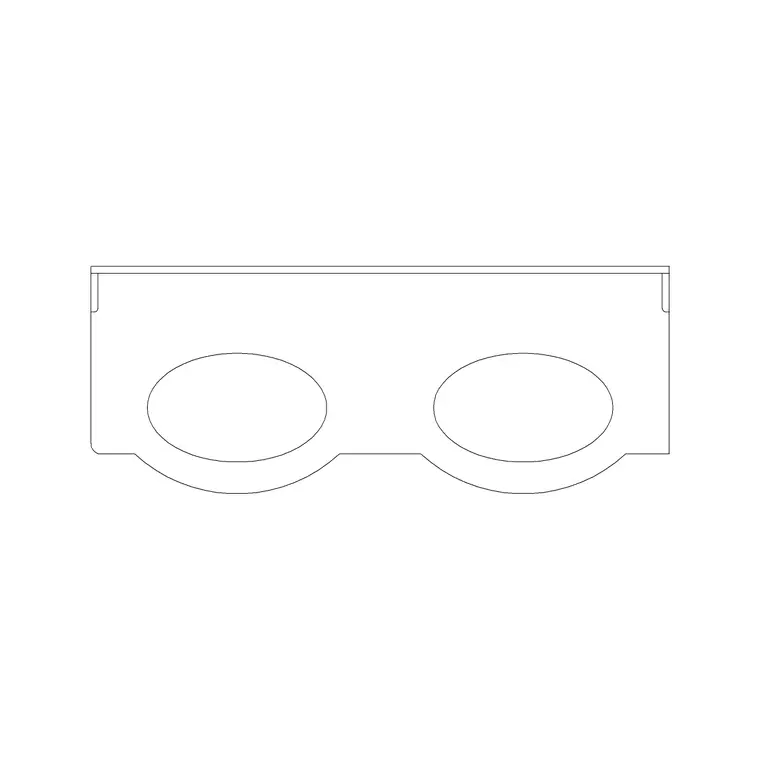
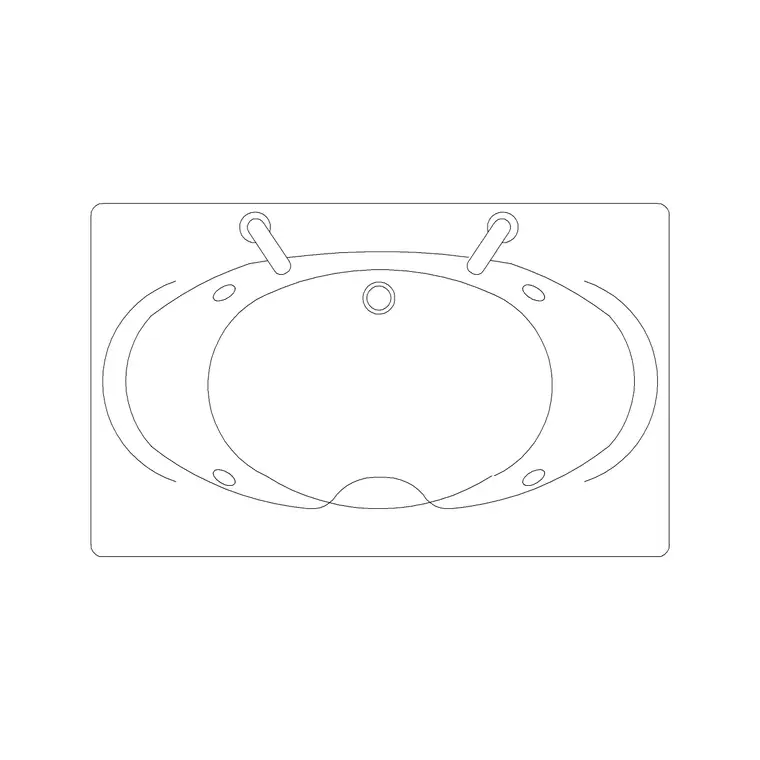
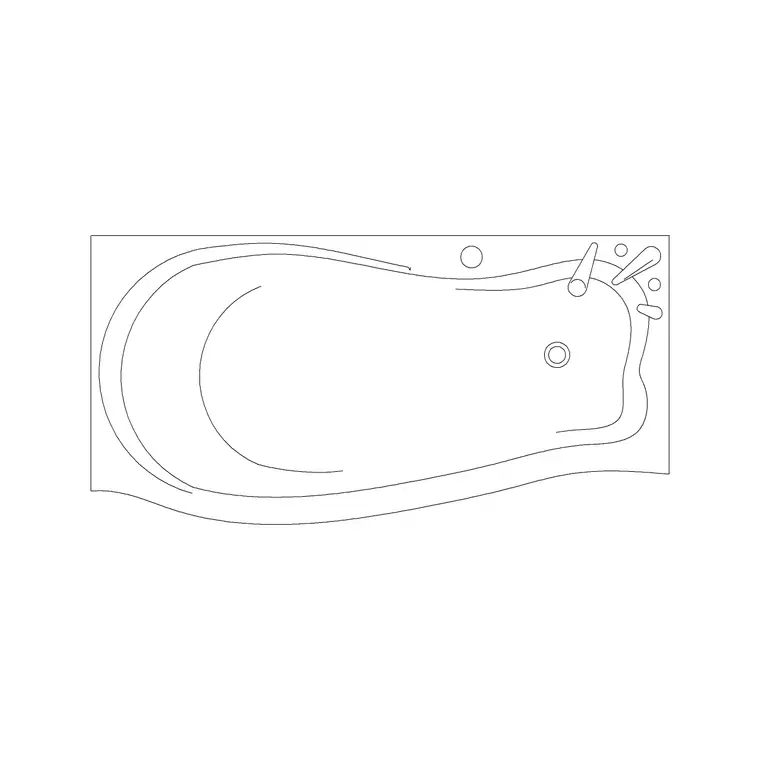
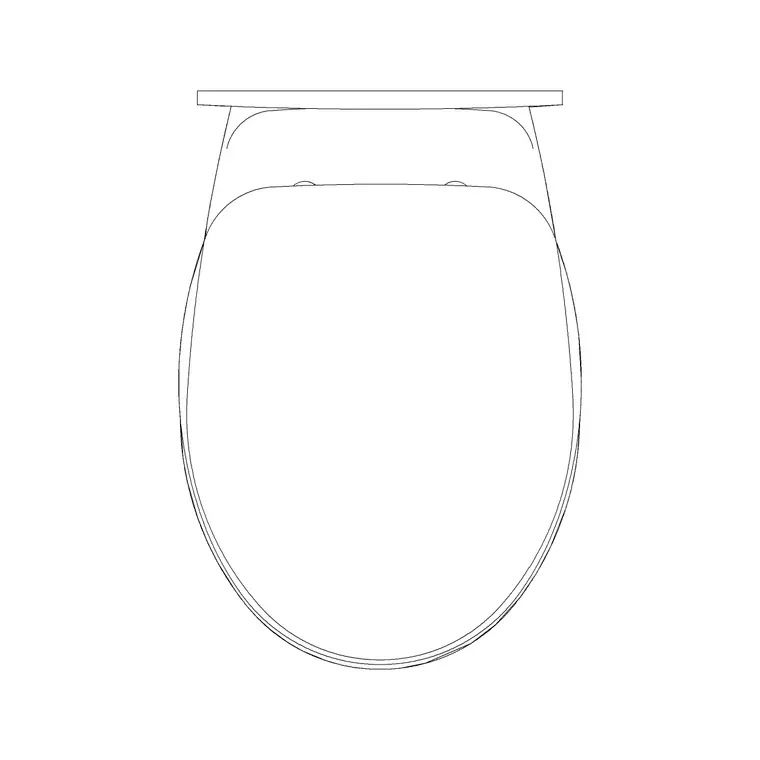
This page collects the free CAD blocks that build that larger, twin-user layout in AutoCAD — double-basin vanities, freestanding and shaped baths, shower trays, toilet commodes and the basin elevations to draw the wall face. Everything is drawn to true millimetre dimensions in DWG and DXF, free for personal and commercial use, with no signup or watermark.
The design problem here is choreography rather than survival: two basins so no one waits, a wet zone that does not soak the dressing route, and a bath placed as a feature rather than wedged into a corner.
What makes a master bathroom different
Three things separate a master bathroom from a standard one. First, it is built for two: the headline fixture is usually a double vanity so two people can use basins at the same time. Second, it separates the bath and the shower instead of combining them — a walk-in shower for daily use and a bath, often freestanding, for soaking. Third, it tends to give the WC its own zone, screened by a half-wall or shut behind a door, so the room can be used by more than one person without awkwardness.
Because the room is larger, the layout becomes about composition. A freestanding bath under a window reads as the focal point; the double vanity runs along the longest wall as the working spine; the shower and WC tuck into the corners or behind partitions. The blocks here let you test that composition to scale before you commit a single dimension.
Twin-user circulation
The defining circulation move in a master bathroom is letting two people pass and work simultaneously. That means wider clear zones than a single-user bathroom: keep the through-route generous — on the order of 900 mm where one person walks behind another using a basin — so the dressing-to-shower path never forces someone to squeeze past the vanity.
At the double vanity, give each basin its own clear standing zone of around 600 mm and space the two bowls far enough apart that elbows do not meet. Around a freestanding bath, leave clear floor on all the visible sides — that surround is part of why a freestanding tub looks the way it does, and it doubles as the cleaning access. The walk-in shower wants an open or low-threshold entry with enough turning room inside; draw the shower block plus its entry zone and confirm the glass does not foul the vanity or the door.
Choosing the master-suite blocks
Lead with a double-basin vanity block — it is the signature of a master bathroom and usually the longest single object on the plan. Pair it with a basin or sink elevation block to draw the mirror wall.
For the bath, a freestanding shape pulled away from the walls reads as a feature; an oval, curved or double-ended bath block suits that role far better than a built-in rectangular tub. If the room is large but not vast, a rectangular bath against one wall with a separate corner shower is the efficient compromise.
Add a shower tray and enclosure for the daily wash, a toilet commode for the WC zone (ideally screened), and finish the scheme with wall lamps flanking the mirrors and a ceiling lamp over the bath. Storage — the vanity drawers plus a tall unit — keeps the surfaces clear, which is what makes a master bathroom feel calm rather than cluttered.
Dimensions and clearances for a master bath
Use these as planning ranges and confirm against your specified fittings. Double vanity: commonly 1200–1800 mm long to carry two bowls with worktop between them. Freestanding bath: around 1500–1800 mm long, and crucially needs clear floor on every exposed side. Walk-in shower: plan for at least 900 by 900 mm, larger for a comfortable wet area. WC: around 600–700 mm projection plus its clear zone.
For circulation, widen the single-user figures: roughly 900 mm for a route where someone passes behind a person at the basin, 600 mm minimum standing zone per basin, and a clear surround around a freestanding bath on all open sides. A master bathroom that does these comfortably usually wants something in the region of 3.0 by 3.5 m or more — below that, a combined bath-shower and single vanity is the honest answer.
Building the master layout in AutoCAD
Start by deciding the focal point, because a master bathroom is composed around one. Place the freestanding bath where it will be seen on entry — often centred on a window — then build the working fixtures around it. Run the double vanity along the longest available wall and array the two basins symmetrically. Tuck the walk-in shower into a corner where the glass will not block sightlines, and give the WC its own screened pocket.
Insert every block at scale 1 in a millimetre drawing (0.001 in a metre drawing, or set INSUNITS to millimetres). Put the bath, shower, vanity, WC, partitions and lighting on separate layers so you can issue a clean plumbing plan, a partition plan and a lighting plan from the one file. Draw both door swings and the shower-glass arc last and walk the two-person route through the plan in your head — if the choreography stalls, adjust before detailing.
Mistakes that shrink a master bathroom
The most common is treating it as a big standard bathroom: lining every wall with fixtures and losing the open centre that makes the room feel like a suite. Resist the urge to fill the middle — the empty floor is the luxury.
Second, crowding a freestanding bath against a wall. A freestanding tub jammed into a corner loses the entire reason to specify it; if you cannot give it clear floor all round, use a built-in bath and save the budget.
Third, a single basin in a two-person room. The double vanity is the one fixture you should not value-engineer out of a master bathroom — it is the difference the occupants notice every morning. Finally, an unscreened WC in an open plan: the master bathroom is a shared room, so give the toilet a half-wall or a door, and check on the plan that the screen does not block the route to the shower.
Free download
Browse the full library — DWG & DXF, no signup.
Questions
Frequently asked
How big does a master bathroom need to be?+
To carry a double vanity, a separate walk-in shower and a freestanding bath comfortably, plan for roughly 3.0 by 3.5 m or more. Below that you can still build a fine master bathroom by combining the bath and shower and using a single wide vanity — drop the scaled blocks in to see what the real room will hold.
Why does a freestanding bath need clear floor all round?+
A freestanding bath is finished on every side and designed to be seen and reached from all of them, so it needs clear floor around the whole tub — both visually, as the feature it is meant to be, and practically, for getting in and for cleaning behind it. Push it into a corner and it stops being a freestanding bath in any useful sense.
Should the WC be in the same room or separate?+
In a master bathroom shared by two people, screen or separate the WC wherever you can — a half-wall, a glass partition or a fully separate compartment. It lets the room be used by more than one person at once. On the plan, check the screen does not block the route to the shower or the vanity.
Can I use these blocks for a luxury hotel suite bathroom?+
Yes. The double vanity, freestanding bath and walk-in shower blocks suit hospitality suite bathrooms as well as residential master baths. They are free for commercial use, so they work for hotel and apartment fit-out drawings as well as private homes.
Related downloads
Blocks for this guide
Related categories
Related guides
Room guide
Free Bathroom CAD Blocks — Design a Bathroom
Design a full bathroom in AutoCAD with free CAD blocks — WC, basin, bath and shower drawn to scale in plan and elevation. DWG & DXF, no signup.
Room guide
Powder Room CAD Blocks — Half-Bath DWG
Design a powder room or half-bath in AutoCAD with free CAD blocks — compact WC, small basin and vanity drawn to scale. DWG & DXF, no signup, commercial-use OK.
Room guide
Guest Washroom CAD Blocks — DWG Download
Design a guest washroom in AutoCAD with free CAD blocks — WC, vanity basin and compact shower drawn to scale. DWG & DXF, no signup, commercial-use OK.